
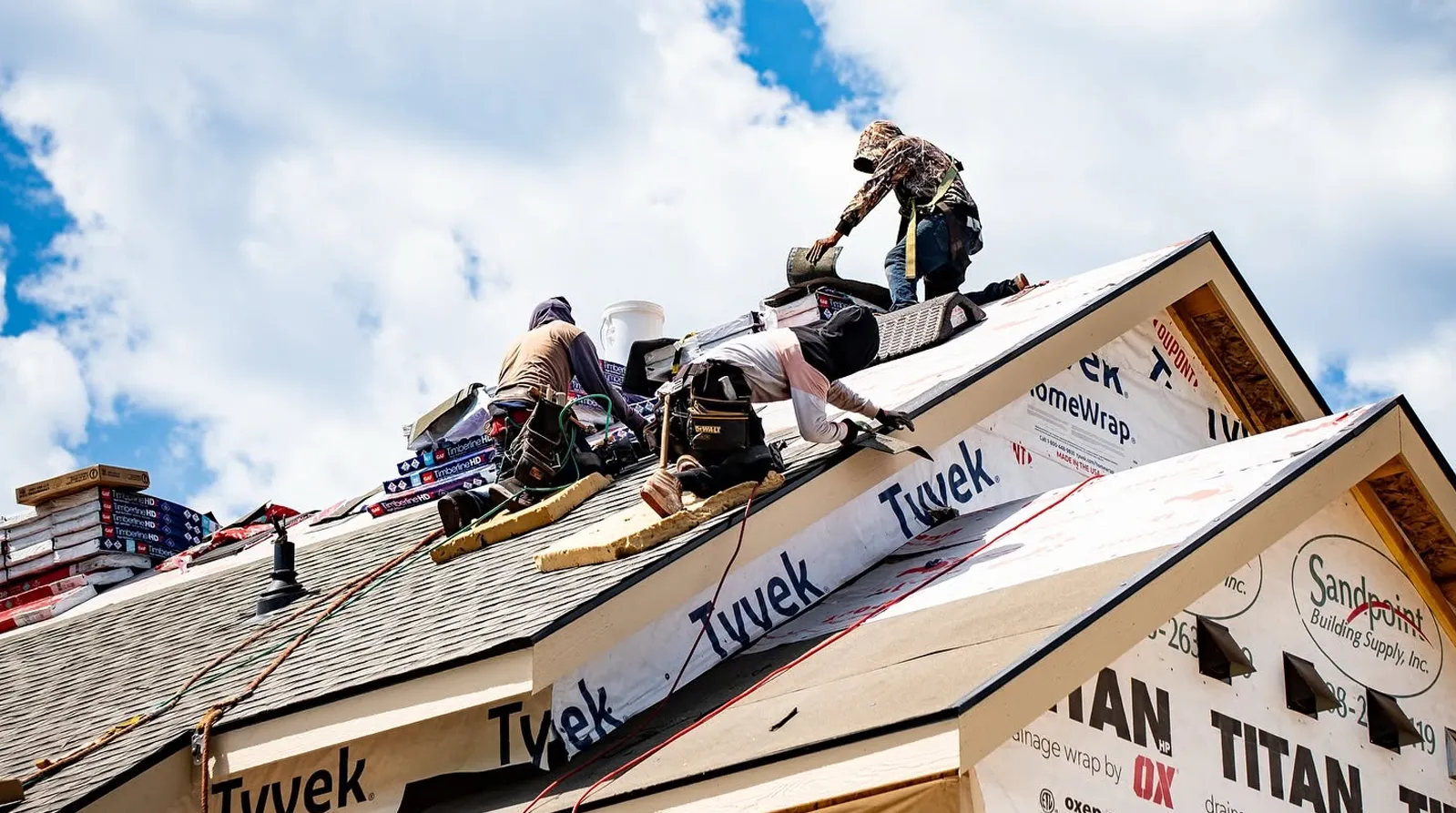
At a Glance: What Post Falls Homeowners Need to Know
Post Falls roofs need to handle a North Idaho mix of snow, ice, freeze-thaw cycles, spring rain, wind, summer heat, tree debris, gutter clogs, and attic moisture. That means a good roofing plan should not only focus on shingles. It should include the full roof system: decking, underlayment, flashing, pipe boots, valleys, attic ventilation, gutters, downspouts, and seasonal maintenance.
For Post Falls homeowners, the best roof care schedule is simple:
- inspect the roof in spring after winter;
- inspect again in fall before snow and ice;
- check the roof after strong wind, hail, heavy rain, heavy snow, or falling branches;
- clean gutters before winter;
- repair small leaks early;
- compare repair vs replacement when problems repeat.
NRCA recommends scheduled roof system inspections at least twice per year, preferably in spring and fall, and after severe storms.
SkyRight serves Post Falls from its local Post Falls business profile location at 510 Clearwater Loop, Suite #100, Post Falls, ID 83854. For local roofing support, visit SkyRight’s Post Falls roofing page, roof repair vs replacement guide, roof maintenance calendar, roof replacement cost guide, and gutter services page.
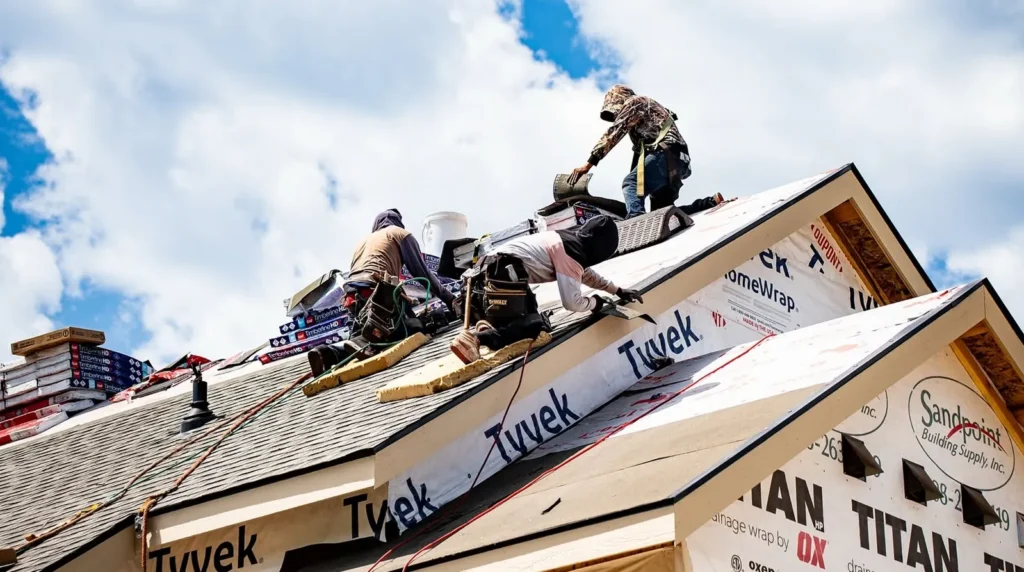
Quick Answer: Should You Repair or Replace Your Post Falls Roof?
If the roof has one isolated issue, repair may be enough. If the roof has repeated leaks, widespread wear, soft decking, multiple damaged slopes, or recurring winter problems, replacement may be the better long-term decision.
Roof Condition | Repair May Be Enough | Replacement May Be Better |
Leak source | One pipe boot, flashing detail, or small area | Multiple leaks or unclear water paths |
Shingle condition | Most shingles are flexible and intact | Brittle, curled, cracked, or losing granules |
Storm damage | Limited to one small area | Multiple slopes damaged |
Decking | Dry and solid | Soft, stained, rotten, or sagging |
Roof age | Mid-life or newer | Near end of expected service life |
Winter issues | One-time ice or gutter problem | Ice dams or roof-edge leaks every winter |
Repair history | Occasional small repair | Repairs keep returning |
Home plans | Short-term localized fix | Long-term protection and curb appeal |
Best rule: do not choose repair or replacement before inspection. The right answer depends on the roof’s age, material, damage pattern, attic condition, drainage, and long-term plans for the home.
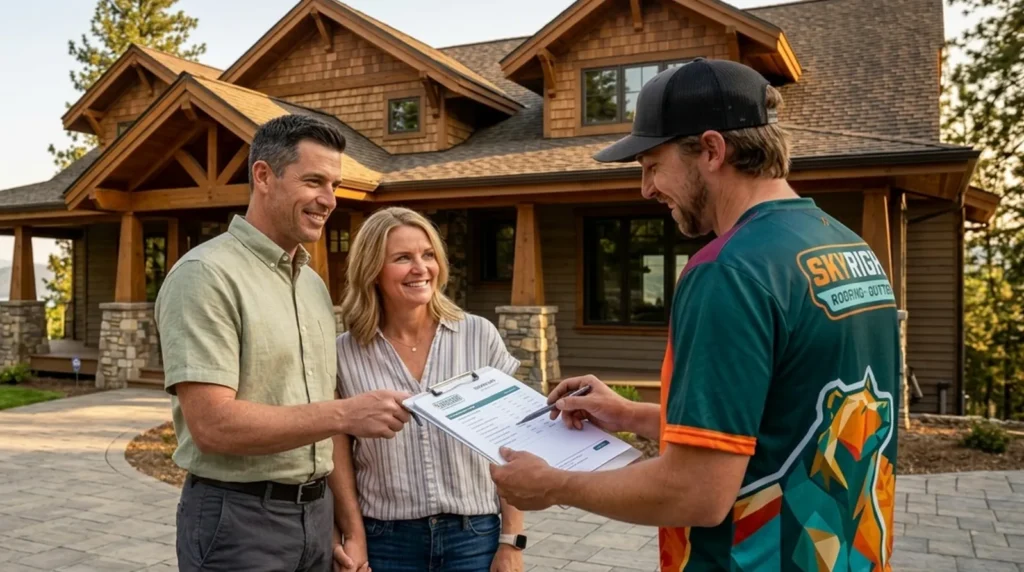
Why Post Falls Roofs Need Local Planning
Post Falls is part of Kootenai County and sits along the Spokane River in North Idaho. Kootenai County’s Post Falls history page describes the area’s origin around the “Little Falls” of the Spokane River and its growth from early lumber activity. That local setting matters because Post Falls homes can face different roofing challenges than homes in warmer or drier regions. Post Falls roofing systems may deal with:- winter snow;
- roof-edge ice;
- freeze-thaw cycles;
- spring rain;
- wind exposure on open lots;
- pine needles and tree debris;
- summer heat;
- attic moisture;
- gutter ice;
- fast runoff from steep roofs;
- snow movement on metal roofs;
- aging asphalt shingles;
- mixed roof ages in growing neighborhoods.
Post Falls Seasonal Roof Maintenance Calendar
A seasonal roofing plan helps homeowners catch small issues before they become expensive leaks.| Season | Main Goal | What to Check |
| Spring | Find winter damage | Missing shingles, gutter damage, roof-edge stains, attic moisture, flashing, pipe boots |
| Summer | Repair and improve | Ventilation, tree limbs, heat stress, moss, exposed nails, replacement planning |
| Fall | Prepare for snow and ice | Gutters, downspouts, valleys, flashing, pipe boots, attic ventilation |
| Winter | Watch for active problems | Ice dams, icicles, gutter ice, snow load concerns, ceiling stains |
| After storms | Document sudden damage | Missing shingles, dents, fallen branches, leaks, loose ridge caps, gutter damage |
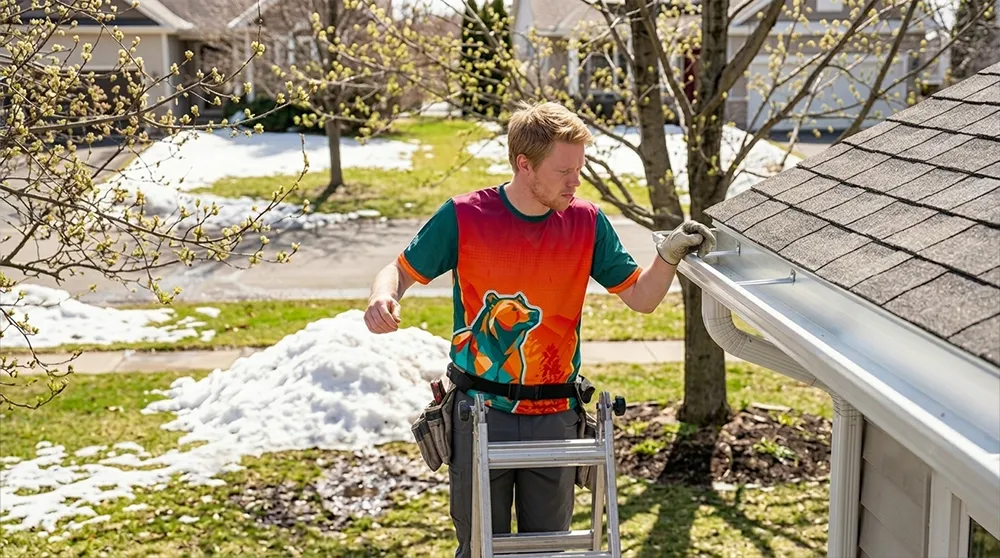
Spring Roof Inspection Checklist for Post Falls Homes
Spring is one of the most important roof inspection seasons in Post Falls. Winter snow, ice, and freeze-thaw cycles can loosen shingles, damage gutters, crack pipe boots, expose flashing problems, and reveal attic moisture issues.What to Check in Spring
Look for:- missing shingles;
- lifted shingle edges;
- cracked shingles;
- curling shingles;
- granules in gutters;
- damaged ridge caps;
- cracked pipe boots;
- loose chimney flashing;
- wall flashing gaps;
- skylight stains;
- gutter separation;
- downspout damage;
- roof-edge stains;
- wet insulation;
- attic frost marks;
- ceiling stains after thaw cycles.
Spring Roof Symptoms and What They May Mean
| Spring Symptom | Possible Cause | Recommended Next Step |
| Ceiling stain after snowmelt | Ice dam, pipe boot leak, flashing leak, attic condensation | Roof and attic inspection |
| Heavy granules in gutters | Asphalt shingle aging or storm wear | Shingle condition review |
| Missing shingles | Wind, age, or failed shingle seal | Repair inspection |
| Gutter pulling away | Ice weight or fascia damage | Gutter and fascia inspection |
| Attic frost marks | Air leakage, poor insulation, or weak ventilation | Attic performance review |
| Moss on shaded slope | Moisture retention and shade | Maintenance and roof surface inspection |
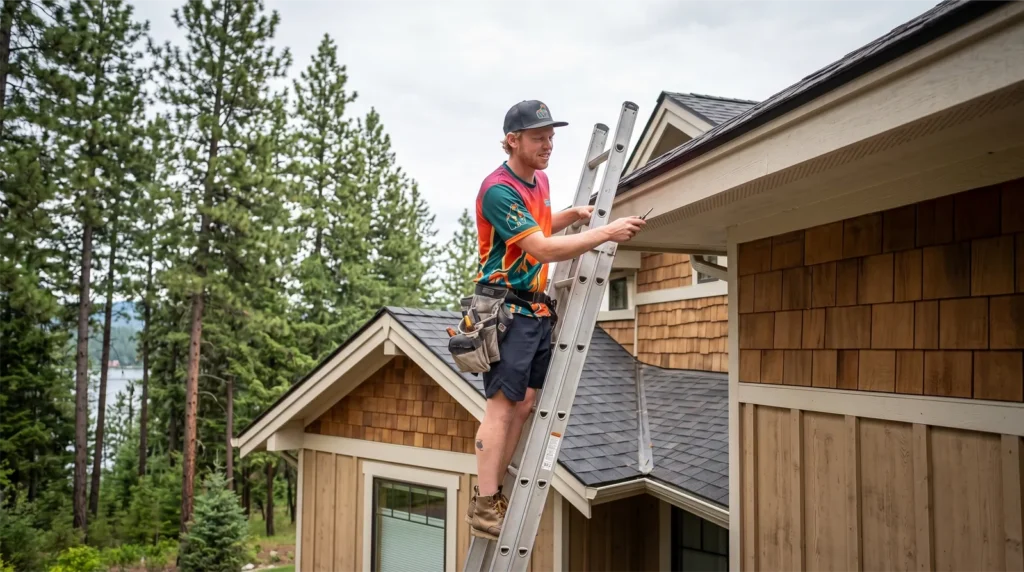
Summer Roof Maintenance Checklist
Summer is the best time to handle non-emergency repairs, review ventilation, and plan roof replacement before the fall rush.What to Check in Summer
- hot upstairs rooms;
- poor attic airflow;
- curled shingles;
- exposed nails;
- loose ridge caps;
- tree limbs touching the roof;
- moss or algae on shaded sections;
- gutters overflowing during thunderstorms;
- cracked sealant around penetrations;
- stains around skylights or chimneys.
Fall Roof Preparation Checklist
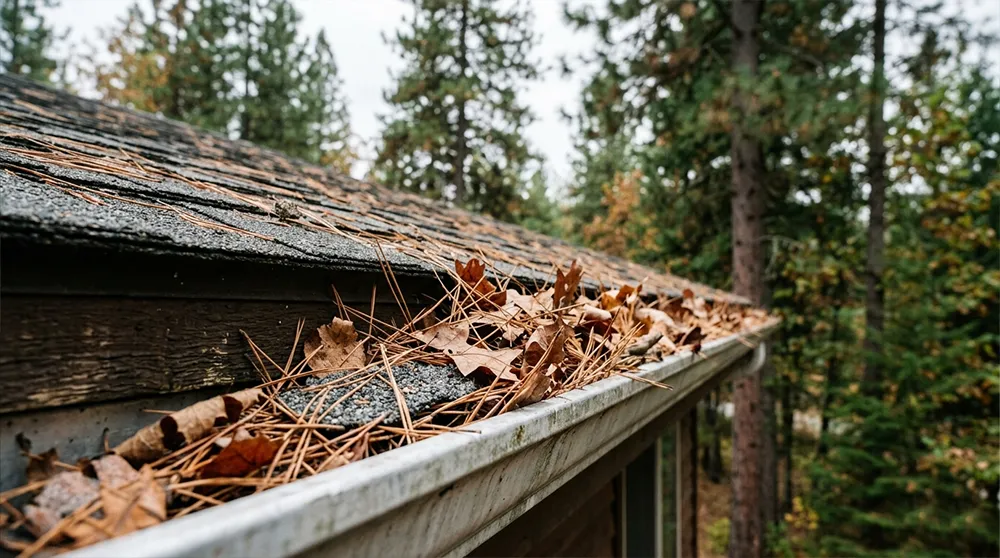
Fall is the most important preparation season for Post Falls roofs. Once snow and ice arrive, roof repairs become harder, slower, and more weather-dependent.Before Winter, Check:
- gutters and downspouts;
- roof valleys;
- pipe boots;
- chimney flashing;
- wall flashing;
- skylight flashing;
- ridge caps;
- missing shingles;
- roof-edge staining;
- tree branches over the roof;
- attic ventilation;
- attic insulation gaps;
- bathroom fan termination.
Fall Roof Prep Table
| Fall Task | Why It Matters Before Winter |
| Clean gutters | Helps prevent gutter ice and overflow |
| Flush downspouts | Confirms water can leave the roof system |
| Clear valleys | Keeps snowmelt moving through high-flow areas |
| Inspect pipe boots | Prevents small penetration leaks |
| Check flashing | Protects chimneys, walls, skylights, and roof transitions |
| Trim branches | Reduces storm debris and impact damage |
| Review attic ventilation | Helps reduce attic moisture and ice dam risk |
| Photograph roof condition | Creates a record before winter storms |
Winter Roof Watchlist for Post Falls Homes
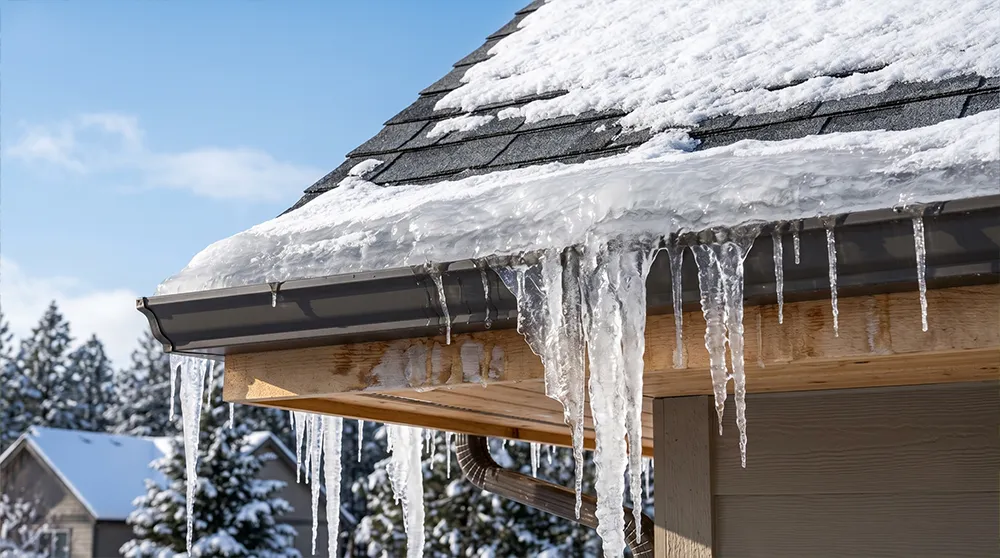
Winter is when hidden roof problems often become visible.Watch for These Warning Signs
- ice dams at eaves;
- large icicles;
- gutter ice;
- water stains after thaw cycles;
- attic frost;
- wet insulation;
- snow drifting heavily on one roof section;
- roof-edge leaks;
- downspouts frozen at ground level;
- gutters pulling away from fascia;
- leaks around chimneys or skylights.
What Not to Do in Winter
Do not:- walk on a snowy or icy roof;
- chop ice with sharp tools;
- aggressively shovel shingles;
- climb icy ladders;
- ignore ceiling stains;
- assume large icicles are harmless;
- wait until spring if water is actively entering the home.
Common Roof Problems in Post Falls
Post Falls roof problems are often caused by weather, aging materials, drainage issues, ventilation problems, or storm damage.| Roof Problem | Common Cause | First Step |
| Missing shingles | Wind, aging sealant, storm damage | Repair inspection |
| Pipe boot leak | Cracked rubber boot around plumbing vent | Replace boot or flashing detail |
| Chimney leak | Loose or failing flashing | Flashing inspection |
| Valley leak | Debris, ice, old underlayment, heavy runoff | Valley system inspection |
| Gutter overflow | Clogs, poor slope, frozen downspout | Gutter service |
| Roof-edge leak | Ice dam, clogged gutter, weak eave protection | Roof and attic inspection |
| Attic frost | Warm moist air reaching cold attic surfaces | Ventilation and air sealing review |
| Granule loss | Asphalt shingle aging or storm wear | Roof condition inspection |
| Multiple leaks | System-wide roof failure | Compare repair vs replacement |
| Soft decking | Long-term moisture damage | Major repair or replacement planning |
Exposed lots in Post Falls face intense wind. Is your roof secretly compromised?
A single wind-lifted shingle tab or a cracked pipe boot flashing can let rainwater travel unseen down your rafters for months before a stain appears on your ceiling. Stop guessing about your roof’s health. Let our local team pinpoint and repair minor vulnerabilities today.

Roof Repair in Post Falls: When It Makes Sense
Roof repair is often the right choice when the damage is localized and the roof is otherwise healthy.Repair May Be a Good Fit If:
- only a few shingles are missing;
- one pipe boot is cracked;
- one flashing detail is leaking;
- one valley has localized damage;
- the roof is not near the end of its life;
- surrounding shingles are still flexible;
- decking is solid;
- material matching is possible;
- the leak source is clear.
Common Post Falls Roof Repairs
| Repair Type | What It Solves |
| Shingle replacement | Missing, lifted, or damaged shingles |
| Pipe boot replacement | Leaks around plumbing vents |
| Flashing repair | Chimneys, walls, skylights, and transitions |
| Valley repair | Water intrusion in high-flow areas |
| Ridge cap repair | Damaged roof peaks and hips |
| Gutter repair | Overflow, fascia stress, and drainage issues |
| Temporary dry-in | Emergency water control before permanent repair |
For a complete repair decision framework, read SkyRight’s roof repair vs replacement guide.
Roof Replacement in Post Falls: When It Becomes the Better Option
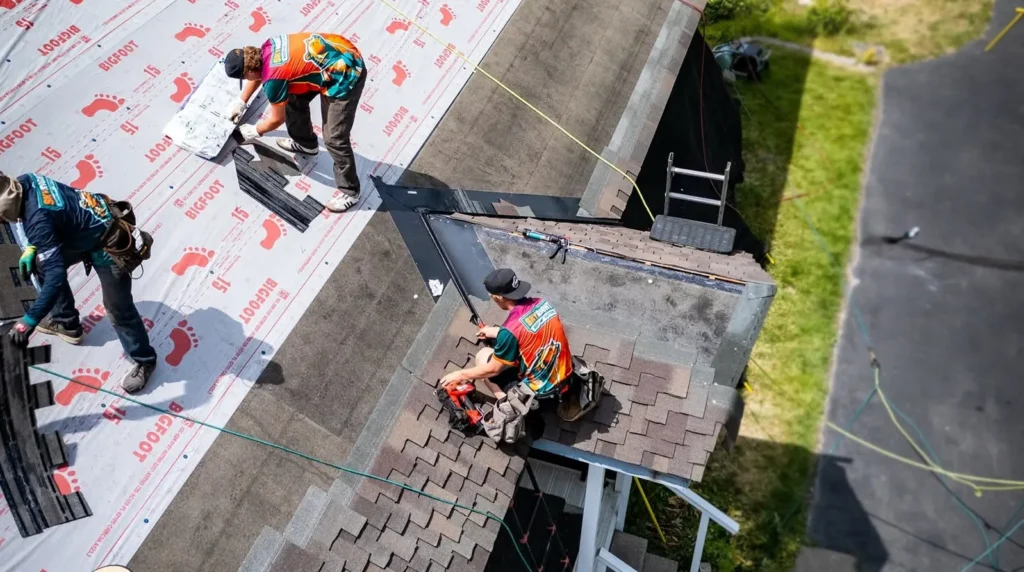
Roof replacement becomes the better option when the roof is failing as a system rather than in one isolated place.Replacement Is More Likely If:
- leaks are recurring;
- shingles are brittle, curled, or cracked;
- granule loss is widespread;
- multiple slopes are damaged;
- decking is soft or stained;
- flashing is failing in several areas;
- repairs are becoming frequent;
- the roof has multiple old layers;
- storm damage affects more than one slope;
- winter leaks happen year after year.
Repair vs Replacement Decision Table
| Question | Repair Is More Likely | Replacement Is More Likely |
| Is damage isolated? | One detail or small area | Multiple slopes |
| How many leaks exist? | One confirmed leak source | Repeated or multiple leaks |
| Are shingles flexible? | Mostly yes | Brittle, curled, or cracking |
| Is decking solid? | Dry and firm | Soft, stained, or rotten |
| Is the roof older? | Mid-life or newer | Near end of useful life |
| Did winter expose recurring issues? | One-time problem | Every winter or multiple seasons |
| Are repairs affordable? | Small repair | Repairs approaching replacement value |

Post Falls Roof Replacement Cost Planning
Roof replacement cost depends on roof size, pitch, access, tear-off, material, decking condition, flashing, ventilation, gutters, and hidden damage.General Planning Ranges
| Roofing Project | General Planning Range | Notes |
| Small roof repair | $400–$2,000+ | Pipe boots, small shingle repairs, flashing details |
| Complex roof repair | $2,000–$5,000+ | Valleys, decking, storm damage, steep access |
| Asphalt roof replacement | $500–$900 per roofing square | A roofing square equals 100 sq. ft. |
| Premium asphalt shingles | $750–$1,500+ per roofing square | Upgraded materials or complex rooflines |
| Metal roofing | $900–$1,800+ per roofing square | Standing seam and detailed metal systems can cost more |
| Full asphalt replacement on many 1,500–2,000 sq. ft. roof surfaces | $8,000–$18,000+ | Depends on pitch, scope, and material |
| Full metal replacement on many 1,500–2,000 sq. ft. roof surfaces | $18,000–$45,000+ | Depends on panel type, trim, and complexity |
Planning a roof replacement budget? Get a detailed, "no-surprises" quote.
We believe in transparent pricing that breaks down everything from high-performance ice shields to disposal fees and attic ventilation corrections. Invest in a durable weather-protection system designed specifically for North Idaho winters, backed by local experts.
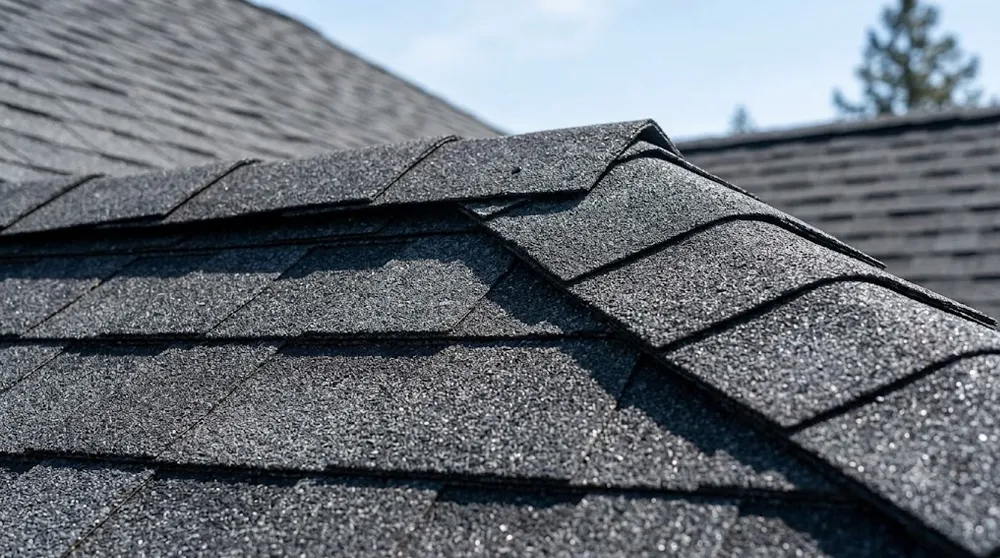
Asphalt Roofing in Post Falls
Architectural asphalt shingles are a practical roofing choice for many Post Falls homes because they balance cost, curb appeal, repairability, color options, and proven residential performance.Asphalt Roofing Makes Sense If:
- upfront budget matters;
- the home has a traditional residential style;
- the homeowner wants many color options;
- small future repairs should be easier;
- the roof has a complex shape;
- replacement speed matters;
- the homeowner wants a familiar roofing system.
Asphalt Roofing Needs Maintenance For:
- granule loss;
- missing shingles;
- cracked pipe boots;
- moss on shaded slopes;
- wind-lifted shingles;
- ridge cap wear;
- flashing problems;
- gutter clogs.
For material planning, visit SkyRight’s asphalt shingle and residential roofing materials guide.

Metal Roofing in Post Falls
Metal roofing can be a strong option for Post Falls homeowners who want long-term durability, snow-shedding potential, and a premium exterior upgrade.
Metal Roofing Makes Sense If:
- the homeowner plans to stay long-term;
- snow shedding is a priority;
- the property has open wind or snow exposure;
- the home has visible roof slopes;
- the homeowner wants a premium look;
- the roof is for a shop, garage, cabin, or rural property;
- lower surface maintenance matters.
Metal Roofing Needs Planning For:
- snow-slide zones;
- gutters and downspouts;
- snow guards near entries;
- panel type;
- trim details;
- fasteners;
- roof penetrations;
- attic condensation;
- higher upfront cost.
For more detail, visit SkyRight’s metal roofing services page and metal roofing in Coeur d’Alene.
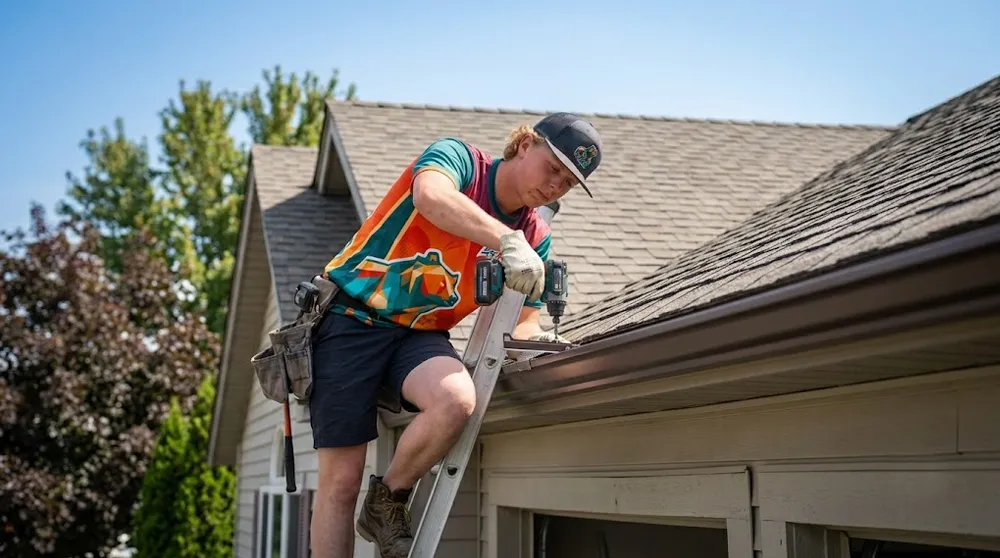
Gutters and Roof Drainage in Post Falls
Gutters are part of the roof system. A good roof can still develop roof-edge problems if gutters are clogged, frozen, sagging, or draining too close to the home.Gutter Problems That Affect Roof Health
- leaves and pine needles;
- granules collecting in gutters;
- loose hangers;
- poor slope;
- clogged downspouts;
- frozen downspout exits;
- gutters pulling away from fascia;
- water pooling near the foundation;
- ice sheets below downspouts.
Gutter Maintenance Table
| Gutter Task | Best Timing | Why It Matters |
| Clean gutters | Spring and fall | Prevents clogs and winter ice |
| Flush downspouts | Fall | Confirms water can exit the roof system |
| Check gutter slope | During inspection | Prevents standing water |
| Inspect fascia | Spring and fall | Finds hidden moisture damage |
| Clear roof valleys | Before winter | Prevents water backup and ice |
| Extend downspouts | Before wet season | Moves water away from the foundation |
For drainage support, visit SkyRight’s gutter services and gutter and roof drainage guide.
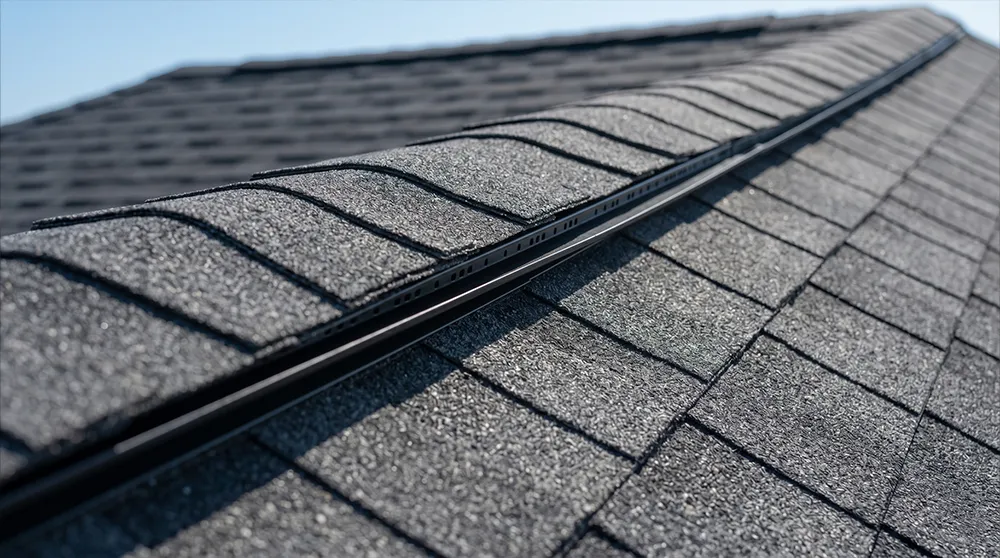
Ventilation, Attic Moisture, and Ice Dams
Many winter roof problems in Post Falls start inside the attic. Ice dams can form when warm air from the home leaks into the attic, warms the roof deck, melts snow, and that meltwater refreezes near colder roof edges. MSU Extension explains that undesirable attic heat from too little insulation or too little ventilation is generally the cause of ice dam conditions.Attic Warning Signs
Look for:- frost on nail tips;
- wet insulation;
- dark roof deck stains;
- musty attic smell;
- bathroom fans venting into the attic;
- blocked soffit vents;
- hot upstairs rooms;
- uneven roof snow melt;
- recurring ice dams;
- ceiling stains after thaw cycles.
For more detail, visit SkyRight’s roof and attic ventilation guide.
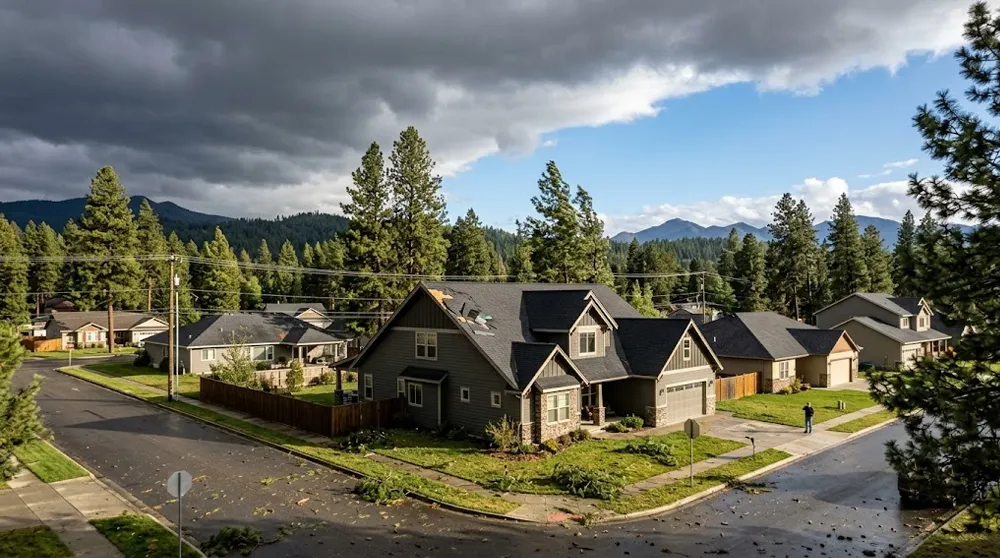
Storm Damage and Insurance Documentation
Post Falls roofs can be affected by wind, hail, falling branches, heavy rain, and snow. After a storm, homeowners should document visible damage safely from the ground.What to Photograph
- missing shingles;
- shingles in the yard;
- branches on the roof;
- dents in gutters or vents;
- damaged ridge caps;
- interior ceiling stains;
- attic moisture if safely accessible;
- gutter separation;
- damaged downspouts.
What to Do After Storm Damage
- Take photos from safe locations.
- Note the date of the storm.
- Protect interior belongings from water.
- Avoid walking on the roof.
- Schedule a professional inspection.
- Contact your insurance company if storm damage may be involved.
- Save receipts for temporary protection or emergency repairs.
Local Permits and Building Considerations
The City of Post Falls Building Division provides an online portal where customers can apply, upload plans, pay fees, schedule inspections, and view inspection results for Building, Planning, and Engineering departments. For properties outside city limits or under county jurisdiction, Kootenai County’s Building Division lists re-roofing among building permit categories handled by the county. Homeowners should confirm permit requirements before major roofing work, especially for full replacement, structural changes, commercial work, additions, or projects outside simple maintenance.How to Hire a Roofing Contractor in Post Falls
A roofing contractor should explain the full roof system, not just the material.
Questions to Ask
- Are you local to North Idaho?
- Do you serve Post Falls specifically?
- Do you provide a written estimate?
- Is tear-off included?
- What material and product line are included?
- What underlayment is included?
- Are flashing details included?
- Are pipe boots replaced?
- Is attic ventilation reviewed?
- How is damaged decking priced?
- Are gutters included or separate?
- What warranty applies?
- Is cleanup included?
- Are permits required for this project?
- What could change the final price?
Post Falls Roofing Scenarios
These examples are planning scenarios, not quotes.
Scenario 1: Post Falls Home With Missing Shingles After Wind
Home profile: Asphalt shingle roof, open lot, several shingles missing after wind.
Best next step: Roof repair inspection.
Why: Missing shingles may be repairable if the damage is localized, but surrounding lifted shingles should also be checked.
Scenario 2: Post Falls Home With Winter Ceiling Stains
Home profile: Water stain appears near an exterior wall during thaw.
Best next step: Inspect the roof edge, gutters, attic ventilation, insulation, and ice-dam conditions.
Why: The source may be an ice dam, gutter problem, flashing issue, roof-edge detail, or attic condensation.
Scenario 3: Post Falls Home With Repeated Leaks
Home profile: Older roof, leaks in multiple rooms, granules in gutters, brittle shingles.
Best next step: Compare repair against replacement.
Why: Multiple leaks often mean the roof system is failing, not just one detail.
Scenario 4: Post Falls Home Comparing Asphalt and Metal
Home profile: Homeowner plans to stay long-term and wants a stronger exterior upgrade.
Best next step: Compare architectural asphalt shingles against standing seam or exposed-fastener metal roofing.
Why: Asphalt is usually more budget-friendly, while metal can offer strong long-term value and snow-shedding potential when planned correctly.
Scenario 5: Post Falls Home With Overflowing Gutters
Home profile: Gutters overflow during rain, fascia has staining, downspouts discharge near the foundation.
Best next step: Gutter and drainage inspection.
Why: Roof-edge leaks are not always caused by shingles. Drainage problems can damage fascia, siding, and roof edges.
Final Recommendation: Build a Roof Plan Before There Is a Leak
Post Falls homeowners should not wait until water is dripping through the ceiling. The best roof plan is simple:- inspect in spring;
- inspect in fall;
- clean gutters before winter;
- document storm damage;
- repair small problems early;
- watch for ice dams;
- review attic ventilation;
- compare repair vs replacement when leaks repeat;
- choose materials based on the home, roof design, budget, and long-term plan.
Ready to protect your Post Falls home before the next storm hits?
From flawless architectural shingle installations to premium standing seam metal systems, our team provides trusted, code-compliant workmanship right here in Kootenai County. Schedule a comprehensive multi-point system consultation with our local experts today.
FAQ: Post Falls Roof Maintenance, Repair & Replacement
How often should Post Falls homeowners inspect their roof?
Post Falls homeowners should visually check their roof in spring and fall, and after major wind, hail, snow, or debris events. A professional inspection is recommended if there are missing shingles, ceiling stains, gutter problems, ice dams, or storm damage.
What is the most important roof maintenance task before winter?
The most important pre-winter tasks are cleaning gutters, clearing valleys, checking flashing, inspecting pipe boots, and reviewing attic ventilation. These steps reduce the risk of ice dams, roof-edge leaks, and winter water damage.
Should I repair or replace my Post Falls roof?
Repair is usually best when damage is isolated and the roof is otherwise healthy. Replacement is usually better when the roof has repeated leaks, widespread granule loss, brittle shingles, soft decking, or storm damage across multiple slopes.
How much does roof repair cost in Post Falls?
Many small roof repairs fall around $400–$2,000, while complex repairs can exceed $3,000–$5,000 depending on the leak source, roof pitch, access, material, flashing, decking, and storm damage. Exact pricing requires inspection.
How much does roof replacement cost in Post Falls?
For planning purposes, asphalt roof replacement often falls around $500–$900 per roofing square, while metal roofing may fall around $900–$1,800+ per roofing square. A roofing square equals 100 sq. ft. Final price depends on the roof design and inspection findings.
Are ice dams common in Post Falls?
Ice dams can happen in Post Falls when attic heat melts roof snow and that meltwater refreezes near colder eaves. They are more likely when gutters are clogged, ventilation is poor, insulation is weak, or roof edges are vulnerable.
Are metal roofs good for Post Falls homes?
Metal roofing can be a strong option for Post Falls homes, especially for long-term homeowners, snow-exposed properties, shops, garages, and modern or rural homes. It costs more upfront than asphalt but can offer strong long-term value.
Can clogged gutters cause roof leaks?
Yes. Clogged or damaged gutters can contribute to roof-edge leaks, fascia damage, ice buildup, siding stains, and poor drainage around the home. Gutter maintenance is part of roof maintenance.
Do I need a permit for roof replacement in Post Falls?
Permit requirements depend on the project scope and whether the property falls under city or county jurisdiction. The City of Post Falls provides an online portal for building applications and inspections, and Kootenai County lists re-roofing among its building permit categories. Homeowners should confirm current requirements before major roofing work.
Who should I call for roofing in Post Falls, ID?
SkyRight provides roof maintenance, roof repair, roof replacement, metal roofing, asphalt roofing, gutter services, and inspection support for homeowners in Post Falls, Coeur d’Alene, Sandpoint, Hayden, Rathdrum, Athol, Spirit Lake, and nearby North Idaho communities.