
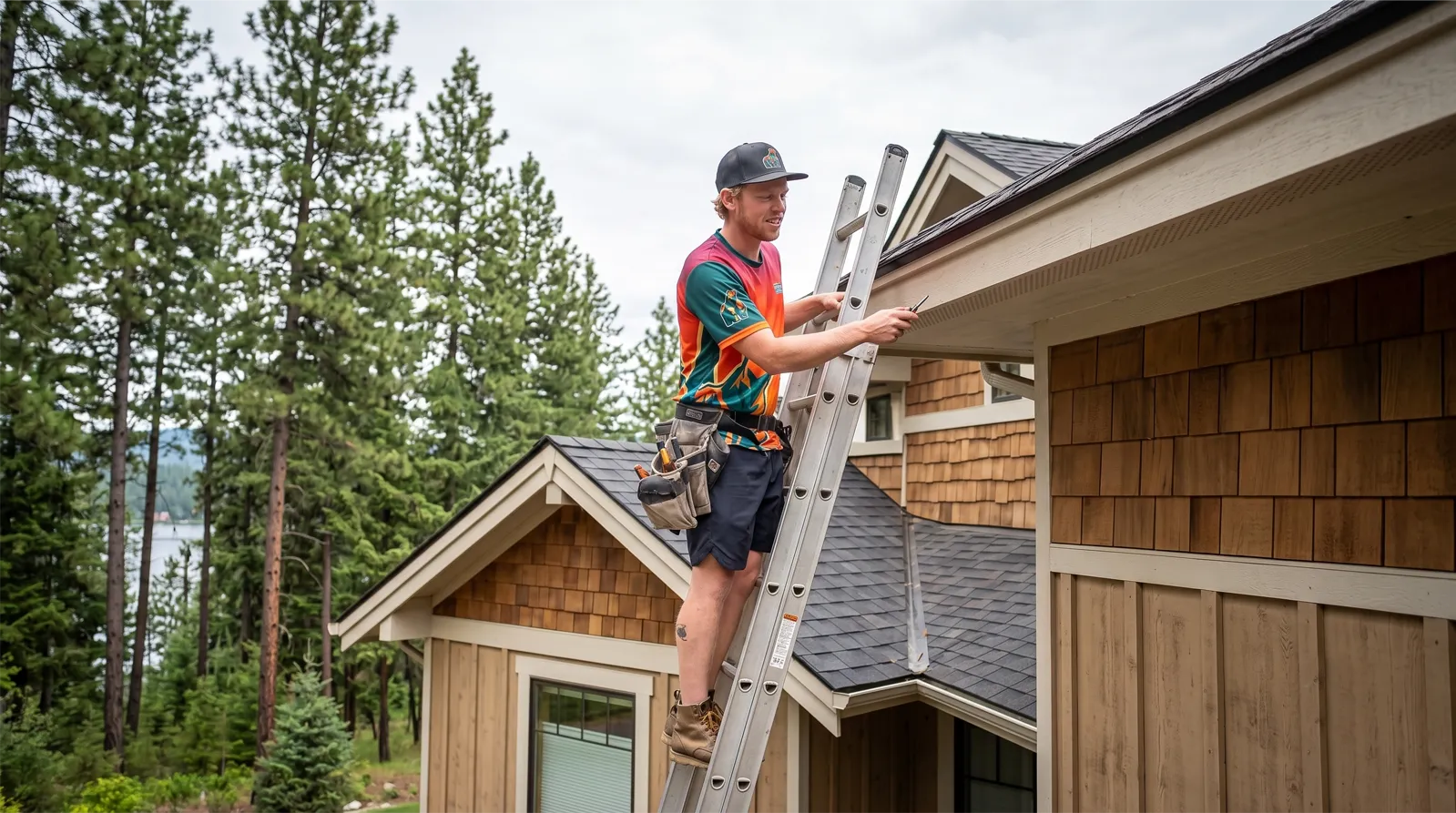
At a Glance: Why Roof Ventilation Matters
Roof ventilation helps protect the roof system by moving air through the attic so heat and moisture do not build up under the roof deck. In North Idaho, good attic ventilation is especially important because homes deal with snow, ice dams, freeze-thaw cycles, attic frost, summer heat, condensation, and moisture from everyday living.
A healthy roof ventilation strategy usually requires three things working together:
- Air sealing to stop warm, moist indoor air from leaking into the attic.
- Insulation to slow heat transfer from the living space into the attic.
- Ventilation to move outdoor air through the attic and help control roof deck temperature and moisture.
ENERGY STAR explains that attic air sealing can stop major air leaks, help maintain indoor comfort, and, when combined with insulation, help reduce dangerous winter ice dam formation. ENERGY STAR also notes that winter attic ventilation helps keep the attic cold, reducing the potential for snow to melt and refreeze at roof edges as ice dams.
For homeowners in Coeur d’Alene, Post Falls, Sandpoint, Hayden, Rathdrum, Athol, Spirit Lake, and nearby North Idaho communities, roof ventilation should be reviewed during roof replacement, roof repair, winter leak diagnosis, and attic moisture inspections.
For related SkyRight resources, visit the North Idaho roof maintenance calendar, winter roof protection guide, roof repair vs replacement guide, roof replacement cost guide, and residential roofing services in Coeur d’Alene.
Quick Answer: What Is the Best Roof Ventilation System?
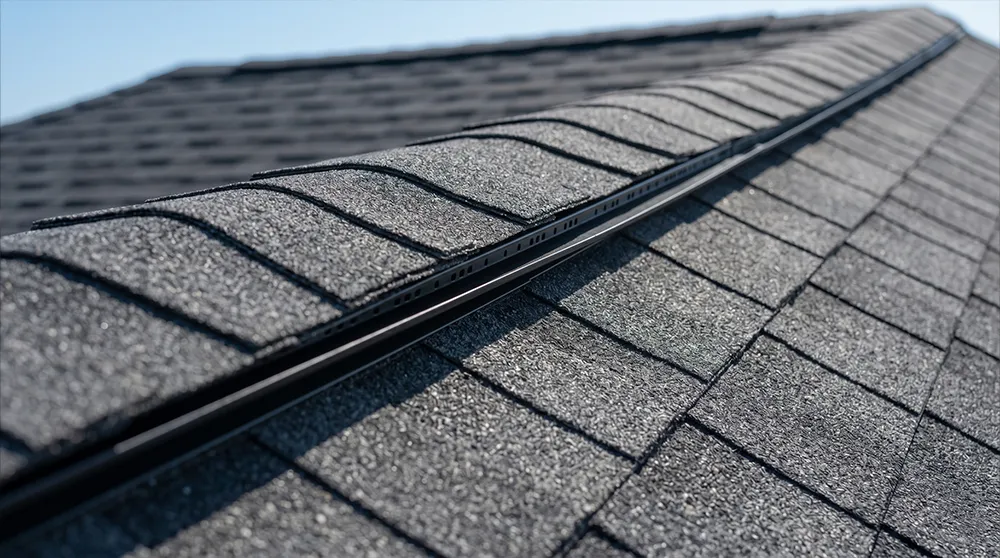
The best roof ventilation system is usually a balanced intake-and-exhaust system. Intake vents bring air into the attic near the lower roof edge, usually through soffits or eaves. Exhaust vents let air exit near the top of the roof, often through ridge vents or other high roof vents.
|
Ventilation Component |
What It Does |
Why It Matters |
|
Intake ventilation |
Brings outdoor air into the attic from low areas |
Feeds the system with fresh air |
|
Exhaust ventilation |
Lets attic air leave near the ridge or upper roof |
Removes heat and moisture |
|
Air sealing |
Blocks indoor air from leaking into the attic |
Reduces condensation, heat loss, and ice dam risk |
|
Insulation |
Slows heat transfer from the home to the attic |
Improves comfort and energy performance |
|
Baffles |
Keep air pathways open at eaves |
Prevent insulation from blocking airflow |
|
Roof inspection |
Confirms the roof system is working together |
Finds hidden moisture, blocked vents, or roof damage |
Best rule: ventilation alone will not fix every roof problem. A cold-climate attic needs balanced ventilation, proper insulation, and strong air sealing.
What Roof Ventilation Does
Roof ventilation helps manage attic temperature and moisture. In a vented attic, outside air enters through intake vents, moves through the attic space, and exits through exhaust vents.
A good ventilation system helps:
- reduce attic heat buildup in summer;
- reduce winter roof deck warming;
- reduce condensation risk;
- reduce attic frost risk;
- support shingle performance;
- reduce ice dam risk;
- protect insulation from moisture;
- protect roof decking from long-term dampness;
- improve comfort in rooms below the attic.
The International Residential Code section R806.2 describes minimum net free ventilation area requirements for enclosed attics, with a general 1/150 minimum and a 1/300 exception when specific conditions are met.
That does not mean every home can be solved with a simple formula. North Idaho homes may have blocked soffits, old gable vents, complex rooflines, vaulted ceilings, attic air leaks, bathroom fans venting into the attic, or insulation covering intake vents.
Why Attic Moisture Happens
Attic moisture often starts inside the home.
Warm indoor air can carry moisture from:
- cooking;
- showers;
- laundry;
- humidifiers;
- indoor plants;
- crawl spaces;
- bathroom fans;
- unsealed ceiling penetrations;
- attic hatches;
- recessed lights;
- duct leaks.
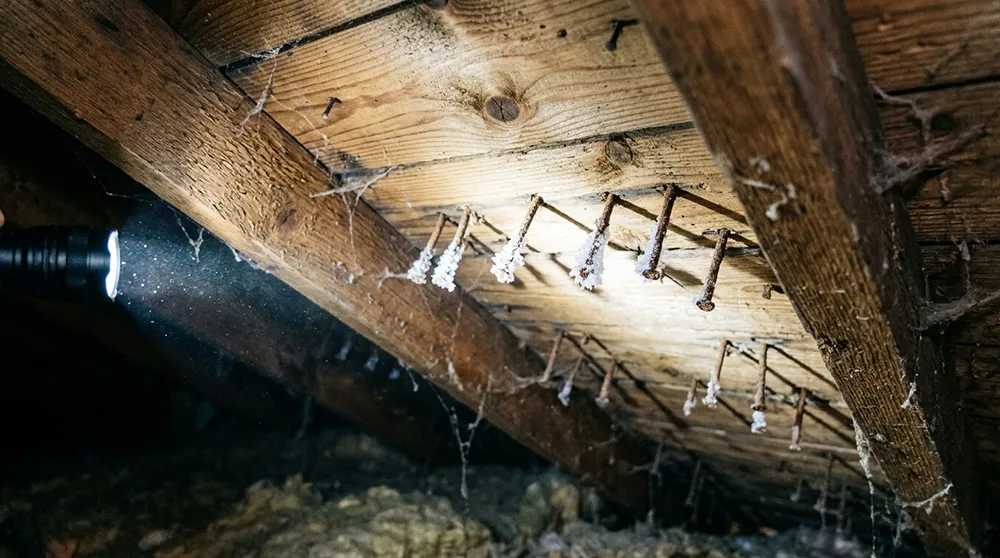
When warm, moist air leaks into a cold attic, moisture can condense on cold surfaces such as roof decking, nails, rafters, vents, or insulation. In winter, this can show up as frost. During thaw cycles, that frost can melt and look like a roof leak.
Common Attic Moisture Symptoms
|
Symptom |
Possible Cause |
|
Frost on roofing nails |
Warm moist air entering cold attic |
|
Wet insulation |
Condensation, roof leak, or bathroom fan issue |
|
Dark stains on roof decking |
Long-term moisture or ventilation problem |
|
Musty attic odor |
Damp insulation or poor airflow |
|
Ceiling stains after cold weather |
Condensation melt or roof leak |
|
Ice dams |
Heat loss, poor air sealing, weak ventilation, or drainage issues |
|
Mold-like staining |
Persistent moisture problem |
|
Rusted nail tips |
Repeated condensation cycles |
A roof leak and an attic condensation problem can look similar from inside the home. That is why inspection matters before assuming the roof surface has failed.
Is your roof actually leaking, or is it hidden attic condensation?
Winter attic frost can melt during thaws and look exactly like a roof failure, ruining drywall and insulation. Don’t pay for a roof repair you don’t need. Let our team perform an in-depth attic inspection to solve the root moisture cause.
Intake Ventilation vs Exhaust Ventilation
A balanced ventilation system needs both intake and exhaust.
Intake Ventilation
Intake vents are usually located at the lower part of the attic system. They bring outside air into the attic.
Common intake vents include:
- soffit vents;
- continuous soffit vents;
- individual eave vents;
- fascia vents;
- low roof intake vents when soffits are not available.
Exhaust Ventilation
Exhaust vents are usually located near the top of the roof. They allow attic air to leave.
Common exhaust vents include:
- ridge vents;
- box vents;
- static roof vents;
- gable vents;
- turbine vents;
- powered attic fans;
- solar-powered attic fans.
Why Balance Matters
A roof with exhaust but weak intake can pull air from the living space instead of from soffits. That can increase heat loss, moisture movement, and ice dam risk.
A roof with intake but weak exhaust may not move enough air out of the attic.
|
Ventilation Problem |
What Can Happen |
|
Too much exhaust, not enough intake |
Pulls conditioned air from the home into the attic |
|
Intake blocked by insulation |
Airflow stops at the eaves |
|
Exhaust vents too low |
Hot, moist air may remain near the ridge |
|
Mixed vent types fighting each other |
Air may short-circuit instead of ventilating the full attic |
|
Bathroom fans venting into attic |
Adds moisture directly into the attic |
|
No baffles at eaves |
Insulation blocks airflow from soffits |
The goal is not simply “more vents.” The goal is controlled airflow through the correct pathway.
Common Roof Vent Types
Different vent types solve different problems.
|
Vent Type |
Intake or Exhaust |
Best Use |
Watchouts |
|
Continuous soffit vent |
Intake |
Strong low-level airflow along eaves |
Must not be blocked by insulation |
|
Individual soffit vents |
Intake |
Homes without continuous soffit openings |
May not provide enough intake if limited |
|
Ridge vent |
Exhaust |
Balanced systems with adequate soffit intake |
Poor performance if intake is blocked |
|
Box vents |
Exhaust |
Roofs where ridge vent is not practical |
Need proper number and placement |
|
Gable vents |
Exhaust or cross ventilation |
Older attic designs |
Can conflict with ridge/soffit systems if not planned |
|
Turbine vents |
Exhaust |
Wind-assisted ventilation |
Moving parts and placement matter |
|
Powered attic fans |
Exhaust |
Specific hot-attic situations |
Can pull conditioned air from home if intake is weak |
|
Solar attic fans |
Exhaust |
Supplemental ventilation |
Still needs adequate intake |
|
Baffles |
Air pathway protection |
Keeps soffit air channels open |
Must be installed correctly |
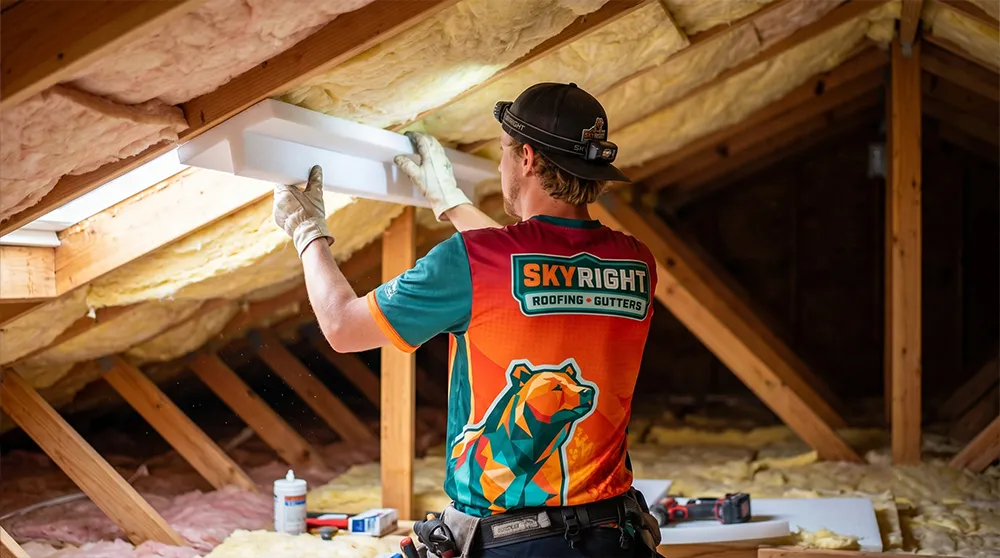
For most modern vented attic systems, a soffit intake + ridge exhaust design is often preferred when the roof shape allows it.
How Much Attic Ventilation Is Needed?
Ventilation is measured by net free area, often called NFA. Net free area means the actual open area through which air can pass after screens, louvers, and vent material are accounted for.
The International Residential Code states that the minimum net free ventilating area is generally 1/150 of the area of the ventilated space, with a 1/300 exception when code conditions are met. The Asphalt Roofing Manufacturers Association explains a practical shortcut for the 1/150 calculation: attic floor square footage divided by 2 gives the approximate square inches of intake NFA and exhaust NFA needed; for the 1/300 exception, attic floor square footage divided by 4 gives each side.
Example Calculation
|
Attic Floor Area |
1/150 Shortcut |
1/300 Shortcut |
|
1,200 sq. ft. |
About 600 sq. in. intake + 600 sq. in. exhaust |
About 300 sq. in. intake + 300 sq. in. exhaust |
|
1,600 sq. ft. |
About 800 sq. in. intake + 800 sq. in. exhaust |
About 400 sq. in. intake + 400 sq. in. exhaust |
|
2,000 sq. ft. |
About 1,000 sq. in. intake + 1,000 sq. in. exhaust |
About 500 sq. in. intake + 500 sq. in. exhaust |
Important: This is a planning explanation only. Actual ventilation design should follow applicable code, manufacturer requirements, roof design, attic layout, insulation conditions, and local inspection standards.
Ventilation, Insulation, and Air Sealing Work Together
Many homeowners think attic ventilation is only about adding roof vents. That is incomplete.
A durable attic system requires:
- Air sealing to stop indoor air leaks.
- Insulation to slow heat transfer.
- Ventilation to remove moisture and help keep the roof deck closer to outdoor temperature.
The Building America Solution Center describes proper attic air sealing, insulation, and ventilation as a combined strategy for reducing ice dam formation in cold snowy climates. ENERGY STAR also identifies attic sealing and proper insulation as key parts of reducing energy waste and improving comfort.
Why Air Sealing Comes First
If warm indoor air leaks into the attic, adding more ventilation may not solve the root problem. The attic may still receive too much heat and moisture from the living space.
Common attic air leak locations include:
- attic hatches;
- recessed lights;
- plumbing penetrations;
- wiring holes;
- bathroom fans;
- duct chases;
- chimney chases;
- top plates;
- dropped ceilings;
- knee walls;
- open soffits above cabinets;
- gaps around vent pipes.
A home with poor air sealing can have roof moisture problems even if it has vents.
Ice Dams and Attic Heat Loss
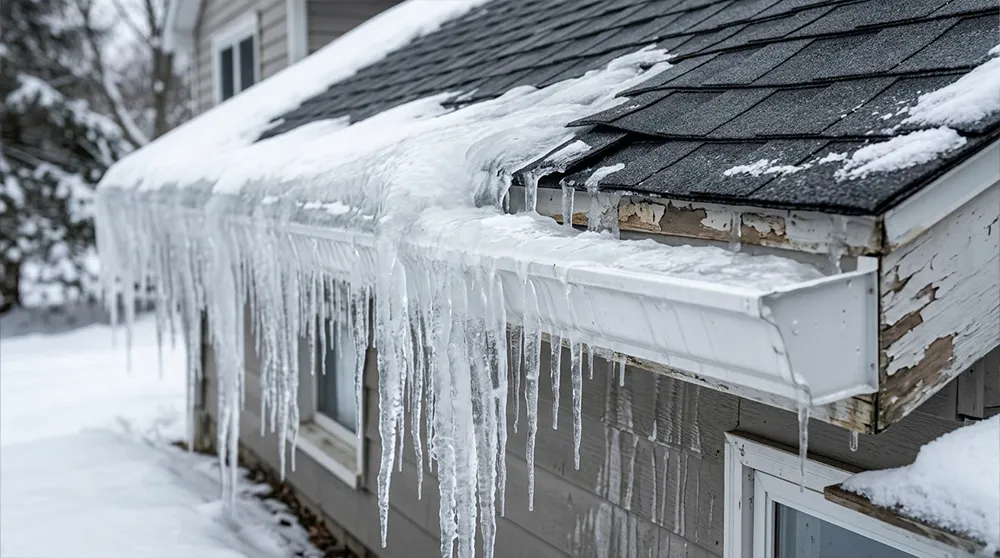
Ice dams form when snow melts on a warmer upper roof area and refreezes near colder eaves. Once ice blocks drainage, water can back up under shingles and leak into the home.
In North Idaho, ice dams are more likely when:
- attic air sealing is weak;
- insulation is thin or uneven;
- soffit vents are blocked;
- bathroom fans vent into the attic;
- gutters are clogged;
- roof valleys hold snow;
- roof edges lack proper protection;
- the home has complex dormers or rooflines;
- warm air leaks through attic penetrations.
ENERGY STAR explains that winter attic ventilation helps keep the attic cold, while insulation and air sealing help block warm, moist air from entering the attic and reduce ice dam risk.
For winter-specific roof protection, read SkyRight’s winter roof protection guide.
Stop fighting icicles every winter—fix the airflow beneath your roof
Adding more vents won’t help if your insulation is blocking the soffits or your ceiling plane leaks warm air. We evaluate your attic air sealing, insulation levels, and intake balance together to keep your roof cold and ice-free.
Summer Heat and Energy Efficiency
Ventilation is also important in summer. A poorly ventilated attic can trap heat under the roof deck, making rooms below the attic less comfortable and increasing cooling demand.
A good attic system can help:
- reduce extreme attic heat buildup;
- improve comfort in upstairs rooms;
- reduce stress on roofing materials;
- improve the value of insulation;
- reduce moisture problems in shoulder seasons;
- support overall home energy performance.
However, ventilation is not a substitute for insulation or air sealing. If the attic floor is poorly insulated, heat can still move between the attic and living space. If the ceiling plane is leaky, conditioned air can escape into the attic.
Energy Efficiency Priorities
|
Priority |
Why It Matters |
|
Seal air leaks |
Stops conditioned air from escaping into attic |
|
Add or correct insulation |
Helps maintain indoor comfort |
|
Keep soffit vents open |
Allows intake airflow |
|
Use proper exhaust vents |
Allows hot attic air to leave |
|
Vent bathroom fans outdoors |
Prevents moisture loading in attic |
|
Review ductwork |
Leaky attic ducts waste energy |
|
Inspect roof during replacement |
Best time to correct ventilation details |
The best energy improvement is usually not “just add a roof fan.” It is a complete attic performance review.
Warning Signs of Poor Roof Ventilation
Schedule a roof or attic inspection if you notice:
- ice dams every winter;
- large icicles along roof edges;
- attic frost;
- wet insulation;
- musty attic smell;
- mold-like stains on roof decking;
- rusted nail tips;
- hot upstairs rooms in summer;
- high energy bills;
- bathroom fans venting into the attic;
- soffit vents covered by insulation;
- roof shingles aging unevenly;
- curling or blistering shingles;
- repeated ceiling stains after freeze-thaw cycles;
- roof leaks that appear only during thaw.
Poor ventilation can shorten roof life and create moisture issues that are easy to miss until damage is visible inside the home.
For seasonal inspection planning, visit SkyRight’s roof maintenance and inspection calendar.
Ventilation and Roof Replacement
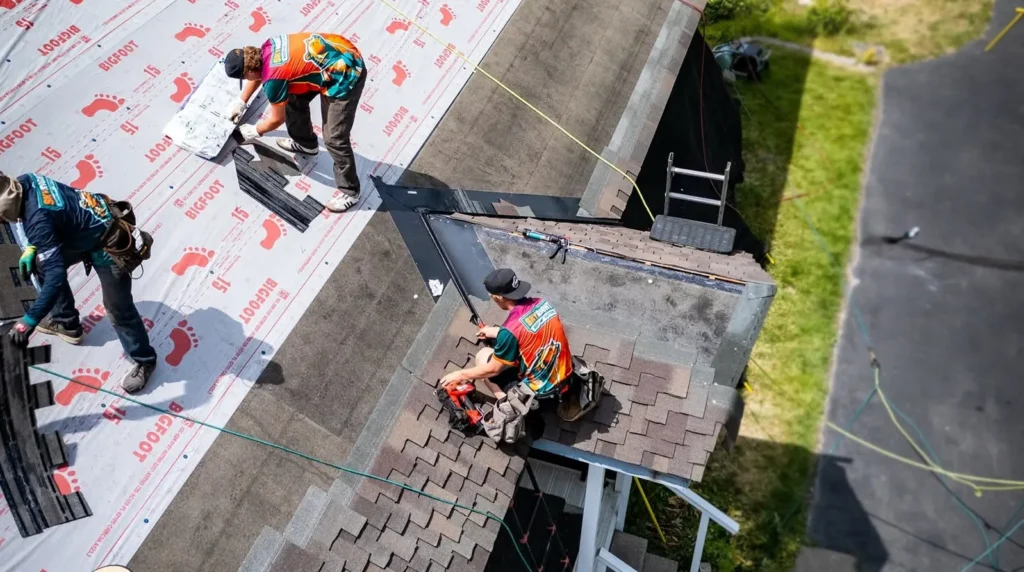
Roof replacement is one of the best times to evaluate ventilation because the roofing system is already being opened, inspected, and rebuilt.
During roof replacement, a contractor should evaluate:
- existing intake ventilation;
- existing exhaust ventilation;
- blocked soffits;
- ridge vent suitability;
- old box vents;
- gable vent conflicts;
- attic moisture signs;
- decking stains;
- rotten sheathing;
- insulation blocking airflow;
- bathroom fan termination;
- ice dam history;
- manufacturer ventilation requirements.
A new roof installed over a poorly ventilated attic may still have problems. The shingles are new, but the attic conditions remain the same.
For replacement planning, read SkyRight’s roof replacement cost guide.
Ventilation and Roof Repair
Ventilation should also be considered during roof repair, especially when the home has repeated leaks, attic moisture, ice dams, or winter ceiling stains.
A repair inspection should ask:
- Is the leak from the roof surface or attic condensation?
- Are pipe boots or flashing actually leaking?
- Is moisture coming from bathroom fans?
- Are there frost marks on nails or decking?
- Are soffit vents blocked?
- Is insulation preventing airflow?
- Is the roof deck soft or stained?
- Are ice dams recurring in the same area?
For leak diagnosis, visit SkyRight’s roof repair vs replacement guide.
Asphalt Shingle Roof Ventilation
Asphalt shingle roofs need proper attic ventilation because trapped heat and moisture can affect roof performance.
Ventilation Issues on Asphalt Roofs
|
Issue |
Why It Matters |
|
Poor intake ventilation |
Airflow cannot start at the eaves |
|
Blocked soffits |
Ridge vents may not work properly |
|
Too many exhaust types |
Air can short-circuit between vents |
|
Bathroom fans into attic |
Adds moisture under roof deck |
|
Attic heat buildup |
Can contribute to shingle aging |
|
Winter attic warmth |
Can contribute to ice dams |
|
Condensation |
Can damage decking and insulation |
For asphalt roof material planning, visit SkyRight’s asphalt shingle and residential roofing materials guide.
Metal Roof Ventilation
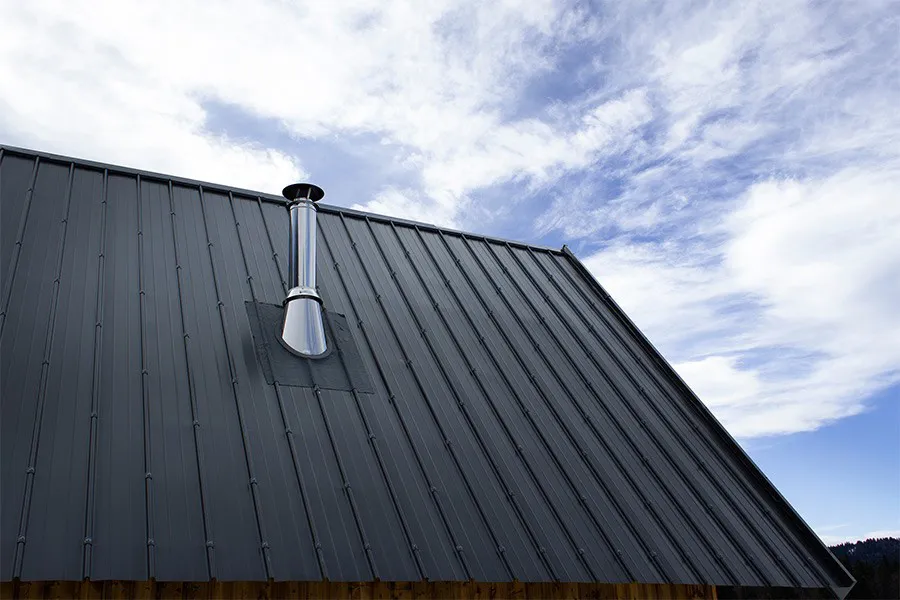
Metal roofing also needs good ventilation and moisture control. A metal roof can shed snow well, but it does not automatically solve attic moisture, condensation, or ice dam risk.
Metal Roof Ventilation Considerations
- condensation control matters;
- attic air sealing still matters;
- insulation should be reviewed;
- ridge details must be compatible with the metal system;
- soffit intake should be open and balanced;
- penetrations must be detailed carefully;
- snow movement and gutters must be planned;
- ventilation is still needed in vented attic assemblies.
For more detail on metal roofing, read SkyRight’s metal roofing guide or visit the metal roofing services page.
Flat and Low-Slope Roof Ventilation Considerations
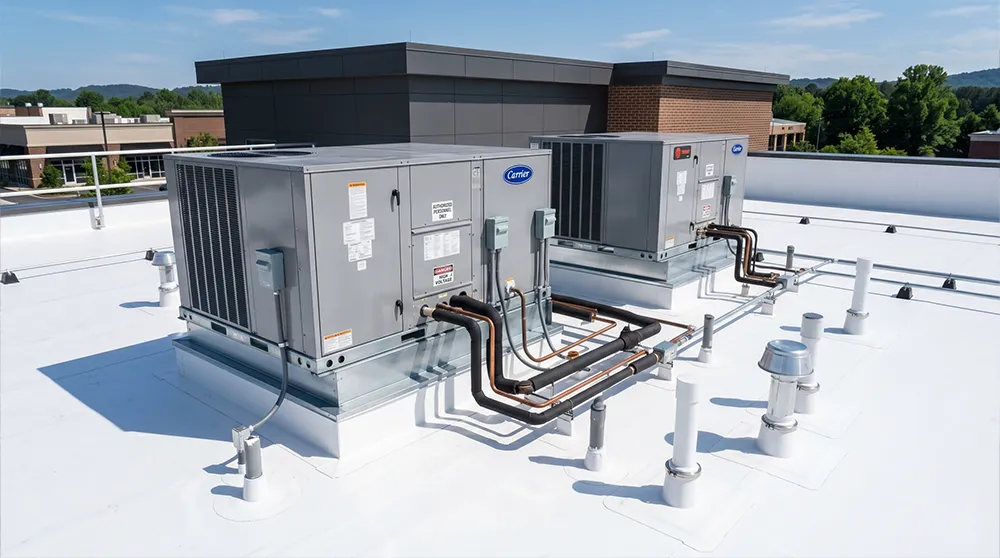
Flat and low-slope roofs are different from standard vented attic roofs. Some commercial or low-slope roof assemblies may rely more on insulation placement, air barriers, vapor control, drainage, and membrane detailing than traditional soffit-to-ridge ventilation.
Key considerations include:
- whether the roof assembly is vented or unvented;
- insulation location;
- vapor control;
- condensation risk;
- roof membrane type;
- deck type;
- drainage;
- rooftop equipment;
- interior humidity;
- commercial occupancy use.
Commercial flat roofs should be evaluated as complete assemblies, not treated like a simple residential attic.
For commercial roof planning, visit SkyRight’s commercial roofing services in Coeur d’Alene and commercial flat roofing systems guide.
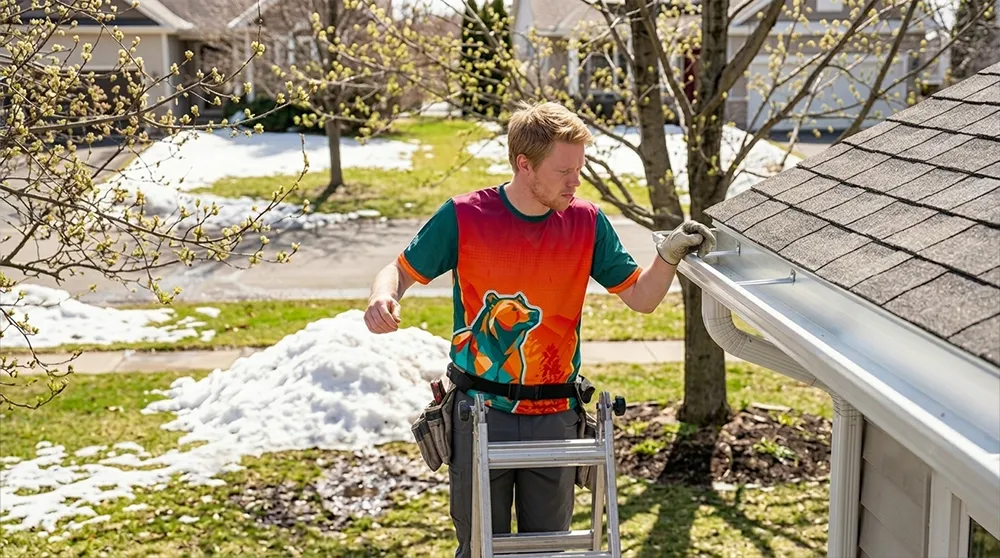
Gutter and Drainage Problems That Look Like Ventilation Problems
Not every winter moisture problem is caused by ventilation. Gutters and drainage can also contribute to roof-edge ice, fascia damage, and water intrusion.
Drainage Issues to Check
|
Symptom |
Possible Drainage Issue |
|
Ice at gutters |
Clogged or frozen gutters |
|
Roof-edge leaks |
Water backing up at eaves |
|
Fascia stains |
Overflowing gutters |
|
Water near foundation |
Downspouts discharging too close |
|
Ice below downspouts |
Downspouts blocked or buried in snow |
|
Overflow during rain |
Gutter slope or capacity issue |
|
Valley ice |
Debris slowing drainage |
A roof ventilation inspection should not ignore gutters. In North Idaho, attic heat, blocked drainage, and ice can work together.
SkyRight provides gutter services and gutter services in Coeur d’Alene for homes that need drainage improvements.
Roof Ventilation Cost Planning
Ventilation costs vary depending on whether the work is part of a roof replacement, a standalone ventilation upgrade, attic air sealing, insulation correction, or leak investigation.
For 2026 planning, roof ventilation installation or upgrade costs are commonly estimated from a few hundred dollars for simple vent work to several thousand dollars for more involved standalone projects, depending on roof size, access, roof type, and whether ventilation is added during replacement. Angi lists ridge vent installation around $300–$650 for many projects, while broader 2026 roof ventilation guides place many standalone ventilation upgrades around $500–$1,200 and some projects up to $2,000 or more.
Planning Ranges
|
Project Type |
General Planning Range |
Notes |
|
Basic roof ventilation inspection |
$100–$400 |
Depends on roof access, report needs, and inspection scope |
|
Add or replace individual roof vents |
$150–$400+ per vent |
Depends on roof type, flashing, access, and quantity |
|
Ridge vent installation or replacement |
$300–$900+ |
Lower when included with roof replacement; higher as standalone work |
|
Standalone ventilation upgrade |
$500–$2,000+ |
Depends on intake/exhaust balance and roof access |
|
Air sealing and insulation work |
$1,500–$5,000+ |
Depends on attic size, insulation type, access, and prep |
|
Complex attic moisture correction |
$3,000–$10,000+ |
May involve ventilation, air sealing, insulation, mold remediation, or duct corrections |
Pricing disclaimer: These are general planning ranges only, not a SkyRight quote. Exact pricing depends on roof design, attic access, vent type, roof pitch, insulation condition, air sealing needs, moisture damage, local code requirements, and whether work is bundled with roof replacement.
North Idaho Ventilation Scenarios
These examples are planning scenarios, not quotes.
Scenario 1: Coeur d’Alene Home With Winter Ice Dams
Home profile: Asphalt shingle roof, large icicles, water stain near an exterior wall after thaw cycles.
Likely issue: Attic heat loss, blocked soffit intake, weak insulation, gutter ice, or roof-edge protection problem.
Best next step: Inspect attic air sealing, insulation, soffit intake, ridge exhaust, gutters, and roof-edge condition.
Why: Ice dams are usually a system problem, not just a shingle problem.
Scenario 2: Post Falls Home With Hot Upstairs Rooms
Home profile: Upstairs rooms are uncomfortable in summer, attic feels extremely hot, roof has limited visible intake ventilation.
Likely issue: Poor attic airflow, inadequate insulation, or air leakage between attic and living space.
Best next step: Review insulation depth, attic air sealing, intake vents, exhaust vents, and whether bathroom fans or ducts are contributing to heat and moisture problems.
Why: More roof exhaust without intake may not solve the comfort problem.
Scenario 3: Sandpoint or Rural North Idaho Home With Attic Frost
Home profile: Frost on roof nails in winter, damp insulation during thaw, no obvious roof leak.
Likely issue: Warm moist indoor air leaking into a cold attic and condensing.
Best next step: Inspect attic air leaks, bathroom fan termination, insulation coverage, baffles, soffit intake, and exhaust ventilation.
Why: A roof repair may not solve condensation if the moisture source is inside the home.
Scenario 4: Hayden or Rathdrum Home Getting a Roof Replacement
Home profile: Older asphalt roof, homeowner is replacing shingles and wants to avoid future ice dams.
Likely issue: Roof replacement is the right time to correct ventilation.
Best next step: Include ventilation review in the replacement scope: intake, exhaust, baffles, ridge vent, old vent removal, flashing, and attic moisture signs.
Why: New shingles should not be installed over unresolved ventilation and moisture problems.
Scenario 5: Metal Roof With Condensation Concerns
Home profile: Metal roof or metal roof upgrade, attic moisture concerns, winter frost, or poor ventilation history.
Likely issue: Moisture control and ventilation need to be planned with the metal roof system.
Best next step: Review attic air sealing, insulation, ventilation, roof deck condition, underlayment, and condensation control.
Why: Metal roofing can be durable, but attic moisture still needs to be controlled.
Ventilation Mistakes to Avoid
Avoid these common mistakes:
- adding exhaust vents without intake;
- mixing ridge vents, box vents, and gable vents without a plan;
- covering soffit vents with insulation;
- venting bathroom fans into the attic;
- assuming attic frost is always a roof leak;
- using powered fans without checking intake;
- ignoring attic air sealing;
- ignoring insulation gaps;
- replacing shingles without checking ventilation;
- assuming metal roofing does not need ventilation;
- ignoring gutters when diagnosing ice dams;
- using ventilation to compensate for roof leaks.
Good ventilation design is controlled, balanced, and matched to the home.
What a Roof Ventilation Inspection Should Include
A ventilation inspection should review both the roof and the attic when safe and accessible.
Exterior Roof Review
- ridge vent condition;
- box vent placement;
- gable vents;
- roof penetrations;
- shingle condition;
- roof deck sagging;
- ice dam evidence;
- gutter condition;
- roof valleys;
- flashing and pipe boots.
Attic Review
- soffit airflow;
- insulation blocking vents;
- baffles;
- attic hatch sealing;
- bathroom fan termination;
- duct leakage;
- frost marks;
- wet insulation;
- roof deck stains;
- intake and exhaust balance;
- insulation coverage;
- signs of condensation.
Homeowner Questions
- Do you see ice dams every winter?
- Are upstairs rooms hot in summer?
- Do you notice musty attic odors?
- Have there been repeated ceiling stains?
- Were vents added during a previous roof replacement?
- Are bathroom fans vented outdoors?
- Has insulation been added recently?
- Are soffits covered or painted shut?
A good inspection should explain whether the issue is roof damage, condensation, ventilation imbalance, drainage, or a combination.
How to Compare Ventilation Recommendations
If two contractors give different recommendations, compare the full logic.
Recommendation | Good Question to Ask |
“Add ridge vent” | Do I have enough soffit intake for that ridge vent to work? |
“Add box vents” | Where will air enter the attic? |
“Install a powered fan” | Will it pull air from the attic or from the living space? |
“Add insulation” | Has air sealing been completed first? |
“Replace the roof” | Is the roof leaking, or is this condensation? |
“Clean gutters” | Are attic heat and ventilation also contributing to ice dams? |
“Seal the attic” | How will ventilation be maintained after sealing and insulation? |
A strong contractor should explain the system, not only the product.
Final Recommendation: Treat the Attic and Roof as One System
Roof ventilation is not just a comfort upgrade. It is part of roof durability, moisture control, ice dam prevention, and energy efficiency.
For North Idaho homes, the best approach is:
- inspect attic moisture signs;
- keep soffit intake open;
- use proper exhaust ventilation;
- seal attic air leaks;
- maintain enough insulation;
- vent bathroom fans outdoors;
- clean gutters before winter;
- check ventilation during roof replacement;
- investigate ceiling stains before assuming roof failure;
- correct the system, not just the symptom.
A roof can only perform as well as the attic below it. If heat and moisture are trapped under the roof deck, shingles, metal panels, flashing, insulation, and decking can all be affected.
Ready to evaluate your roof and attic ventilation? Schedule a roof inspection with SkyRight.
Ready to protect your home with a perfectly balanced ventilation system?
Whether you’re planning a full roof replacement or trying to lower your summer energy bills, a high-performing roof requires a healthy attic ecosystem. Partner with North Idaho’s trusted experts for a thorough multi-point inspection.
FAQ: Roof Ventilation, Attic Moisture & Energy Efficiency
What does roof ventilation do?
Roof ventilation moves air through the attic to help control heat and moisture. It can reduce attic heat buildup in summer, reduce condensation risk in winter, and help lower the chance of ice dams when combined with air sealing and insulation.
What is the best type of roof ventilation?
For many vented attic systems, the best setup is balanced intake and exhaust ventilation. Soffit vents bring air in near the lower roof edge, while ridge vents or other high vents let air escape near the top.
How do I know if my attic has poor ventilation?
Common signs include attic frost, wet insulation, musty odors, mold-like stains on roof decking, hot upstairs rooms, ice dams, large icicles, rusted nail tips, and ceiling stains after freeze-thaw cycles.
Can poor attic ventilation cause roof leaks?
Poor ventilation can create condensation that looks like a roof leak. It can also contribute to ice dams, which may force water under shingles. A professional inspection can determine whether water is coming from the roof surface or attic moisture.
Does adding more roof vents fix attic moisture?
Not always. Adding vents may not solve the problem if soffit intake is blocked, attic air leaks are unsealed, insulation is poor, or bathroom fans vent into the attic. Ventilation, insulation, and air sealing must work together.
What is the difference between intake and exhaust ventilation?
Intake ventilation brings outdoor air into the attic, usually through soffit or eave vents. Exhaust ventilation lets attic air leave near the top of the roof through ridge vents, box vents, or other upper vents.
Can ventilation help prevent ice dams?
Yes, but only as part of a complete system. Ice dam prevention usually requires attic air sealing, insulation, balanced ventilation, clean gutters, and proper roof-edge details.
Should attic fans be used for roof ventilation?
Attic fans can help in specific situations, but they are not always the best first choice. If intake ventilation is weak, a powered fan may pull conditioned air from the living space into the attic. The whole system should be evaluated first.
Should roof ventilation be checked during roof replacement?
Yes. Roof replacement is one of the best times to correct ventilation problems because the roof system is already being evaluated. Intake, exhaust, baffles, old vents, ridge vent options, and attic moisture signs should be reviewed.
Who provides roof ventilation inspections in Coeur d’Alene and Post Falls?
SkyRight provides roof inspections, roof ventilation review, roof repair guidance, roof replacement planning, gutter services, asphalt roofing, metal roofing, and residential roofing support for homeowners in Coeur d’Alene, Post Falls, Sandpoint, Hayden, Rathdrum, Athol, Spirit Lake, and nearby North Idaho communities.