At a Glance: Is Metal Roofing Worth It in North Idaho?
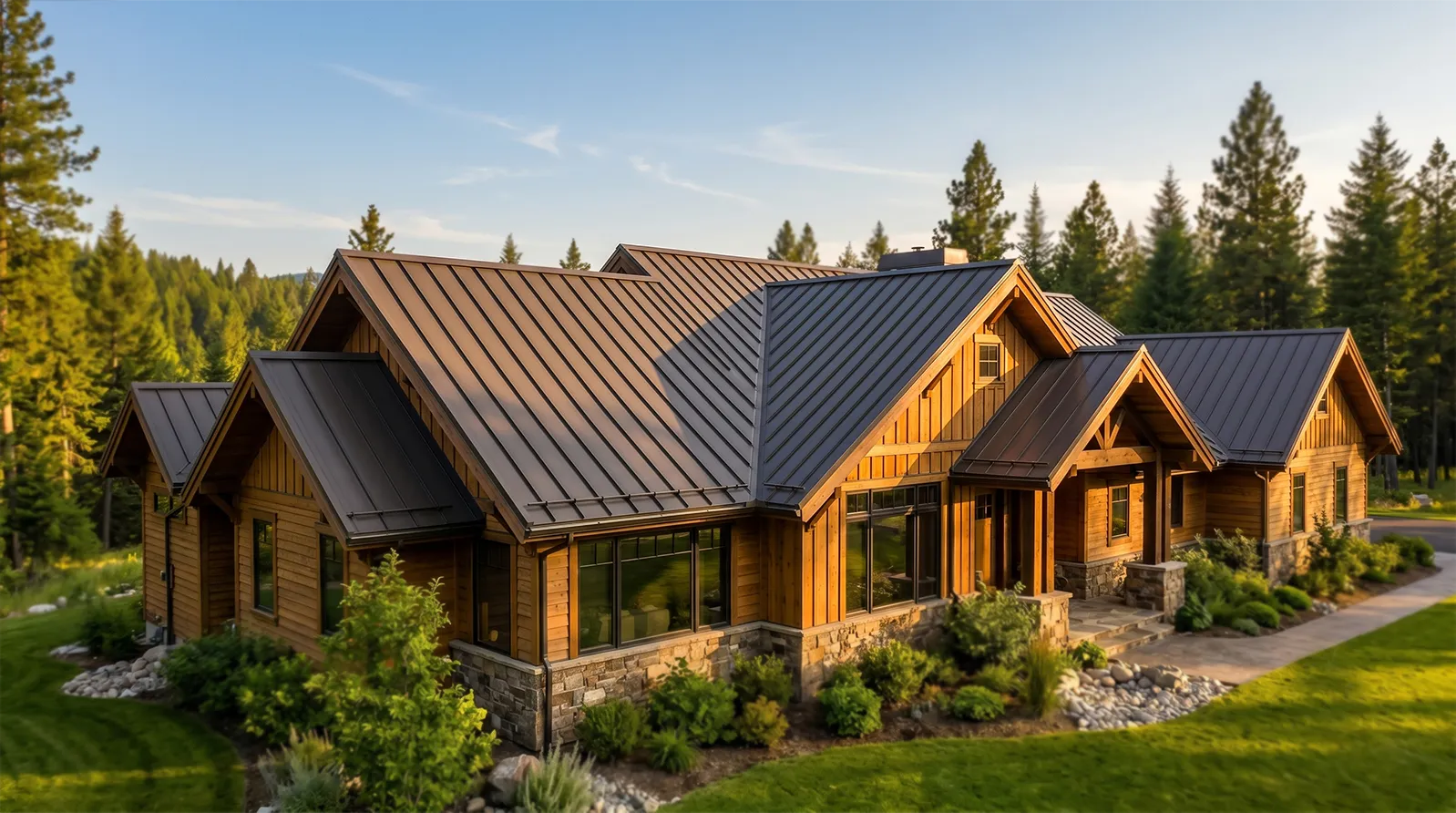
Metal roofing can be a strong choice for North Idaho homeowners who want a long-lasting roof system with strong snow-shedding potential, durable weather performance, low maintenance, and a clean modern or mountain-home look.
For planning purposes in 2026, many installed metal roofs fall around $700–$1,800+ per roofing square, depending on panel type, metal material, roof pitch, tear-off, trim, underlayment, snow-management details, fasteners, penetrations, and roof complexity. A roofing square equals 100 sq. ft. Standing seam metal roofing is often more expensive than exposed-fastener or corrugated metal systems; current 2026 market guides commonly place standing seam around $10–$18 per sq. ft. installed, while corrugated metal can often land around $7–$12 per sq. ft. installed.
Quick recommendation:
Choose metal roofing if you plan to stay in the home long-term, want better snow-shedding potential, prefer a premium material, and are comfortable with a higher upfront investment. Choose asphalt shingles if upfront budget, traditional curb appeal, and easier small repairs matter more.
SkyRight installs and evaluates metal roofing, asphalt roofing, roof replacement, roof repair, gutters, and residential roof systems across Coeur d’Alene, Post Falls, Sandpoint, Hayden, Rathdrum, Athol, Spirit Lake, and nearby North Idaho communities.
For related services, visit SkyRight’s metal roofing page, metal roofing in Coeur d’Alene, residential roofing services in Coeur d’Alene, Post Falls roofing page, or roof replacement cost guide.
Quick Answer: Metal Roofing vs Asphalt Shingles
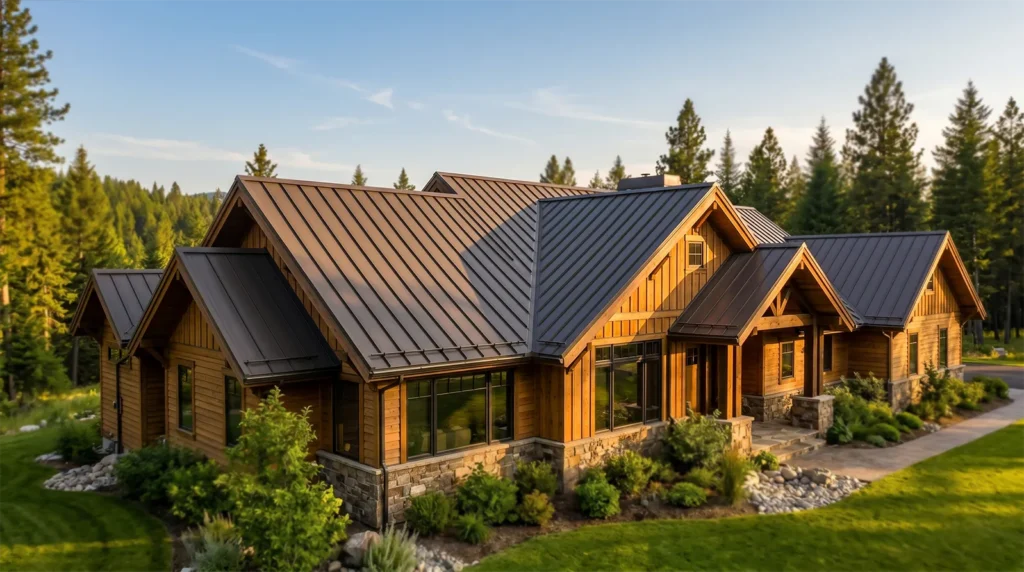
Metal roofing costs more upfront than asphalt shingles, but it can be a better long-term investment when the homeowner values durability, snow performance, lower maintenance, and long ownership.
|
Category |
Metal Roofing |
Asphalt Shingles |
|
Upfront cost |
Higher |
Lower |
|
Long-term value |
Strong for long-term ownership |
Strong for budget-conscious replacements |
|
Snow shedding |
Often better, depending on pitch and panel type |
Moderate |
|
Repair simplicity |
More specialized |
Usually easier for small repairs |
|
Appearance |
Modern, cabin, farmhouse, commercial, or premium look |
Traditional residential look |
|
Noise |
Usually controlled by proper decking and underlayment |
Familiar rain sound |
|
Maintenance |
Lower, but not maintenance-free |
Moderate maintenance |
|
Best fit |
Long-term homes, snow exposure, premium upgrades |
Most residential budgets and neighborhoods |
Metal roofs are often promoted for durability in snow, ice, hail, wind, wildfire exposure, and extreme temperatures; however, the roof must still be designed and installed correctly for the home, slope, underlayment, ventilation, snow movement, and drainage.

What Is Metal Roofing?
Metal roofing is a roofing system made from metal panels, shingles, or tiles installed over a roof deck with the proper underlayment, flashing, trim, fasteners, ventilation, and drainage details.
For North Idaho homes, the most common residential metal roof systems are:
- standing seam metal roofing;
- exposed-fastener metal panels;
- corrugated metal panels;
- metal shingles;
- steel roofing;
- aluminum roofing;
- specialty metals such as copper or zinc.
The best metal roof is not just the panel. It is the full system: deck, underlayment, flashing, valleys, penetrations, trim, fasteners, ventilation, gutters, and snow-management details.
Types of Metal Roofing
Different metal roof systems perform differently and cost differently.
|
Metal Roof Type |
Description |
Best Fit |
|
Standing seam metal roof |
Vertical panels with raised seams and concealed fasteners |
Premium residential homes, long-term ownership, snow-prone roofs |
|
Exposed-fastener metal roof |
Panels fastened through the face of the panel |
Budget-conscious metal roofing, barns, shops, some homes |
|
Corrugated metal roof |
Wavy or ribbed panel profile |
Rustic, utility, agricultural, or budget-focused projects |
|
Metal shingles |
Metal pieces designed to resemble shingles, shakes, slate, or tile |
Homeowners who want metal durability with a less panel-like look |
|
Steel roofing |
Common, durable, available in painted and coated finishes |
Most residential and light commercial projects |
|
Aluminum roofing |
Lightweight and corrosion-resistant |
Specialty use cases, sometimes coastal or weight-sensitive projects |
|
Copper or zinc roofing |
Premium architectural metals |
High-end custom homes and accents |
For many North Idaho homeowners, the main decision is between standing seam metal and exposed-fastener metal.
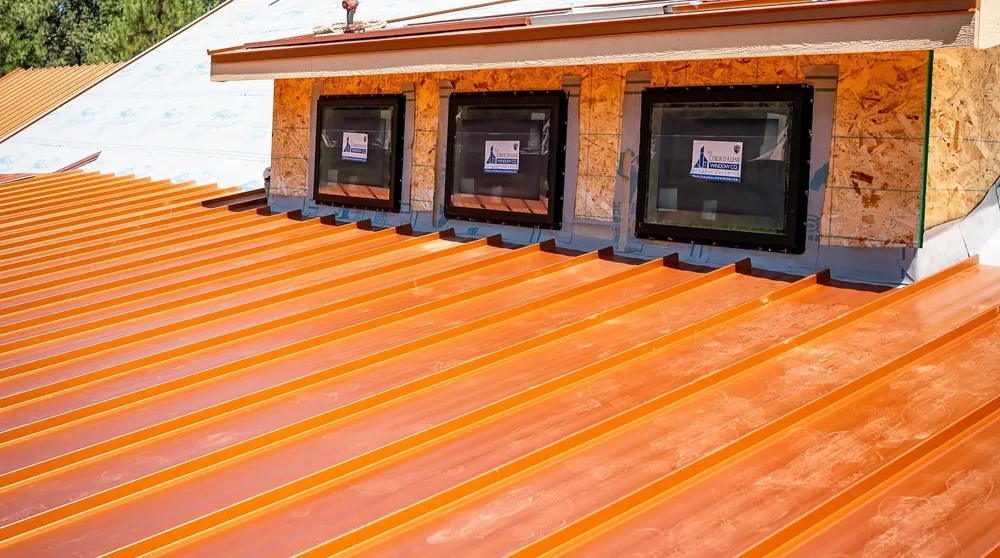
Standing Seam Metal Roofing
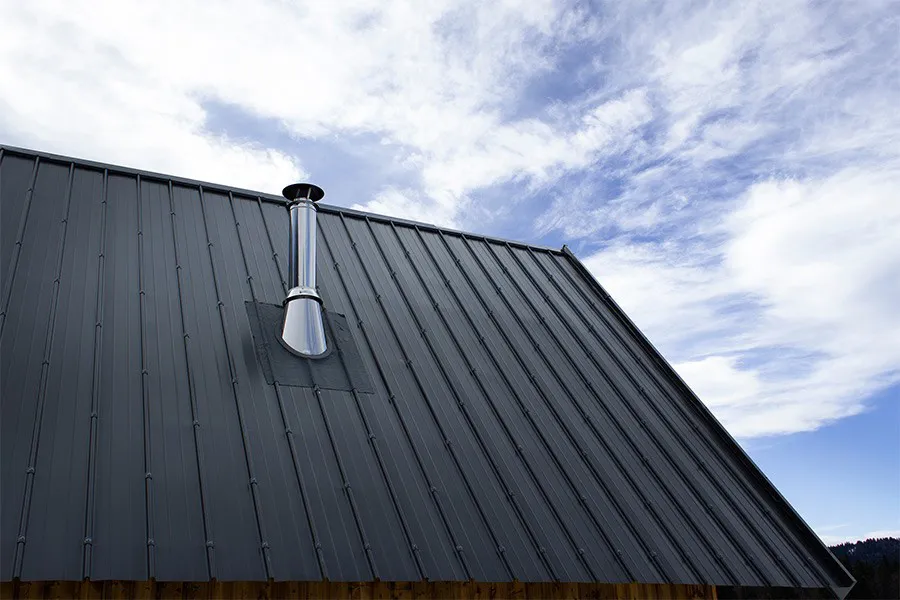
Standing seam metal roofing is often considered the premium residential metal roof option.
It uses vertical panels with raised seams. The fasteners are typically concealed, which helps reduce exposed screw maintenance and gives the roof a cleaner appearance.
Standing Seam Advantages
- premium appearance;
- concealed fasteners;
- strong snow-shedding potential;
- fewer exposed penetration points;
- long-term performance potential;
- clean lines for modern and mountain-style homes;
- strong option for visible roof slopes.
Standing Seam Considerations
- higher upfront cost;
- more specialized installation;
- detailed trim work;
- snow-slide planning near entries and walkways;
- harder small repairs than asphalt shingles;
- may not fit every home style or budget.
Standing seam is often the best metal roof choice for homeowners who want a long-term premium roof and are not choosing primarily based on the lowest installed price.
Exposed-Fastener Metal Roofing
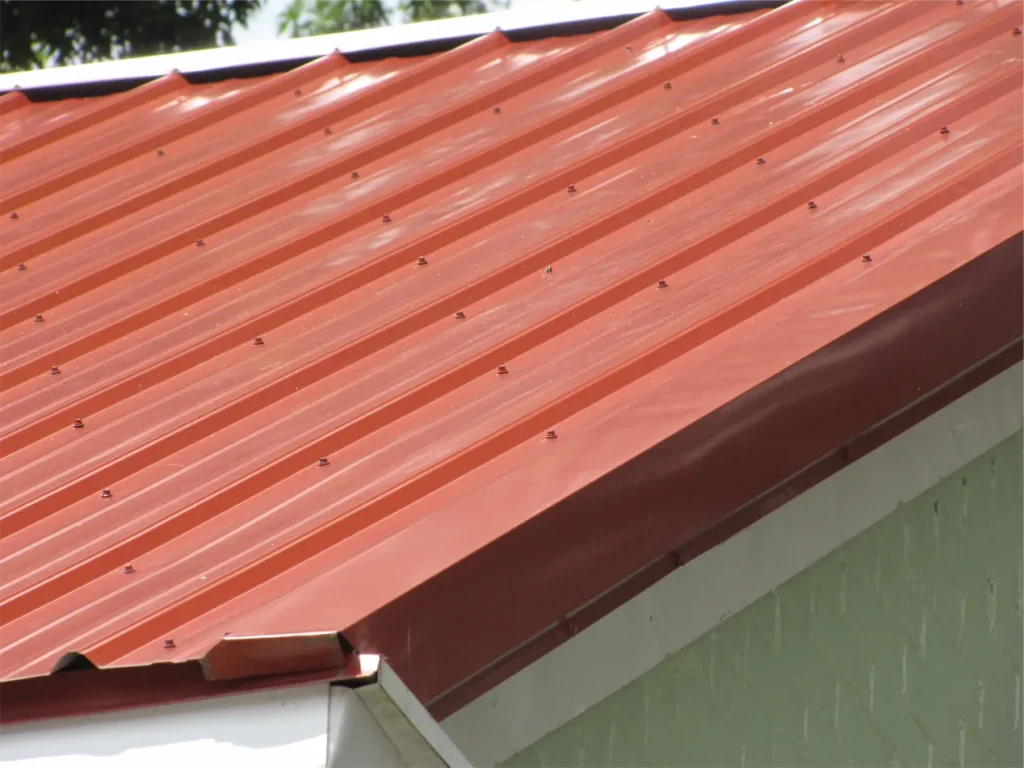
Exposed-fastener metal roofing uses screws through the metal panel face. It is usually less expensive than standing seam and is common on shops, barns, outbuildings, cabins, and budget-conscious metal projects.
Exposed-Fastener Advantages
- lower upfront cost than standing seam;
- faster installation in many cases;
- practical for shops, garages, barns, and some homes;
- strong metal-roof appearance;
- useful for simple rooflines.
Exposed-Fastener Considerations
- fasteners are exposed to weather;
- rubber washers can age;
- screws may need inspection or replacement over time;
- more visible fastener pattern;
- not as premium-looking as standing seam;
- roof penetrations and trim details must be done carefully.
An exposed-fastener system can be a good choice when budget matters and the homeowner understands the maintenance tradeoff.
Metal Roofing Cost Ranges
Metal roofing costs vary widely because “metal roof” can mean a simple exposed-fastener panel or a premium standing seam system with complex trim and snow-management details.
For planning purposes in North Idaho:
|
Metal Roof Type |
Planning Cost Per Roofing Square |
Installed Cost Per Sq. Ft. Equivalent |
Typical Use Case |
|
Corrugated or exposed-fastener metal |
$700–$1,200 per square |
$7–$12 per sq. ft. |
Shops, barns, cabins, budget metal projects |
|
Standard standing seam steel |
$1,000–$1,800 per square |
$10–$18 per sq. ft. |
Premium residential roof replacement |
|
Higher-end standing seam or complex roof |
$1,800–$3,500+ per square |
$18–$35+ per sq. ft. |
Complex homes, specialty finishes, detailed trim |
|
Aluminum metal roofing |
$1,200–$2,500+ per square |
$12–$25+ per sq. ft. |
Specialty use cases |
|
Copper or zinc roofing |
$2,000–$4,000+ per square |
$20–$40+ per sq. ft. |
High-end architectural projects |
These ranges are for planning only. Western States Metal Roofing’s 2026 cost guide lists standing seam around $10–$16 per sq. ft. installed and corrugated metal around $7–$12 per sq. ft. installed, while another 2026 standing seam guide notes that premium metals such as copper can reach much higher installed costs.
Pricing disclaimer: These are general planning ranges, not a SkyRight quote. Exact cost depends on roof size, pitch, panel type, tear-off, decking, underlayment, flashing, trim, snow guards, gutters, roof access, penetrations, color, finish, and hidden damage.
For broader replacement planning, read SkyRight’s North Idaho roof replacement cost guide.
Thinking about a metal roof but worried about the upfront cost?
A premium metal roof is a lifelong investment that eliminates the need for repeated replacements. Let us evaluate your home and provide a detailed lifecycle comparison between architectural shingles and standing seam metal.
Metal Roofing Cost for a Typical North Idaho Home
A 1,500–2,000 sq. ft. roof surface may cost very different amounts depending on the metal system.
|
Example Roof |
Possible Planning Range |
Notes |
|
Simple exposed-fastener metal roof |
$12,000–$24,000 |
Simple roofline, fewer penetrations, easier access |
|
Standard standing seam metal roof |
$18,000–$36,000 |
Common premium residential range |
|
Complex standing seam roof |
$30,000–$55,000+ |
Steep pitch, dormers, valleys, skylights, snow details |
|
Premium architectural metal roof |
$45,000+ |
Specialty metals, custom trim, complex design |
These are planning examples only. A simple roof in Post Falls may cost far less than a steep, complex, snow-exposed roof near Sandpoint or Hayden Lake.
What Affects Metal Roof Cost?
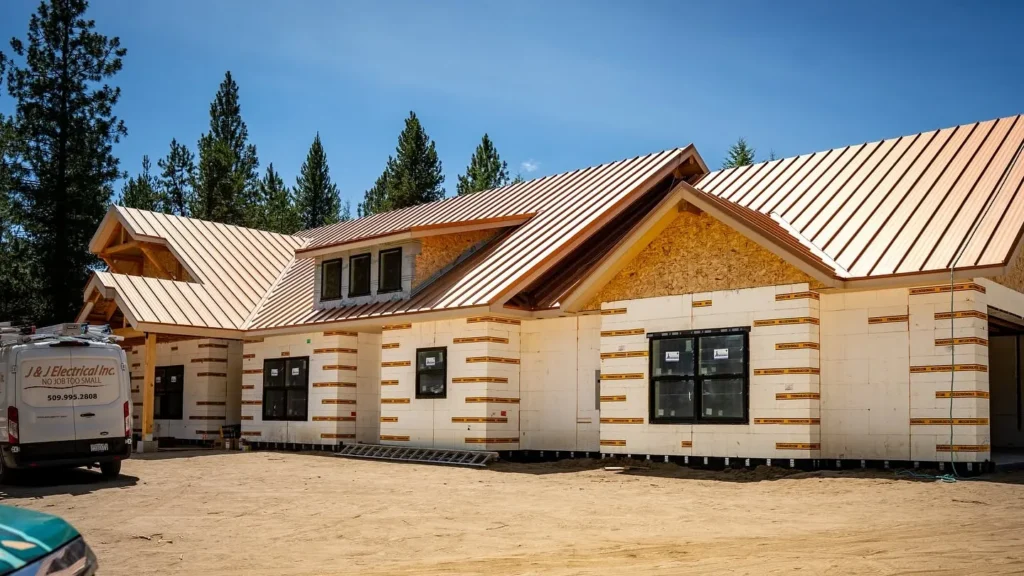
Metal roof pricing depends on the full roof system, not just the panel.
Cost Factor | Why It Matters |
Panel type | Standing seam usually costs more than exposed-fastener panels |
Metal material | Steel, aluminum, copper, and zinc have different costs |
Gauge or thickness | Heavier-gauge panels usually cost more |
Paint or finish | Premium finishes can increase material cost |
Roof pitch | Steeper roofs require more safety setup and labor |
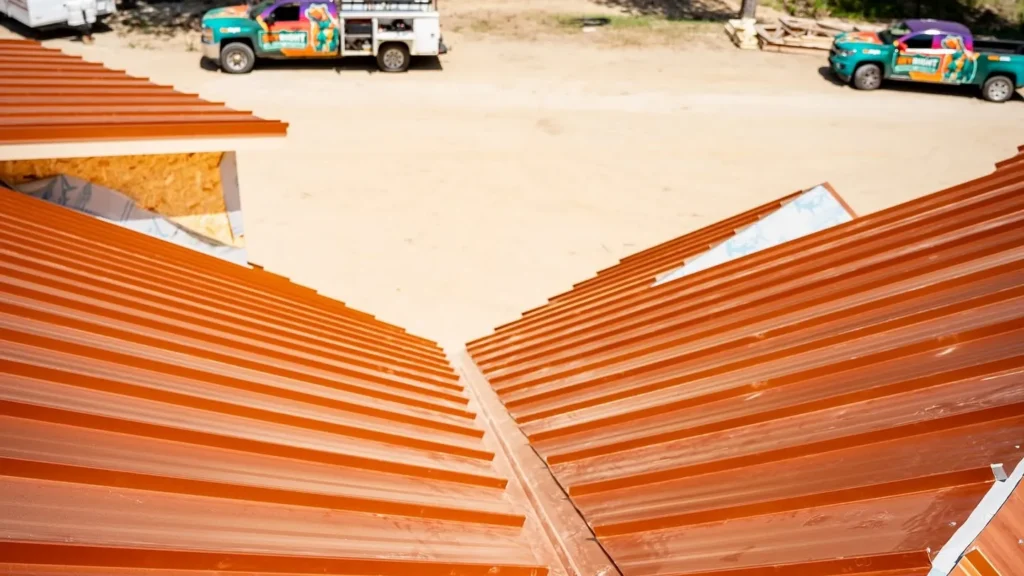
Roof complexity | Dormers, valleys, hips, chimneys, and skylights increase trim labor |
Tear-off | Removing old roofing adds labor and disposal |
Decking condition | Soft or damaged sheathing must be repaired |
Underlayment | High-temperature and metal-compatible underlayments may be needed |
Trim package | Eaves, rakes, ridges, valleys, sidewalls, and penetrations require metal trim |
Snow guards | Snow management may be needed near entries, decks, and walkways |
Gutters | Metal roofs can shed snow and water differently than asphalt |
Access | Rural sites, steep lots, and tight driveways can increase labor complexity |
Installer skill | Proper metal installation requires specialized layout and detailing |
A low metal roof bid may be missing important trim, underlayment, fastener, or snow-management details.
Metal Roofing and North Idaho Snow
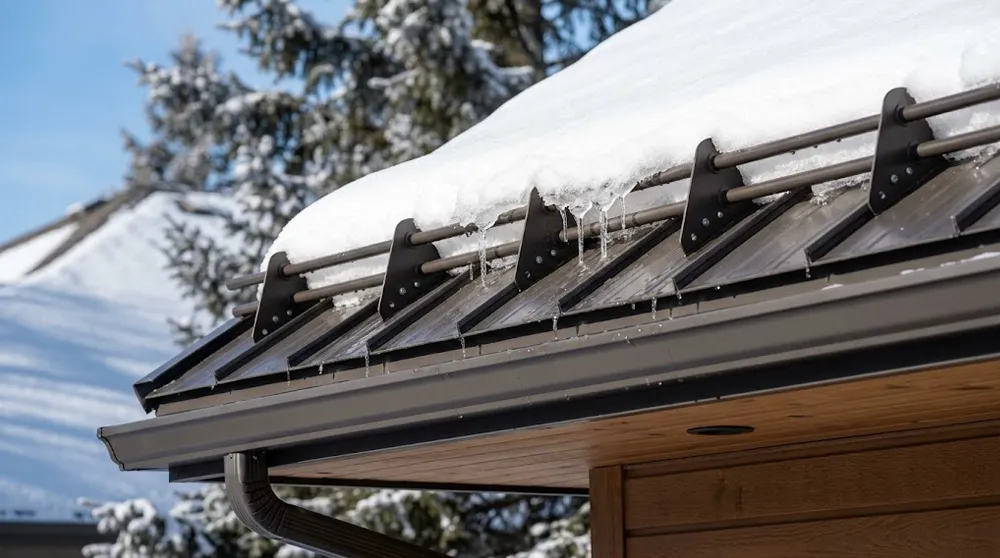
Metal roofing can be a strong option in snowy regions because smooth panels can shed snow more readily than rougher roofing materials. This can help reduce long-term snow accumulation on steep enough roofs, but it can also create snow-slide hazards if not planned correctly.
Snow Advantages of Metal Roofing
- snow may slide off more easily;
- panels are less likely to hold moisture than rough surfaces;
- durable surface for repeated winter cycles;
- strong fit for cabins, rural homes, shops, and mountain-style properties;
- useful for homes with heavy tree cover or repeated snow accumulation.
Snow Considerations
- snow can slide suddenly;
- gutters can be damaged by sliding snow;
- entries and walkways need protection;
- decks, garage doors, and landscaping can be in snow-slide zones;
- snow guards may be needed;
- roof pitch and panel profile matter;
- ice can still form at eaves, valleys, and transitions.
A metal roof should be designed with snow movement in mind. The question is not only, “Will it shed snow?” The better question is, “Where will the snow go?”
Where will the snow go when it slides off your metal roof?
Unmanaged snow slides can destroy expensive gutters, crush decks, and block walkways. At SkyRight, we design integrated snow-management systems and heavy-duty gutter systems engineered specifically for severe North Idaho thaws.
Do Metal Roofs Prevent Ice Dams?
Metal roofs can help snow move more easily on some roof designs, but they do not automatically prevent ice dams.
Ice dams happen when heat from inside the home warms the roof deck, melts snow, and that meltwater refreezes near colder roof edges. The root causes often include attic air leakage, inadequate insulation, poor ventilation, roof geometry, and blocked drainage. University of Minnesota Extension explains that controlling heat loss, insulation, and ventilation is central to preventing ice dams.
Metal Roof Ice Dam Risk Areas
Ice and winter leaks can still happen around:
- eaves;
- valleys;
- dormers;
- skylights;
- chimneys;
- roof-to-wall transitions;
- gutters;
- snow guards;
- penetrations;
- low-slope sections;
- areas over warm living spaces.
Ice Dam Prevention for Metal Roofs
A good winter-ready metal roof plan includes:
- proper attic air sealing;
- balanced ventilation;
- adequate insulation;
- metal-compatible underlayment;
- correct flashing;
- clear gutters;
- snow-management planning;
- properly detailed penetrations;
- routine inspections.
For deeper winter roof guidance, read SkyRight’s winter roof protection guide.
Metal Roofing vs Asphalt Shingles
Metal and asphalt are both good roofing materials, but they fit different priorities.
|
Category |
Metal Roofing |
Asphalt Shingles |
|
Upfront cost |
Higher |
Lower |
|
Long-term ownership |
Strong fit |
Good fit |
|
Snow shedding |
Often better |
Moderate |
|
Storm performance |
Strong when system is properly installed |
Good with quality architectural shingles |
|
Repair ease |
More specialized |
Usually easier |
|
Material weight |
Often lightweight |
Moderate |
|
Appearance |
Premium, modern, rustic, or cabin-style |
Traditional residential |
|
Noise concerns |
Controlled by deck and underlayment |
Familiar sound profile |
|
Maintenance |
Lower, but still needs inspection |
Moderate |
|
Best for |
Long-term homeowners and snow-exposed properties |
Budget-conscious replacements and traditional neighborhoods |
Many industry comparisons note that metal roofing costs more upfront but can last significantly longer than asphalt shingles, while asphalt shingles remain more affordable and easier to repair for many homeowners.
For asphalt material planning, visit SkyRight’s asphalt shingle and residential roofing materials guide.
When Metal Roofing Is the Better Choice
Metal roofing may be the better choice when:
- you plan to stay in the home long-term;
- snow shedding is a priority;
- the roof has steep visible slopes;
- you want a premium exterior upgrade;
- you like modern, rustic, farmhouse, or mountain-style curb appeal;
- the home is in a wooded or rural setting;
- you want a lower-maintenance roof surface;
- you are comparing lifecycle value, not only upfront price;
- you are replacing the roof anyway and want to upgrade materials.
Metal roofing is especially worth considering for homes near Sandpoint, Hayden Lake, rural Post Falls, Athol, Spirit Lake, and other North Idaho areas where snow, trees, and long-term durability matter.
When Asphalt Shingles May Be the Better Choice
Asphalt shingles may be the better choice when:
- upfront budget is the main factor;
- the neighborhood has traditional roof styles;
- the homeowner wants easier small repairs;
- the roof has many complex small sections;
- the homeowner plans to sell soon;
- the home does not need a premium material upgrade;
- matching the existing style matters;
- a faster, simpler replacement is preferred.
Architectural asphalt shingles are still a practical and attractive choice for many homes in Coeur d’Alene, Post Falls, Hayden, Rathdrum, and Sandpoint.
Pros of Metal Roofing
Metal roofing offers several strong advantages.
Long-Term Durability
A quality metal roof can provide long-term protection when installed correctly. Metal roofing is commonly chosen for durability against weather, snow, ice, wind, and fire exposure.
Snow-Shedding Potential
Metal panels can help snow slide from the roof more easily than rougher roofing surfaces, especially on steeper roof slopes. This is one reason metal roofing is popular for cabins, rural homes, garages, barns, and mountain-style properties.
Lower Surface Maintenance
Metal roofs are not maintenance-free, but they often require less surface-level maintenance than asphalt shingles. The main inspection points are fasteners, seams, trim, penetrations, coatings, and snow-management details.
Curb Appeal
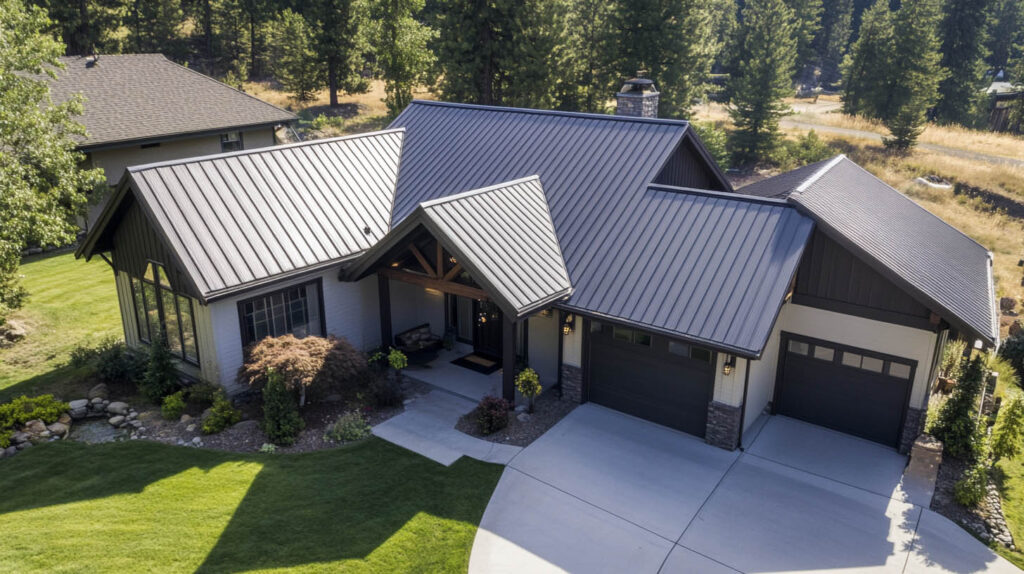
Metal roofing can create a premium look. It works well with:
- modern homes;
- lake homes;
- mountain homes;
- cabins;
- farmhouse designs;
- black, bronze, charcoal, gray, green, and copper-tone exterior palettes.
Fire and Weather Resistance
Metal is noncombustible as a roofing material, though the complete roof assembly and surrounding property conditions also matter. For North Idaho properties near trees or rural areas, this can be part of the material conversation.
Cons of Metal Roofing
Metal roofing is not the right choice for every homeowner.
Higher Upfront Cost
Metal roofing usually costs significantly more upfront than asphalt shingles. This is the biggest reason many homeowners choose architectural shingles instead.
Specialized Installation
Metal roofing requires specialized installation. Poor trim details, bad fastener placement, incorrect underlayment, or weak flashing can create leaks even with a premium material.
Snow-Slide Hazards
A metal roof may shed snow suddenly. That can create risks near:
- front entries;
- garage doors;
- decks;
- patios;
- walkways;
- driveways;
- landscaping;
- gutters;
- lower roofs.
Snow guards or snow-management planning may be needed.
Repair Complexity
Small repairs can be more specialized than asphalt shingle repairs. Panels, seams, trim, and color matching require the right knowledge.
Noise Concerns
A properly installed metal roof over a solid deck with underlayment is usually not as noisy as many homeowners fear. However, rain and hail sound can still be different from asphalt shingles.

Best Metal Roofing Materials for North Idaho
The right metal depends on budget, style, roof design, and long-term goals.
|
Material |
Strengths |
Considerations |
|
Painted steel |
Common, durable, many colors, strong value |
Coating quality and installation details matter |
|
Galvalume steel |
Good corrosion resistance, often used for panels |
Appearance may be more industrial if unpainted |
|
Aluminum |
Lightweight and corrosion-resistant |
Usually more expensive and can dent more easily |
|
Copper |
Premium appearance and long life |
Very expensive and usually used for accents or custom homes |
|
Zinc |
Premium architectural material |
Expensive and specialized |
For most North Idaho homes, painted steel standing seam or painted steel exposed-fastener panels are the most practical metal roofing options.
Metal Roof Colors and Curb Appeal
Metal roofing color affects curb appeal, heat absorption, resale presentation, and how the home fits its surroundings.
Popular metal roof colors in North Idaho include:
|
Color |
Best Fit |
|
Charcoal or black |
Modern homes, white siding, strong contrast |
|
Dark bronze |
Wood siding, stone, rustic homes |
|
Forest green |
Cabins, wooded lots, rural homes |
|
Medium gray |
Contemporary homes and lake homes |
|
Brown |
Earth-tone homes and natural settings |
|
Matte black |
Modern farmhouse and high-contrast designs |
|
Copper tone |
Accents, premium homes, rustic-modern styles |
Color should be selected with siding, trim, stone, gutters, garage doors, landscape, and neighborhood character in mind.
For comparison, read SkyRight’s guide to choosing the best shingle color for your home.
Metal Roofing and Gutters
Metal roofs can move water and snow differently than asphalt roofs. That makes gutter planning important.
Gutter Considerations for Metal Roofs
- snow may slide into gutters;
- gutters may need stronger attachment;
- downspouts must handle fast runoff;
- valley discharge can be concentrated;
- snow guards may be needed above entries;
- gutter placement must match panel edges;
- fascia condition should be checked before installation.
A good metal roof plan should consider both the roof and the drainage system.
SkyRight provides gutter services and gutter services in Coeur d’Alene for homeowners who need drainage improvements with a roof project.
Metal Roofing and Roof Ventilation
Metal roofing does not eliminate the need for ventilation.
Poor attic ventilation can still contribute to:
- condensation;
- attic frost;
- ice dams;
- damp insulation;
- mold-like staining;
- roof deck damage;
- comfort problems;
- uneven snow melt.
A metal roof installation should include a review of intake and exhaust ventilation, especially in homes with prior ice dam issues, attic moisture, bathroom fan problems, or winter stains.
For more detail, read SkyRight’s guide to roof and attic ventilation.
Maintenance for Metal Roofs
Metal roofs are lower maintenance than many materials, but they are not “install and forget.”
Metal Roof Maintenance Checklist
|
Maintenance Item |
What to Check |
|
Fasteners |
Loose, backed-out, missing, or worn fasteners |
|
Sealant |
Aging sealant around penetrations and transitions |
|
Trim |
Ridges, rakes, eaves, sidewalls, and valleys |
|
Panel surface |
Scratches, dents, coating damage, debris |
|
Gutters |
Snow damage, clogs, attachment, downspouts |
|
Snow guards |
Placement, attachment, damage |
|
Penetrations |
Plumbing vents, chimneys, skylights, exhaust vents |
|
Valleys |
Debris, snow accumulation, ice buildup |
|
Attic |
Condensation, frost, ventilation problems |
A good maintenance rhythm is spring inspection, fall inspection, and after-storm checks.
For seasonal planning, visit SkyRight’s roof maintenance and inspection calendar.
Metal Roof Repair Warning Signs
Schedule an inspection if you notice:
- water stains inside the home;
- loose or missing fasteners;
- rust or coating damage;
- bent or lifted trim;
- leaks around pipe penetrations;
- snow guard damage;
- gutter damage from snow slides;
- panel movement;
- sealant cracks;
- dents from impact;
- attic condensation;
- ice buildup at eaves or valleys.
Metal roof leaks often happen at details: fasteners, penetrations, seams, flashing, valleys, and transitions.
For leak diagnosis, read SkyRight’s roof repair vs replacement guide.
Metal Roofing for Homes, Shops, and Commercial Buildings
Metal roofing can work for more than single-family homes.
Residential Homes
Best for homeowners who want long-term durability, premium curb appeal, and snow-shedding potential.
Cabins and Rural Properties
Strong fit for wooded lots, snow-prone areas, outbuildings, and mountain-style homes.
Shops, Garages, and Barns
Exposed-fastener metal can be practical for utility buildings and simple rooflines.
Commercial Buildings
Metal roofing may be appropriate for certain commercial properties, depending on slope, use, drainage, insulation, and budget.
For commercial roofing needs, visit SkyRight’s commercial roofing services in Coeur d’Alene.
North Idaho Metal Roofing Scenarios
These examples are planning scenarios, not quotes.
Scenario 1: Coeur d’Alene Home Comparing Asphalt and Metal
Home profile: 1,800 sq. ft. roof surface, visible roof slopes, owner plans to stay 15+ years, considering architectural shingles vs standing seam metal.
Likely recommendation: Compare architectural asphalt shingles against standing seam metal.
Planning range: Asphalt may be closer to $9,000–$18,000+, while standing seam metal may land around $18,000–$36,000+ depending on complexity.
Why: Metal may cost more upfront, but long-term ownership and curb appeal can justify the upgrade.
Relevant SkyRight pages: metal roofing in Coeur d’Alene and residential roofing in Coeur d’Alene.
Scenario 2: Post Falls Home With Open Wind and Snow Exposure
Home profile: Open lot, wind exposure, snow drifting, homeowner wants better durability and a stronger exterior upgrade.
Likely recommendation: Standing seam metal or a carefully specified exposed-fastener system, depending on budget.
Planning range: Around $14,000–$35,000+, depending on roof size, pitch, panel type, and trim details.
Why: Metal can be a strong choice, but snow-slide zones and gutters must be planned before installation.
Relevant SkyRight page: roofing services in Post Falls.
Scenario 3: Sandpoint or Rural North Idaho Cabin
Home profile: Tree cover, snow accumulation, rustic exterior, owner wants a long-term roof with strong snow-shedding potential.
Likely recommendation: Metal roofing should be strongly considered.
Planning range: Around $15,000–$40,000+, depending on system type, roof access, slope, and snow-management needs.
Why: Metal roofing fits many rural and cabin-style properties, especially where snow and debris management are recurring concerns.
Relevant SkyRight page: metal roofing services.
Scenario 4: Shop, Garage, or Outbuilding
Home profile: Simple roofline, utility building, owner wants durable metal at a practical cost.
Likely recommendation: Exposed-fastener metal may be appropriate.
Planning range: Around $7–$12 per sq. ft. installed for many corrugated or exposed-fastener projects, depending on details.
Why: For simple utility structures, exposed-fastener metal can provide strong practical value when installed correctly.
Scenario 5: Older Asphalt Roof With Repeated Winter Problems
Home profile: Older asphalt roof, repeated ice buildup, granules in gutters, leaks during thaw cycles, homeowner considering upgrade.
Likely recommendation: Compare roof replacement options: architectural asphalt, premium asphalt, or metal roofing.
Planning range: Metal will usually cost more upfront, but may provide stronger long-term value if snow movement and roof design are addressed.
Why: The homeowner should not only replace the roof surface. The inspection should also evaluate attic ventilation, gutters, insulation, and ice dam risk.
How to Compare Metal Roofing Bids
Metal roofing bids should be detailed. A vague “metal roof” estimate is not enough.
Metal Roofing Bid Checklist
Bid Item | What to Confirm |
Panel type | Standing seam, exposed-fastener, corrugated, or metal shingle |
Metal material | Steel, aluminum, copper, zinc, or other |
Gauge | Panel thickness |
Finish | Painted, Galvalume, PVDF, SMP, or other coating |
Tear-off | Whether old roofing is removed |
Decking | How damaged sheathing is priced |
Underlayment | Metal-compatible underlayment and ice protection |
Fasteners | Concealed or exposed fastener type |
Trim | Ridges, valleys, sidewalls, eaves, rakes, and transitions |
Penetrations | Pipe boots, vents, skylights, chimneys |
Ventilation | Intake and exhaust ventilation review |
Snow guards | Whether snow management is included |
Gutters | Whether drainage changes are needed |
Warranty | Manufacturer and workmanship warranty details |
Cleanup | Disposal, debris removal, and final site cleanup |
Common Metal Roofing Mistakes to Avoid
Avoid these mistakes:
- choosing metal only because it “lasts forever”;
- ignoring snow-slide paths;
- skipping gutter review;
- choosing exposed-fastener metal without understanding fastener maintenance;
- installing metal over bad decking;
- using the wrong underlayment;
- ignoring attic ventilation;
- accepting vague trim details;
- choosing color without considering siding and gutters;
- comparing metal and asphalt bids as if they are the same system;
- hiring an installer without metal roofing experience.
A metal roof is a premium system when installed correctly. It can become a frustrating system when details are rushed.
Final Recommendation: Is Metal Roofing Right for Your Home?
Metal roofing is right for many North Idaho homes, but not every home.
It is a strong choice if you want:
- long-term durability;
- snow-shedding potential;
- premium curb appeal;
- lower surface maintenance;
- strong performance in harsh weather;
- a roof that fits mountain, cabin, rustic, farmhouse, or modern home styles.
It may not be the best choice if you want:
- the lowest upfront cost;
- the easiest small repairs;
- a traditional asphalt look;
- a simple budget replacement;
- no snow-slide planning;
- no additional gutter or trim considerations.
The best way to decide is to compare metal roofing against architectural asphalt shingles for your specific home, roof pitch, snow exposure, ventilation, gutter system, budget, and ownership timeline.
Ready to compare metal roofing options for your North Idaho home? Schedule a roofing estimate with SkyRight.
FAQ: Metal Roofing in North Idaho
Is metal roofing good for North Idaho homes?
Yes. Metal roofing can be a strong option for North Idaho homes because it offers durability, snow-shedding potential, long-term value, and a premium appearance. It works especially well for long-term homeowners, rural properties, cabins, shops, and homes with snow exposure.
How much does a metal roof cost in North Idaho?
For planning purposes, many metal roofs fall around $700–$1,800+ per roofing square, with standing seam often around $1,000–$1,800+ per square and corrugated or exposed-fastener metal often around $700–$1,200 per square. Complex roofs, premium metals, and specialty details can cost more.
Is standing seam metal roofing better than exposed-fastener metal?
Standing seam is usually the premium choice because it has concealed fasteners, a cleaner appearance, and strong long-term performance potential. Exposed-fastener metal is usually less expensive and can work well for shops, garages, barns, cabins, and some budget-focused homes.
Does a metal roof stop ice dams?
No. Metal roofing can help snow slide more easily on some roofs, but it does not automatically stop ice dams. Ice dams are usually related to attic heat loss, insulation, ventilation, drainage, and roof-edge conditions.
Are metal roofs noisy when it rains?
A properly installed metal roof over solid decking and underlayment is usually not as noisy as many homeowners expect. However, rain and hail can sound different from asphalt shingles.
Can metal roofing be installed over shingles?
Sometimes, but it depends on local code, roof condition, number of layers, decking condition, manufacturer requirements, ventilation, and installation method. In many cases, tear-off is better because it allows the roof deck to be inspected.
Are metal roofs better than asphalt shingles?
Metal roofs are better for long-term durability, snow-shedding potential, premium appearance, and lower surface maintenance. Asphalt shingles are better for lower upfront cost, traditional curb appeal, and easier small repairs. The right choice depends on budget, roof design, and ownership timeline.
Do metal roofs need gutters?
Yes, many metal roofs still need gutters. Because metal can shed water and snow quickly, gutter design, attachment, downspout placement, and snow-management details are important.
What color metal roof is best?
Popular North Idaho metal roof colors include charcoal, black, bronze, gray, forest green, brown, and copper tones. The best color depends on siding, trim, stone, gutters, home style, and surrounding landscape.
Who installs metal roofing in Coeur d’Alene and Post Falls?
SkyRight provides metal roofing, roof replacement, roof repair, gutter services, and residential roofing support for homeowners in Coeur d’Alene, Post Falls, Sandpoint, Hayden, Rathdrum, Athol, Spirit Lake, and nearby North Idaho communities.
Ready to upgrade to a weather-resistant metal roof system?
From flawless trim packages to high-temperature underlayments, we specialize in building metal roofs that stand up to North Idaho winter cycles. Schedule an on-roof evaluation with our certified local team today.