
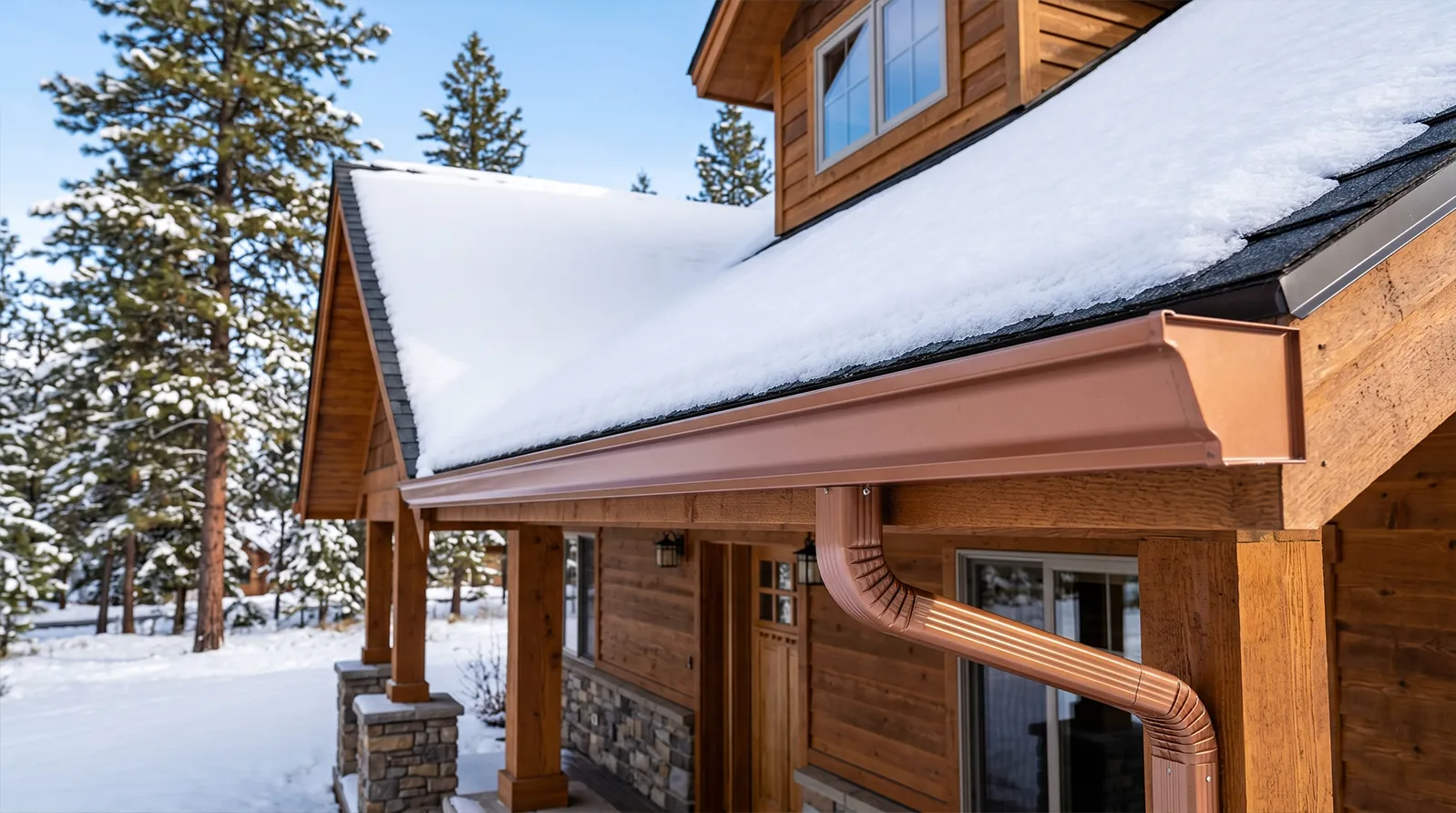
At a Glance: Why Gutters Matter in Winter
Gutters are not just an exterior add-on. In North Idaho, gutters are part of the roof drainage system that helps move rainwater, snowmelt, and roof runoff away from the home.
When gutters clog, freeze, sag, overflow, or pull away from the fascia, they can contribute to:
- roof-edge leaks;
- ice buildup at eaves;
- fascia and soffit damage;
- siding stains;
- foundation water problems;
- gutter separation;
- downspout ice;
- unsafe icicles;
- moisture behind the roof edge;
- water backing up during freeze-thaw cycles.
Ice dams are often connected to attic heat loss, insulation, ventilation, roof-edge conditions, and snowmelt patterns. University of Minnesota Extension explains that long-term ice dam prevention depends heavily on controlling heat loss from the home, not just removing visible ice.
For North Idaho homeowners in Coeur d’Alene, Post Falls, Sandpoint, Hayden, Rathdrum, Athol, Spirit Lake, and nearby areas, the best gutter plan is simple: clean gutters before winter, keep downspouts open, watch drainage during thaw cycles, correct roof-edge problems early, and inspect the roof system when ice or leaks repeat.
For related SkyRight resources, visit gutter services, gutter services in Coeur d’Alene, the winter roof protection guide, the roof maintenance calendar, and the roof repair vs replacement guide.
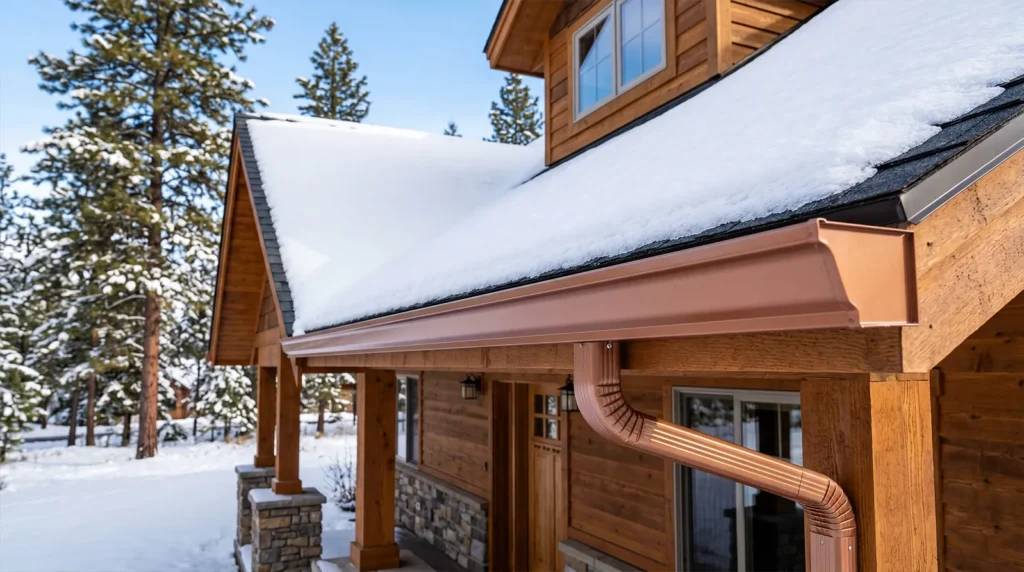
Quick Answer: How Do You Maintain Gutters During Snow and Ice Season?
The best way to maintain gutters during snow and ice season is to prepare them before winter, monitor them during thaw cycles, and inspect them after storms.
|
Timing |
What to Do |
Why It Matters |
|
Early fall |
Clean leaves, pine needles, and roof granules from gutters |
Prevents winter blockages before snow arrives |
|
Late fall |
Confirm downspouts drain away from the home |
Reduces foundation and ice buildup problems |
|
Before first snow |
Check gutter slope, loose hangers, fascia, and roof valleys |
Finds weak points before freeze-thaw stress |
|
During winter |
Watch for icicles, gutter ice, overflow, and roof-edge leaks |
Identifies drainage failure early |
|
After thaw cycles |
Check for water stains, downspout ice, and overflow marks |
Finds where meltwater is not draining |
|
After wind or snow events |
Look for branches, broken gutters, and loose fasteners |
Storm debris can block drainage quickly |
|
Spring |
Inspect gutters, fascia, shingles, and roof edges |
Winter ice can damage the drainage system |
Best rule: clean gutters before winter, but do not assume clean gutters alone will prevent ice dams. Ice dams often involve attic heat loss, poor ventilation, insulation gaps, roof-edge details, and freeze-thaw cycles.

Why Gutters Are Part of the Roof System
A roof does not stop at the shingles, metal panels, or membrane. The roof system also includes the parts that move water away from the home.
That includes:
- roof valleys;
- drip edge;
- fascia;
- soffits;
- gutters;
- downspouts;
- extensions;
- splash blocks;
- drainage paths;
- grading around the home.
If water cannot leave the roof correctly, the home can still experience leaks, ice problems, fascia rot, siding damage, and foundation moisture even if the roof covering is in good condition.
What Gutters Protect
|
Home Area |
How Gutters Help |
|
Roof edge |
Move water away from eaves and fascia |
|
Fascia |
Reduce repeated wetting and ice weight |
|
Soffits |
Limit water backing into vented areas |
|
Siding |
Reduce staining and splashback |
|
Foundation |
Move water away from the home |
|
Walkways |
Reduce ice sheets from uncontrolled runoff |
|
Landscaping |
Prevent erosion below rooflines |
|
Basement or crawl space |
Reduce water pooling near the structure |
SkyRight’s gutter services page is relevant when roof drainage, downspouts, fascia, or winter water flow need attention.
How Snow and Ice Affect Gutters
North Idaho gutters deal with more than rainfall. They also deal with snowmelt, ice, falling branches, pine needles, roof granules, and freeze-thaw cycles.
Common Winter Gutter Problems
|
Problem |
What Happens |
Why It Matters |
|
Clogged gutters |
Leaves, needles, and granules block water flow |
Meltwater backs up and freezes |
|
Frozen downspouts |
Water cannot drain out |
Gutters fill with ice and overflow |
|
Ice-filled gutters |
Gutters become heavy |
Hangers, fascia, and seams can fail |
|
Sagging gutters |
Slope changes and water pools |
Drainage gets worse over time |
|
Icicles |
Water drips and refreezes at edges |
Can signal gutter overflow or ice dam risk |
|
Roof-edge ice |
Water freezes near eaves |
Can contribute to leaks during thaw |
|
Downspout discharge ice |
Water freezes at ground level |
Walkways and entries become slippery |
|
Snow sliding into gutters |
Especially common with metal roofs |
Gutters can bend or detach |
NRCA warns homeowners not to use ice picks, shovels, or sharp-edged tools on ice dams because they can damage roof coverings and flashing; it also advises calling a professional when the roof is steep, snow is deep, or ice is thick.
North Idaho Gutter Maintenance Calendar
A simple seasonal schedule can prevent many winter gutter and roof-edge problems.
|
Season |
Main Goal |
Gutter & Drainage Tasks |
|
Spring |
Inspect winter damage |
Check sagging gutters, fascia stains, downspout damage, and roof-edge leaks |
|
Summer |
Repair and improve |
Fix slope, replace damaged sections, trim branches, plan upgrades |
|
Fall |
Prepare for snow and ice |
Clean gutters, clear valleys, check hangers, flush downspouts |
|
Winter |
Monitor active problems |
Watch for ice, overflow, icicles, leaks, and blocked downspouts |
|
After storms |
Check for sudden damage |
Look for fallen branches, loose gutters, missing shingles, and debris |
For a broader seasonal roof plan, see SkyRight’s North Idaho roof maintenance and inspection calendar.
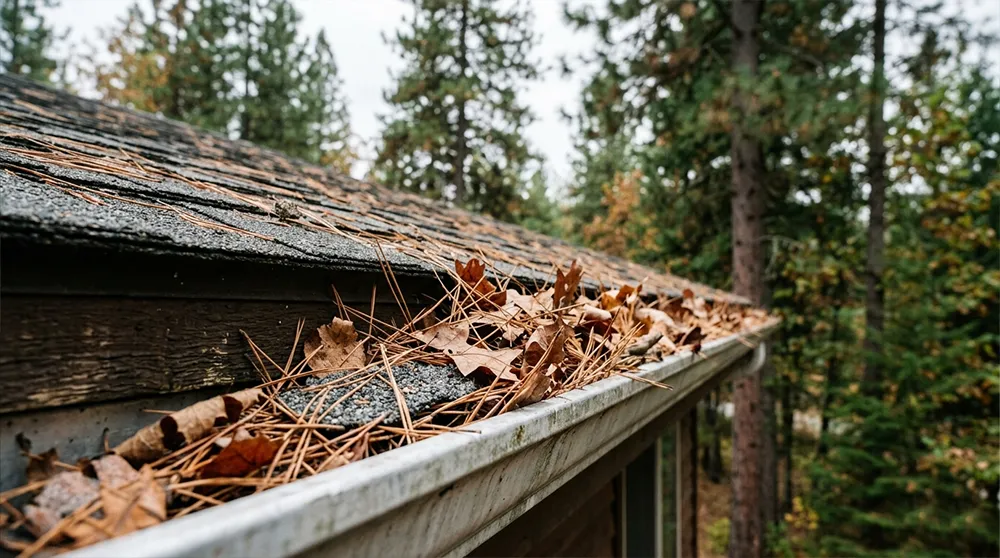
Fall Gutter Checklist: The Most Important Season
Fall is the most important gutter maintenance season in North Idaho. Once snow and ice arrive, small drainage problems become harder and more dangerous to fix.
Before Winter, Check:
- leaves and pine needles in gutters;
- roof granules collecting near downspouts;
- loose gutter hangers;
- gutter slope;
- downspout clogs;
- downspout extensions;
- roof valleys feeding into gutters;
- fascia staining;
- drip edge alignment;
- gutter seams;
- water pooling near the foundation;
- tree branches above rooflines.
Fall Gutter Prep Table
|
Task |
Why It Matters Before Winter |
|
Clean gutters |
Prevents trapped water and ice buildup |
|
Flush downspouts |
Confirms water can exit the system |
|
Clear roof valleys |
Prevents debris dams above gutters |
|
Check gutter slope |
Keeps water moving toward downspouts |
|
Tighten loose hangers |
Helps gutters resist snow and ice weight |
|
Inspect fascia |
Finds hidden moisture damage |
|
Extend downspouts |
Moves water away from the foundation |
|
Trim branches |
Reduces storm debris and gutter clogs |
The goal is not just a clean gutter. The goal is a working drainage path from roof to ground.
Don't wait for the first freeze to check your gutters
Clogged gutters full of pine needles turn into heavy, destructive ice blocks in winter. Stay off the ladder and let our North Idaho professionals prep your roof drainage system before the snow flies.
Winter Gutter Watchlist
Homeowners should not climb ladders or walk roofs during icy weather. But they can watch for warning signs from the ground.
Watch for These Signs
- large icicles along gutters;
- water spilling over gutter edges during thaw;
- ice bulging from gutter sections;
- downspouts frozen solid;
- gutters pulling away from fascia;
- stains on siding below gutters;
- ice sheets below downspouts;
- roof-edge leaks;
- ceiling stains near exterior walls;
- gutter corners leaking;
- heavy snow or ice loading one section.
FEMA’s snow-load guidance warns that improper roof snow removal can damage roof coverings and create additional hazards; if there is concern about structural stress, the guidance emphasizes stopping removal activity and addressing safety first.
What Not to Do
Do not:
- climb an icy ladder;
- stand under heavy icicles;
- chop gutter ice with sharp tools;
- hit gutters with hammers;
- pour boiling water into frozen gutters from a ladder;
- aggressively pull ice from roof edges;
- ignore water entering the home;
- assume icicles are harmless.
If gutter ice is causing active leaks or safety concerns, call a professional.
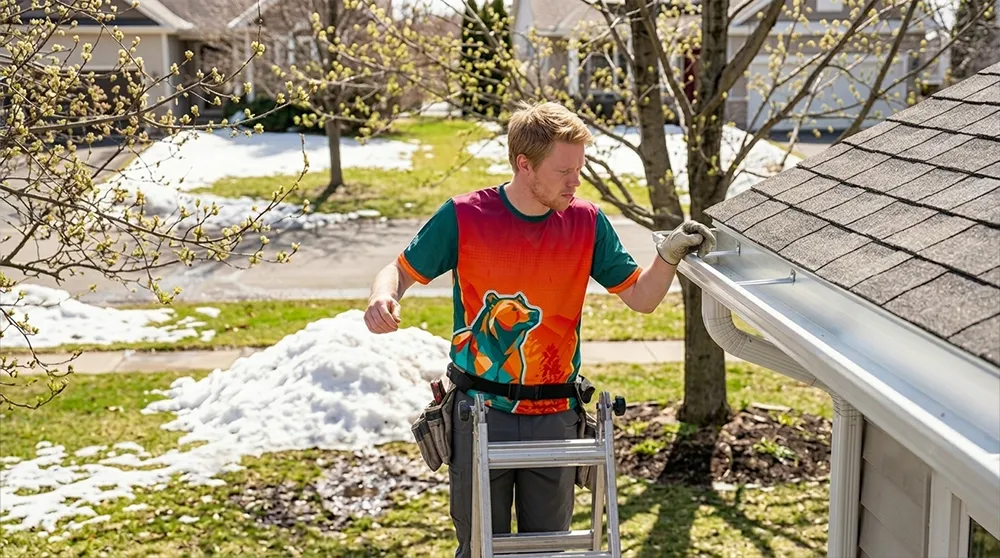
Spring Gutter Inspection After Snow and Ice
Spring inspection helps identify damage from winter stress.
Check for:
- sagging gutter sections;
- separated seams;
- cracked corners;
- loose downspouts;
- bent brackets;
- fascia staining;
- rotten fascia;
- roof granules in gutters;
- missing shingles above gutters;
- drip edge problems;
- water pooling near the foundation;
- basement or crawlspace moisture.
Spring Damage Table
|
Spring Symptom |
Possible Winter Cause |
Recommended Next Step |
|
Gutter pulling away |
Ice weight or weak hangers |
Inspect hangers, fascia, and slope |
|
Brown fascia stains |
Overflow or backflow |
Check gutter capacity and roof edge |
|
Granules in gutters |
Aging shingles or storm wear |
Inspect asphalt shingles |
|
Downspout detached |
Ice expansion or impact |
Repair and secure drainage |
|
Water near foundation |
Poor downspout discharge |
Add extensions or redirect flow |
|
Ceiling stain near exterior wall |
Ice dam or roof-edge leak |
Inspect roof edge, gutters, attic, and ventilation |
If spring inspection shows roof damage, use SkyRight’s roof repair vs replacement guide to understand whether repair or larger replacement planning may be needed.
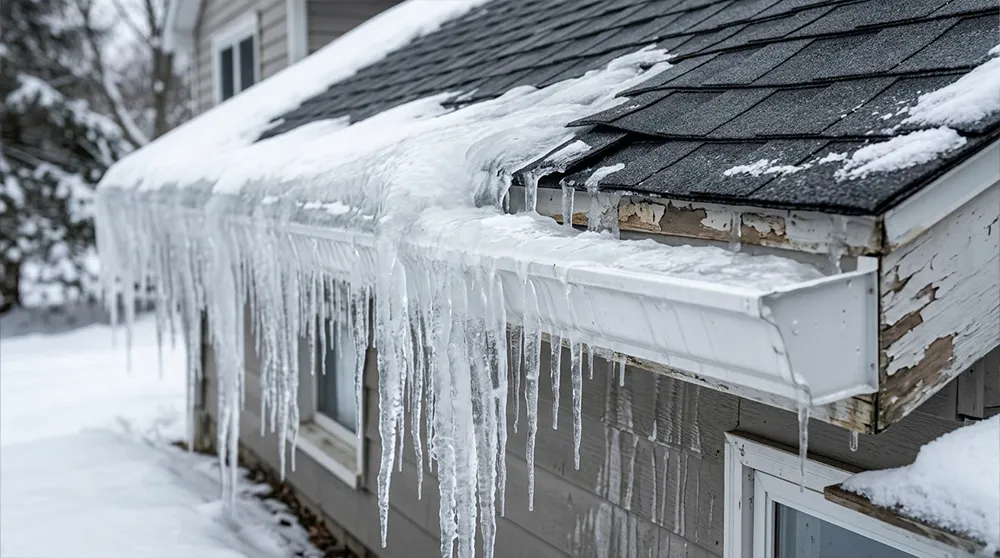
Ice Dams vs Gutter Ice
Ice dams and gutter ice are related, but they are not exactly the same.
Ice Dam
An ice dam forms when snow melts on a warmer roof area, runs down the roof, and refreezes near the colder eave. Water behind the ice can back up under shingles and leak into the home. Ice dam prevention usually involves attic air sealing, insulation, ventilation, roof-edge protection, and snow/ice management.
Gutter Ice
Gutter ice happens when water freezes inside or around the gutter. It may come from clogged gutters, slow drainage, frozen downspouts, roof snowmelt, or overflow during freeze-thaw cycles.
Comparison Table
|
Issue |
Main Location |
Common Cause |
Main Risk |
|
Ice dam |
Roof edge / eave area |
Warm attic, snowmelt, refreezing |
Water backing under roof covering |
|
Gutter ice |
Inside gutter or downspout |
Clogs, slow drainage, frozen water |
Gutter damage, overflow, fascia damage |
|
Icicles |
Gutter edge or roof edge |
Dripping water refreezing |
Falling ice, possible drainage problem |
|
Roof-edge leak |
Eaves, fascia, exterior wall area |
Ice dam, clogged gutter, flashing issue |
Interior staining and hidden moisture |
Clean gutters help, but if attic heat is melting snow unevenly, gutters alone will not solve the ice dam problem.
For full winter roof guidance, see SkyRight’s winter roof protection guide.
Are ice dams forming despite clean gutters?
If you have recurring ice dams, the problem is likely attic heat loss and poor ventilation, not just your gutters. Let us audit your roof system to stop the freeze-thaw cycle from damaging your home.
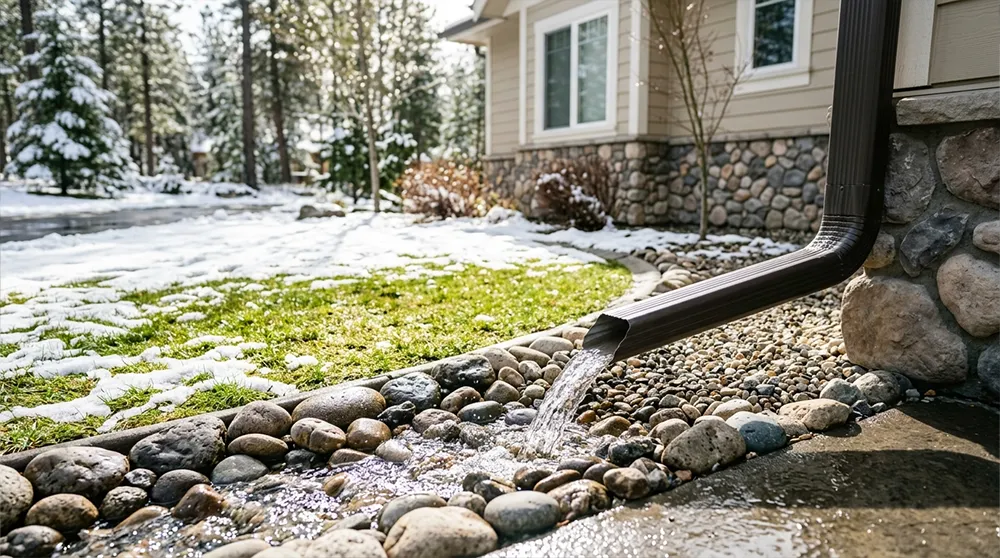
Downspouts and Drainage: The Forgotten Half of Gutters
A gutter is only useful if the downspout moves water away from the home.
Downspout Problems
- downspouts clogged with leaves;
- elbows packed with debris;
- downspout exits buried in snow;
- water draining onto walkways;
- water pooling near foundation walls;
- extensions disconnected;
- downspouts crushed by ice or impact;
- underground drains frozen or blocked.
Downspout Checklist
|
Check |
Why It Matters |
|
Water exits freely |
Prevents backup into gutters |
|
Extensions are attached |
Moves water away from foundation |
|
Discharge avoids walkways |
Reduces winter ice hazards |
|
Elbows are clear |
Prevents hidden clogs |
|
Ground slope carries water away |
Reduces pooling near the home |
|
Snow does not block exit |
Prevents freeze-thaw backup |
A clean gutter with a blocked downspout is still a failed drainage system.
Roof Valleys and Gutters
Roof valleys carry more water than most roof areas. In snow and ice climates, valleys can collect leaves, pine needles, branches, and snow.
Valley Problems That Affect Gutters
- debris dams;
- slow snowmelt drainage;
- concentrated runoff;
- gutter overflow below valleys;
- ice buildup where valley water enters gutters;
- shingle wear in high-flow areas;
- roof-edge leaks below valley discharge points.
Valley Maintenance Tips
- clear debris before winter;
- inspect shingles or metal valley flashing;
- watch for moss or algae in shaded valleys;
- check gutter sections below valleys;
- monitor overflow during heavy rain;
- inspect after windstorms.
Valleys are common leak areas when roof drainage is not maintained.
Fascia, Soffits, Drip Edge, and Roof Edges
Gutters attach to the fascia, and the fascia sits at one of the most vulnerable parts of the roof: the edge.
Roof Edge Components
|
Component |
What It Does |
|
Fascia |
Vertical board where gutters are often attached |
|
Soffit |
Underside of the roof overhang, often includes attic intake vents |
|
Drip edge |
Metal flashing that helps direct water off the roof edge |
|
Gutter |
Collects runoff from the roof edge |
|
Downspout |
Moves collected water to the ground |
|
Soffit vents |
Bring intake air into the attic for ventilation |
If gutters overflow repeatedly, the fascia and soffits can stay wet. If soffit vents are blocked or damaged, attic ventilation may suffer. That can contribute to moisture and ice dam problems.
For attic airflow and moisture guidance, read SkyRight’s roof and attic ventilation guide.
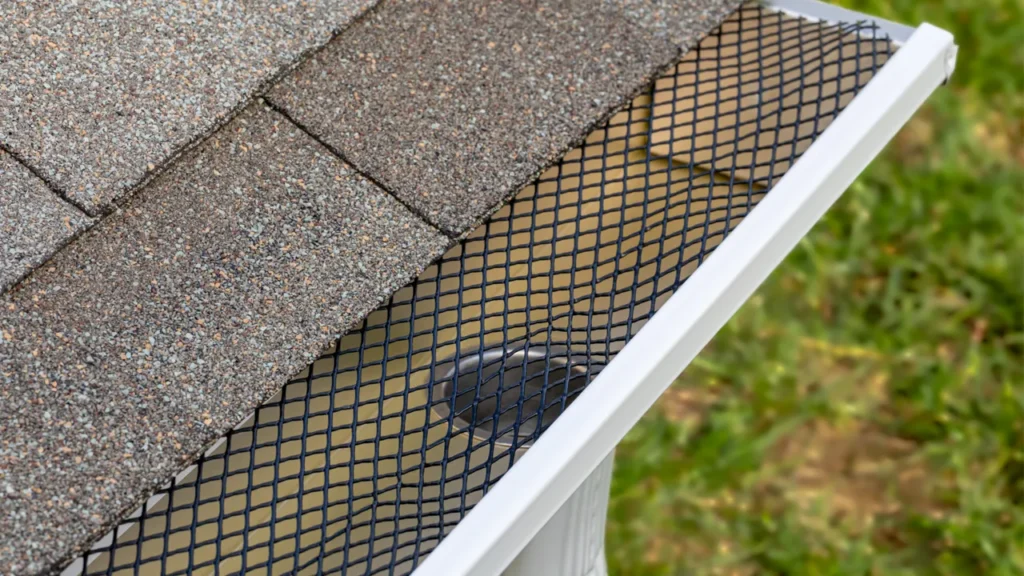
Gutter Guards in Snow and Ice Climates
Gutter guards can reduce debris buildup, but they do not eliminate maintenance.
Gutter Guards May Help With:
- leaves;
- pine needles, depending on guard type;
- large debris;
- frequent clogging;
- safer maintenance frequency;
- keeping downspouts clearer.
Gutter Guards May Not Solve:
- ice dams;
- attic heat loss;
- frozen downspouts;
- poor gutter slope;
- sagging gutters;
- roof-edge leaks;
- snow sliding from metal roofs;
- very fine debris;
- maintenance needs in wooded areas.
Gutter Guard Decision Table
|
Situation |
Gutter Guards May Help? |
Notes |
|
Many leaves nearby |
Yes |
Choose guard type carefully |
|
Pine needles |
Maybe |
Some guards handle needles better than others |
|
Ice dams |
No |
Root cause is often attic heat and roof-edge conditions |
|
Frozen downspouts |
No |
Downspout flow still matters |
|
Metal roof snow slides |
Maybe, but not enough alone |
Snow management may be needed |
|
Hard-to-access gutters |
Yes |
Can reduce cleaning frequency |
|
Neglected gutters |
Not until cleaned/repaired |
Existing issues should be fixed first |
Gutter guards are a maintenance reducer, not a winter roof protection system by themselves.
Gutters for Asphalt Shingle Roofs
Asphalt shingle roofs often shed granules over time. Those granules can collect in gutters and downspouts.
Asphalt Roof Gutter Issues
- granules clogging downspout elbows;
- shingle debris after storms;
- moss or algae washing into gutters;
- roof-edge ice under shingles;
- gutter overflow near eaves;
- drip edge or starter shingle issues;
- valley runoff overwhelming gutter sections.
If you see heavy granules in the gutters, the asphalt roof may need inspection. Some granule loss is normal over time, but heavy accumulation can be a sign of aging shingles or storm wear.
For asphalt material planning, visit SkyRight’s asphalt shingle and residential roofing materials guide.
Gutters for Metal Roofs
Metal roofs shed water and snow differently than asphalt roofs. That makes gutter design and snow management especially important.
Metal Roof Gutter Issues
- snow sliding into gutters;
- gutters bending from snow load;
- fast runoff during rain;
- downspouts overwhelmed by concentrated flow;
- snow guards needed above entries or walkways;
- ice forming at panel edges;
- gutter placement not matching panel runoff.
Metal Roof Drainage Questions
Ask:
- Where will snow slide?
- Are gutters strong enough for snow movement?
- Are downspouts sized and placed correctly?
- Do entries, decks, and walkways need protection?
- Are snow guards recommended?
- Is the fascia strong enough?
- Is water concentrated in one valley or gutter section?
For more detail, read SkyRight’s metal roofing guide or visit the metal roofing services page.
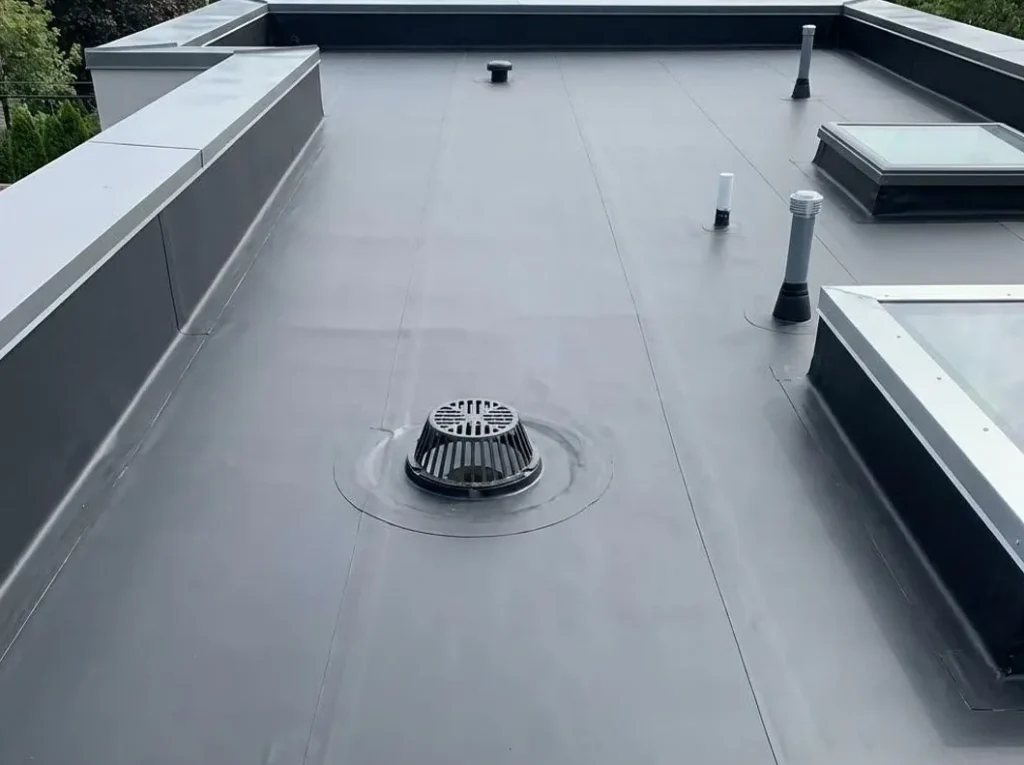
Gutters and Flat or Commercial Roof Drainage
Commercial and low-slope roofs may use internal drains, scuppers, downspouts, gutters, or parapet drainage. These systems need regular maintenance because ponding water can cause serious roof problems.
Commercial Drainage Concerns
- clogged internal drains;
- frozen scuppers;
- ponding water;
- debris around rooftop units;
- downspout ice;
- parapet wall leaks;
- flat roof membrane stress;
- snow and ice buildup near drains.
For commercial and low-slope roof planning, visit SkyRight’s commercial roofing services in Coeur d’Alene and the commercial flat roofing systems guide.
Gutter Cleaning and Maintenance Cost Planning
Professional gutter cleaning costs vary by home size, number of stories, gutter length, roof height, debris level, gutter guards, access, and whether downspouts are clogged.
Angi’s 2026 gutter cleaning data lists an average cost of about $168, with many homeowners spending $119–$234. HomeGuide lists gutter cleaning around $100–$250 on average, or about $0.50–$2.50 per linear foot, with higher costs for multi-story homes or more difficult access.
Planning Ranges
|
Service |
General Planning Range |
Notes |
|
Basic gutter cleaning |
$100–$250 |
Depends on length, height, debris, and access |
|
Multi-story or difficult access cleaning |
$200–$400+ |
Steep roofs, tall ladders, and heavy debris increase cost |
|
Downspout clog clearing |
$75–$250+ |
May be added to cleaning or repair work |
|
Minor gutter repair |
$150–$500+ |
Loose hangers, small leaks, or limited sections |
|
Gutter section replacement |
$300–$1,500+ |
Depends on material, length, fascia, and access |
|
Full gutter replacement |
Varies widely |
Depends on home size, material, profile, guards, and downspouts |
Pricing disclaimer: These are general planning ranges only, not a SkyRight quote. Exact pricing depends on home height, gutter length, debris level, slope, material, damage, fascia condition, downspout routing, winter access, and whether roof repairs are also needed.

When Gutter Problems Become Roof Repairs
A gutter problem can become a roof repair issue when water begins damaging the roof edge, fascia, soffits, decking, or interior walls.
Signs You Need Roof Inspection, Not Just Gutter Cleaning
- ceiling stains near exterior walls;
- soft fascia;
- rotten soffits;
- water behind gutters;
- shingles lifting near roof edge;
- ice dams returning every winter;
- repeated gutter overflow in the same area;
- roof deck staining near eaves;
- wet insulation;
- visible roof-edge damage.
If the roof edge is damaged, cleaning the gutter may not be enough. The roof, fascia, drip edge, and attic ventilation may all need inspection.
Noticing water damage behind your gutters?
If your fascia is soft, soffits are rotting, or you see ceiling stains near exterior walls, a simple cleaning won’t fix it. Get a professional inspection to address the root cause of your roof-edge leaks.
When Gutter Problems Become Replacement Planning
Gutter and drainage problems can reveal a larger roof system issue.
Consider replacement planning if:
- shingles are brittle and losing granules;
- roof-edge leaks are recurring;
- ice dams have damaged multiple areas;
- fascia and decking are soft;
- gutters are repeatedly pulling away;
- the roof is near the end of its service life;
- repairs keep returning every winter;
- storm damage affects roof and gutters together.
For budgeting and planning, read SkyRight’s roof replacement cost guide.
North Idaho Gutter & Drainage Scenarios
These examples are planning scenarios, not quotes.
Scenario 1: Coeur d’Alene Home With Pine Needles and Overflowing Gutters
Home profile: Asphalt shingle roof, trees near the home, gutters overflow during fall rain.
Likely issue: Gutters and downspouts clogged with pine needles, leaves, and granules.
Best next step: Clean gutters, flush downspouts, inspect fascia, and check roof valleys.
Why: Overflow before winter can become gutter ice, fascia staining, and roof-edge problems.
Scenario 2: Post Falls Home With Ice-Filled Gutters
Home profile: Open lot, winter winds, gutters packed with ice, icicles forming at roof edge.
Likely issue: Frozen drainage, possible clogged downspouts, roof-edge ice, and attic heat contribution.
Best next step: Inspect gutters, downspouts, attic ventilation, insulation, and roof edge after conditions are safe.
Why: Removing ice without solving the cause may lead to the same problem next winter.
Scenario 3: Sandpoint or Rural North Idaho Home With Heavy Snow
Home profile: Metal roof, snow slides into gutters, gutters bending near entries.
Likely issue: Snow movement and gutter attachment are not working together.
Best next step: Review metal roof drainage, snow guards, gutter placement, fascia strength, and downspout routing.
Why: Metal roofs can shed snow quickly, and gutters must be planned for that movement.
Scenario 4: Hayden Home With Basement Moisture
Home profile: Gutters appear clean, but downspouts discharge next to the foundation.
Likely issue: Drainage exits too close to the home.
Best next step: Add or correct downspout extensions, verify grade, and inspect for roof-edge overflow.
Why: Water management should move water away from the home, not just off the roof.
Scenario 5: Rathdrum Home With Repeated Ice Dams
Home profile: Clean gutters, but ice dams return every winter and stains appear near exterior walls.
Likely issue: Attic heat loss, poor ventilation, insulation gaps, and roof-edge conditions.
Best next step: Inspect attic air sealing, insulation, soffit intake, roof ventilation, gutters, and eave protection.
Why: Clean gutters help drainage, but they do not fix attic heat loss.
Safe DIY Gutter Maintenance
Homeowners can safely do some gutter-related checks from the ground.
Safer Homeowner Tasks
- look for overflow during rain;
- check downspout discharge from the ground;
- photograph icicles or gutter ice;
- keep ground-level downspout exits clear;
- remove debris from accessible splash blocks;
- check for water pooling near the foundation;
- watch for roof-edge stains;
- schedule professional cleaning before winter.
Leave These Tasks to Professionals
- walking on the roof;
- winter gutter ice removal;
- steep ladder work;
- cleaning high gutters;
- repairing fascia;
- replacing damaged gutters;
- removing large ice dams;
- working near power lines;
- correcting roof-edge flashing;
- diagnosing interior leaks.
Winter roof and gutter work can be dangerous. NRCA specifically recommends professional help when roofs are steep, snow is deep, or ice is thick.
Gutter Maintenance Checklist Before Winter
Use this checklist before snow and ice season.
|
Checklist Item |
Done |
|
Gutters cleaned |
|
|
Downspouts flushed |
|
|
Downspout exits clear |
|
|
Extensions attached |
|
|
Roof valleys cleared |
|
|
Gutter slope checked |
|
|
Loose hangers tightened |
|
|
Gutter seams inspected |
|
|
Fascia checked |
|
|
Soffit vents visible |
|
|
Tree branches trimmed |
|
|
Roof-edge stains checked |
|
|
Granules in gutters noted |
|
|
Ice dam history reviewed |
|
|
Roof inspection scheduled if needed |
Gutter Watchlist During Winter
Use this checklist after snow, rain-on-snow, or thaw cycles.
|
Winter Sign |
What It May Mean |
|
Large icicles |
Overflow, ice dam, or slow drainage |
|
Water spilling over gutters |
Clog, frozen downspout, or bad slope |
|
Ice at downspout exit |
Blocked discharge or poor drainage path |
|
Gutter pulling away |
Ice weight or fascia weakness |
|
Stain near exterior wall |
Ice dam or roof-edge leak |
|
Wet insulation |
Roof leak or attic condensation |
|
Ice sheet near walkway |
Downspout discharge problem |
|
Heavy snow above gutter |
Potential snow-slide or ice problem |
If water enters the home, treat it as a roof and drainage emergency, not just a gutter issue.

Final Recommendation: Keep Water Moving Before It Freezes
In snow and ice climates, gutters fail when water stops moving.
For North Idaho homes, the best gutter and roof drainage plan is:
- clean gutters in fall;
- flush downspouts;
- keep roof valleys clear;
- check fascia and drip edge;
- extend downspouts away from the foundation;
- watch gutters during thaw cycles;
- avoid sharp tools on roof ice;
- address attic heat loss if ice dams return;
- inspect roof edges after winter;
- repair drainage problems before they become leaks.
A clean gutter is helpful. A complete drainage system is better.
Ready to prepare your roof and gutters for snow and ice season? Schedule a gutter and roof inspection with SkyRight.
FAQ: Gutters & Roof Drainage in Snow/Ice Climates
How often should gutters be cleaned in North Idaho?
Most North Idaho homes should have gutters checked in spring and fall. Homes with pine needles, trees, moss, or heavy roof debris may need more frequent cleaning, especially before winter.
Should gutters be cleaned before winter?
Yes. Fall gutter cleaning is one of the most important roof maintenance tasks in snow and ice climates. Clean gutters help snowmelt and rain drain before freezing temperatures arrive.
Can clogged gutters cause roof leaks?
Yes. Clogged gutters can cause water to overflow, back up near the roof edge, damage fascia, soak soffits, and contribute to roof-edge leaks during thaw cycles.
Do clean gutters prevent ice dams?
Clean gutters help drainage, but they do not fully prevent ice dams. Ice dams often involve attic heat loss, poor insulation, ventilation problems, roof-edge conditions, and snowmelt refreezing at colder eaves.
Are icicles on gutters bad?
Small icicles can happen in winter, but large or repeated icicles may signal gutter overflow, frozen downspouts, roof-edge ice, or ice dam risk. They can also become a safety hazard if they fall.
Should I remove ice from my gutters myself?
Avoid climbing icy ladders or chopping ice from gutters. Sharp tools can damage gutters, shingles, and flashing, and winter ladder work is dangerous. Professional help is safer for heavy ice buildup.
Do gutter guards work in snow and ice?
Gutter guards can reduce leaves and debris, but they do not eliminate maintenance or prevent all ice problems. They also do not fix attic heat loss, frozen downspouts, poor gutter slope, or roof-edge leaks.
Why are my gutters full of roof granules?
Granules in gutters can come from normal asphalt shingle aging, storm wear, or deteriorating shingles. Heavy granule buildup should be checked because it may indicate roof wear.
Are gutters different for metal roofs?
Yes. Metal roofs shed water and snow differently than asphalt roofs. Gutters on metal roofs may need stronger attachment, snow-management planning, proper placement, and downspout capacity.
Who provides gutter and roof drainage services in Coeur d’Alene and Post Falls?
SkyRight provides gutter services, roof drainage inspections, roof repair, roof replacement, metal roofing, asphalt roofing, and winter roof maintenance guidance for homeowners in Coeur d’Alene, Post Falls, Sandpoint, Hayden, Rathdrum, Athol, Spirit Lake, and nearby North Idaho communities.