
NOAA’s latest El Niño outlook is attracting attention ahead of the 2026–27 winter.
In its August 2026 advisory, the Climate Prediction Center reported that El Niño was strengthening and estimated a greater than 90% chance that it would become a very strong event during the Northern Hemisphere fall and winter.
For a homeowner in Post Falls, that immediately raises a question:
What does that mean for my roof?
The most important answer is that El Niño is not a precise local weather forecast.
It cannot tell us exactly how much snow Post Falls will receive, when the first major winter storm will occur or whether one particular house will experience ice buildup.
What it can do is remind homeowners that winter weather patterns are changing and that September and fall are the right time to make sure the roofing system is ready.
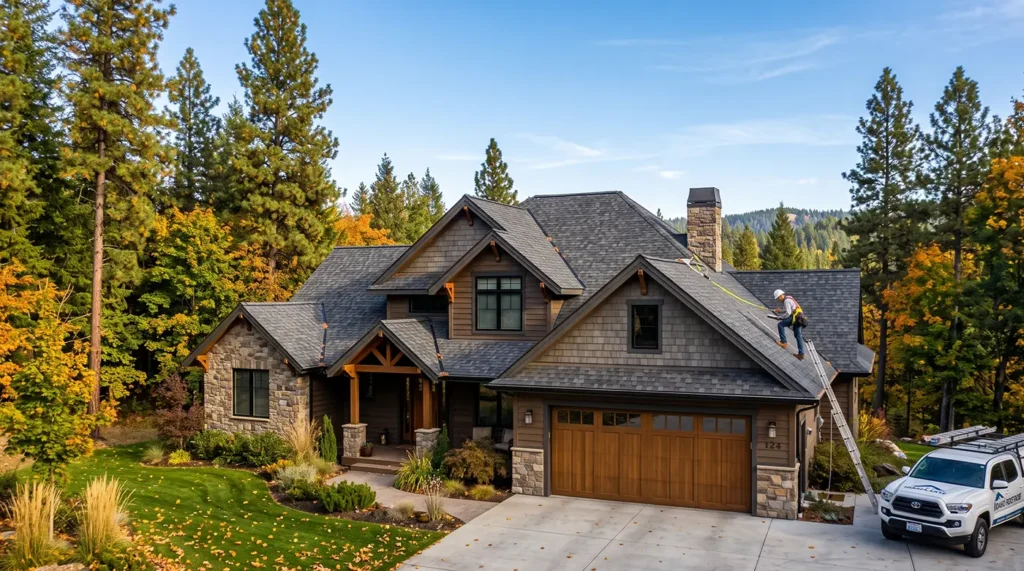
Do Not Prepare for a Forecast. Prepare for North Idaho Conditions.
Trying to design a roof maintenance plan around one seasonal snowfall prediction is not the best approach.
Post Falls roofs should already be capable of handling a combination of rain, snow, freezing temperatures, wind and repeated temperature changes.
That makes the condition of the roof more important than trying to guess exactly what El Niño will produce.
Before winter, homeowners should understand whether their roofing materials are intact, whether flashing and penetrations are properly sealed, whether gutters are clear and whether previous problem areas have been corrected.
Contact Us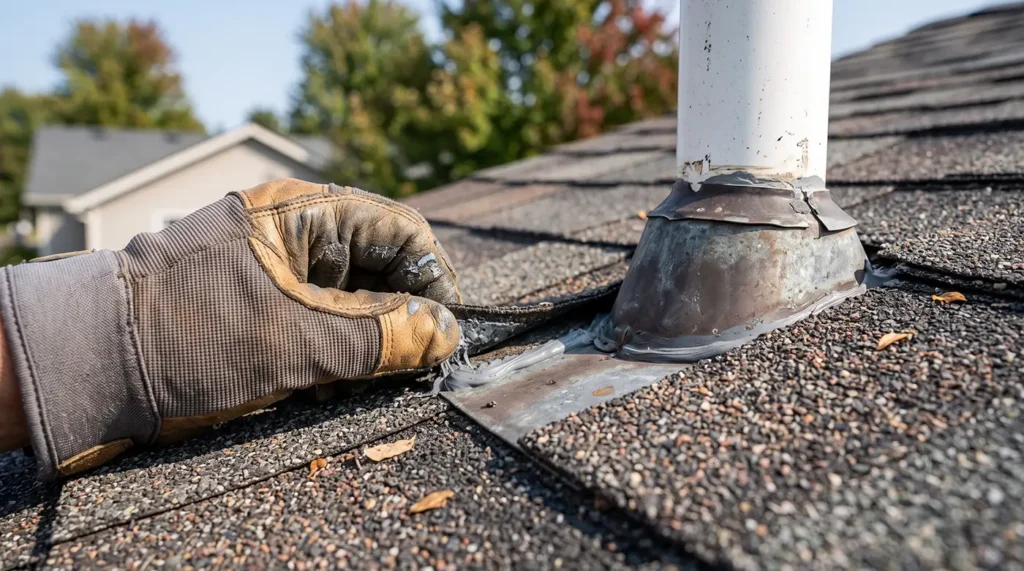
Check for Existing Roof Damage First
Winter does not need to create a roof defect if one already exists.
Loose or damaged shingles, deteriorated flashing and small openings around roof penetrations may allow moisture to enter long before a dramatic leak becomes visible inside the home.
Inspecting the roof during fall creates an opportunity to identify these problems under more manageable conditions.
SkyRight’s Signs of Roof Damage After a Severe Storm and How to Identify Roof Damage Early articles are useful internal resources to link from this section.
Make Sure Water Can Leave the Roof
Winter roofing problems are often discussed in terms of snow, but drainage starts with liquid water.
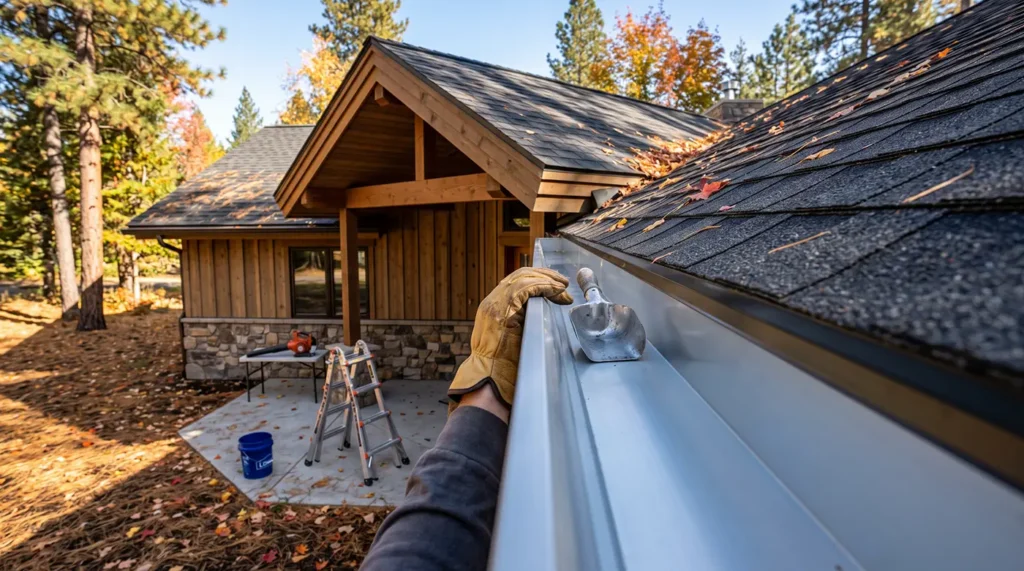
Rain and melting snow need a clear route off the roof.
Gutters filled with leaves, pine needles or other debris restrict that route. Downspouts also need to move water away from the building.
This is why fall gutter maintenance is part of winter roof preparation, not simply a cosmetic exterior task.
For additional internal linking, connect this section to SkyRight’s Gutters Service, What Happens If You Don’t Clean Your Gutters Before Winter? and How to Maintain Roof Gutters During Snow and Ice Season resources.
Inspect Roof Flashing
Flashing protects some of the roof’s most vulnerable transition areas.
It is commonly found around chimneys, walls, vents and other roof penetrations.
When flashing becomes loose, damaged or improperly sealed, water may enter areas that are difficult for homeowners to see from the ground.
A fall inspection gives a roofing professional an opportunity to check these details before winter precipitation makes existing weaknesses more consequential.
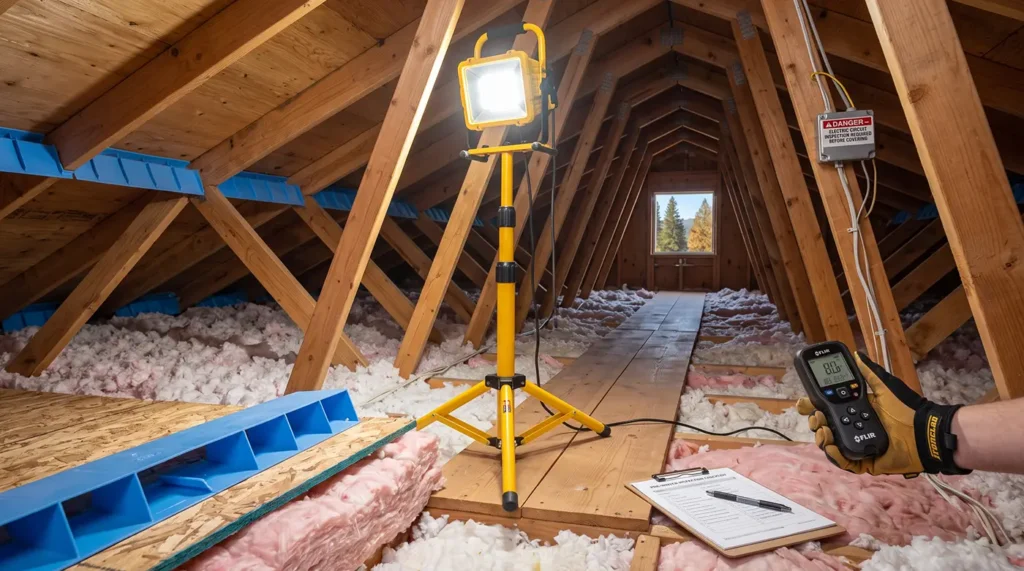
Think About Ventilation and Attic Conditions
The roof surface is only one component of winter roof performance.
Attic insulation and ventilation influence temperature and moisture conditions beneath the roofing system.
During cold weather, poor attic conditions can contribute to condensation and uneven roof temperatures.
Homeowners should watch for moisture, staining, damp insulation and excessive condensation in accessible attic areas.
SkyRight’s existing winter and ice-dam educational content provides a natural supporting content cluster around this subject.
Review What Happened Last Winter
One of the best predictors of a potential problem is a problem that has already happened.
Think back to the previous winter.
Did one section of the roof develop unusually large icicles?
Did a gutter overflow?
Was there water staining inside the house?
Did snow remain on one section of the roof noticeably longer than surrounding areas?
Did you experience a roof leak that was temporarily repaired but never fully investigated?
These are useful details to share during a professional roof inspection.
Know the Difference Between Maintenance, Repair and Replacement
Scheduling an inspection does not mean assuming the roof needs replacement.
A relatively young roof in good overall condition may only require maintenance.
A localized defect may require a roof repair.
An older roofing system with widespread deterioration may justify discussing replacement.
The goal of an inspection is to understand the condition of the roof before a winter emergency forces a decision.
SkyRight’s Roof Repair vs. Replacement: How to Decide resource is an ideal internal link here.
CALL US (208) 897-2828Why Fall Is the Right Time to Act
The best time to discover that flashing needs attention or a gutter is clogged is before snow and freezing temperatures arrive.
Fall gives Post Falls homeowners time to inspect, plan and prioritize.
Even if winter 2026–27 turns out to be relatively manageable in North Idaho, preventive maintenance still protects the roof from normal seasonal exposure.
And if the winter becomes more complicated, the home begins the season in better condition.

Prepare Your Post Falls Roof for Winter 2026–27
A strong El Niño is an interesting climate story, but homeowners do not need to predict the weather to make a smart roofing decision.
Focus instead on what can be controlled: roof condition, flashing, drainage, gutters, ventilation and known problem areas.
SkyRight Roofing and Gutters provides roof inspections, residential roofing, roof repair, roof replacement, metal roofing, gutters and other roofing services from its Post Falls location.
To schedule a roof inspection in Post Falls, call (208) 897-2828.