
If you are leaving Sandpoint for a holiday visit or closing a home for part of the winter, give someone a clear way to notice and report roof trouble while you are away. A useful plan includes current photographs, an agreed check-in schedule, safe observation points, and the contact details needed to arrange professional help. It should be simple enough for another person to follow without climbing onto the roof.
November is a practical time to put that plan together. You may have already cleaned gutters or scheduled seasonal maintenance, but a house can still experience wind damage, a new leak, or a blocked drainage route after you leave. A written handover makes it easier to compare conditions and respond when something changes.
This guide explains how to organize winter roof monitoring for a Sandpoint home, whether your absence lasts a weekend or several weeks. For repairs and inspection questions before departure, explore SkyRight’s roofing services in Sandpoint.

Start with a record of the roof you have today
Take a short set of photographs from the ground during daylight. Include the main roof slopes that you can see safely, the roof edges, gutter runs, downspout outlets, and areas where water normally leaves the property. Photograph the same views you want your local contact to check later. Wide photographs help someone identify the part of the building, while a closer view can record an existing stain or a small detail.
Inside the home, record the condition of ceilings and walls beneath roof transitions, skylights, and areas with a previous leak. Use rooms that are normally accessible. Keep the images in a shared folder with dates and plain descriptions such as “upstairs hallway ceiling” or “garage roof from driveway.” A marked floor plan can be helpful when a person checking the house is unfamiliar with the layout.
Write down existing concerns separately. An old ceiling mark, a repaired gutter joint, or an area awaiting a contractor’s assessment deserves a brief note. That record helps distinguish a known condition from a change that needs attention. A dry-looking ceiling at one visit is also worth recording because it gives the next observation a useful comparison.
Choose a local contact and agree on the job
Ask a trusted person, property manager, or other suitable local contact to check the house. Confirm which parts of the property they may enter, where they can park, and how they should reach you. Arrange access securely and share only the information that person needs. Avoid putting access codes in the same broadly shared document as photographs and contractor details.
Give the contact an observation task they can carry out from safe, accessible locations. Their role can include looking for changes in roof appearance from the ground, checking ordinary occupied rooms for moisture, and photographing concerns. Any work requiring roof access, ladders in winter conditions, or entry into an unsafe space should be evaluated by an appropriately qualified professional.
Set an ordinary check-in rhythm that fits the length of your absence and the property’s circumstances. Also agree that a significant weather event or a report from a neighbor can trigger an additional check when access is safe. A schedule is useful only if someone knows what to do when travel or conditions prevent the planned visit.
Create a one-page winter roof handover
Keep the working instructions brief. The person checking the home should be able to find the next step without reading a long inspection report. Use the table below as a starting point and adapt it to your building.
| Information to include | What the local contact needs | Why it helps |
|---|---|---|
| Property and access | Address, permitted access areas, and a secure way to obtain entry instructions | Reduces delays when a check is needed |
| Observation views | Ground-level roof photos and room names for interior checks | Makes changes easier to locate |
| Known concerns | Dated notes about previous leaks or work awaiting assessment | Provides context for new photographs |
| Communication | Your main number, backup contact, and preferred photo-sharing method | Helps a concern reach the right person |
| Professional help | Roofing contact and any existing inspection or warranty paperwork | Supports a more informed service request |
| Decision authority | Who can approve an assessment and how that approval is obtained | Avoids confusion about next steps |
Use a repeatable observation process
A consistent process produces more useful information than an occasional message saying the house looks fine. Ask for a short update after each agreed visit, including when the contact sees no apparent change.
- Check that access is safe. The visit can wait if travel, ice, falling material, or another hazard makes approaching the house unsafe.
- Compare the exterior views. From the established ground-level locations, note visible changes around roof edges, gutters, downspouts, and accessible drainage outlets.
- Look inside accessible rooms. Note fresh staining, drips, damp finishes, or an unusual moisture smell in the areas identified in the handover.
- Record the time and location. Photograph a concern from a safe position and describe the room or side of the house.
- Send the update and follow the agreed contact plan. A new concern should reach the person authorized to arrange assessment.
Keep these updates together. A sequence of dated observations can help a contractor understand when a change appeared and what was happening around that time. It also helps you avoid relying on memory when you return.
Watch how water leaves the roof
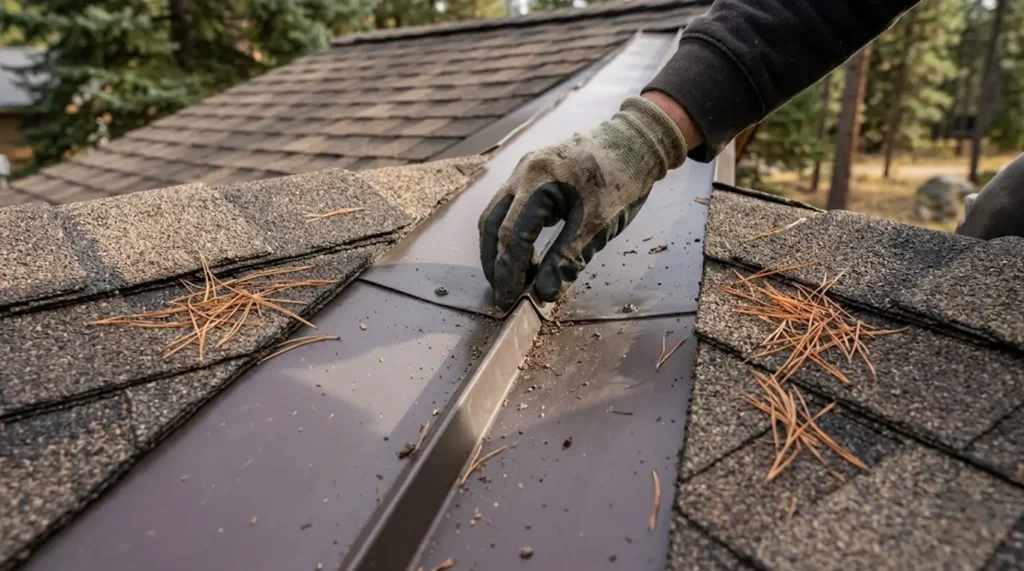
Gutters, roof edges, and downspout outlets are useful observation points because they show part of the drainage path. From the ground, a contact may notice a newly separated gutter section, discharge collecting near an entrance, or overflow that was absent in the baseline photographs. Record where the water appears and whether it is associated with rain or a thaw.
A visible icicle or ice buildup deserves context rather than a quick diagnosis. Photograph it from a safe distance and keep people away from places where material could fall. A professional can evaluate whether the concern involves drainage, roofing details, or conditions inside the building. The earlier Sandpoint first-freeze roof guide explains the roof transitions that deserve attention before cold weather.
Include attic moisture questions in the inspection handover
Roof monitoring also benefits from knowing whether an inspection has identified attic moisture or ventilation concerns. Keep the relevant findings with the property records and ask the contractor what signs the local contact can observe safely in ordinary rooms. An existing report can guide the next assessment without expecting the person checking your home to diagnose a roof assembly.
ENERGY STAR’s attic ventilation guidance explains that insulation, air sealing, and ventilation work together to manage heat and moisture. It also warns against blocking soffit vents. If ice buildup or interior moisture repeatedly appears, ask a professional to evaluate those conditions together. SkyRight’s roof and attic ventilation guide offers further background for that conversation.
Agree on when professional assessment is needed
Contact a roofing professional promptly about a new active leak, visible storm damage, a displaced roof component, or a recurring change near the same roof transition. Share the photographs, dates, and any relevant previous repair information. Describe observations plainly and let the contractor determine the likely cause and suitable next step.
Structural warning signs require a more urgent response. The Pacific Northwest National Laboratory’s snow-load guidance identifies concerns including bowing structure, sticking doors, and unusual creaking. Snow loads vary with the building and conditions. A photograph or a simple snow-depth estimate cannot establish that a roof is safe. If there is apparent structural movement, falling material, or an immediate danger, keep people clear, leave the affected area, and contact emergency services.
A monitoring plan should also identify who handles other urgent building concerns. Water near electrical equipment, for example, needs appropriate emergency attention. The local contact should know how to reach help without entering a hazardous area.
Review the plan before you leave and after you return
Before departure, confirm the contact has received the instructions and can find the photo folder. Check that telephone numbers work, explain how you will respond while traveling, and name a backup decision-maker if you expect to be unavailable. Discuss any unresolved concern with your contractor before leaving.
When you return, review the observations and arrange follow-up for reported changes. Add service records and new photographs to the same folder. That history makes the next absence easier to organize and gives future inspections a clearer starting point.
Questions about winter roof monitoring in Sandpoint
How often should someone check the house while I am away?
Agree on a schedule suited to your property, length of absence, and any existing concerns. Include a way to request an extra visit after significant weather when conditions allow safe access. A contractor or property manager familiar with the home can help you set the scope.
Should the person checking my home clear snow from the roof?
Keep the handover focused on safe observations. Roof access and snow removal involve hazards and should be assessed by a qualified professional with suitable equipment and a plan for the building.
Does a ceiling stain show exactly where a roof leak starts?
The stain provides a useful location to report, but a contractor must investigate the source. Share the room name, photographs, timing, and whether the mark has changed.
Can monitoring guarantee that a leak will be found immediately?
Visits provide observations at particular times. Use the plan to improve communication and response, and address known maintenance concerns before departure.
What should I send when requesting a roofing assessment?
Include the property address, your contact details, the observed concern, safe photographs, and relevant service history. Explain your travel schedule and who can provide access. Contact SkyRight or call (208) 597-0101 to discuss a Sandpoint roofing assessment.