

October is the point when roofing problems in Sandpoint can change from minor maintenance concerns into winter problems.
As of October 6, the National Weather Service is forecasting a significant temperature change for the Sandpoint area this weekend. After mild weather through Friday, shower chances increase Saturday, snow levels are expected to lower Saturday night, and overnight temperatures may reach approximately 31°F Saturday night and 30°F Sunday night. Weather.gov
That does not mean Sandpoint is about to experience a major winter storm.
It does mean homeowners are entering the period when rain, freezing temperatures, snowmelt and freeze-thaw cycles begin exposing weaknesses that may have gone unnoticed during summer.
The most useful question is therefore not, “Will it snow this weekend?”
It is:
Is my roof ready for the first sustained period of cold and wet weather?

Why the First Freeze Matters to a Roof
Water is relatively easy to manage when it can move freely.
Problems become more complicated when water enters a small gap and temperatures then fall below freezing. Moisture can remain around roof edges, flashing, gutters and other transitions before freezing or refreezing.
A first cold spell does not usually “create” a healthy roof problem from nothing. More often, it exposes an existing weakness.
Examples include a deteriorated pipe boot, loose flashing, a partially clogged valley, damaged shingles or poor drainage.
That is why early October is still an excellent time to identify problems before winter limits repair opportunities.
Contact Us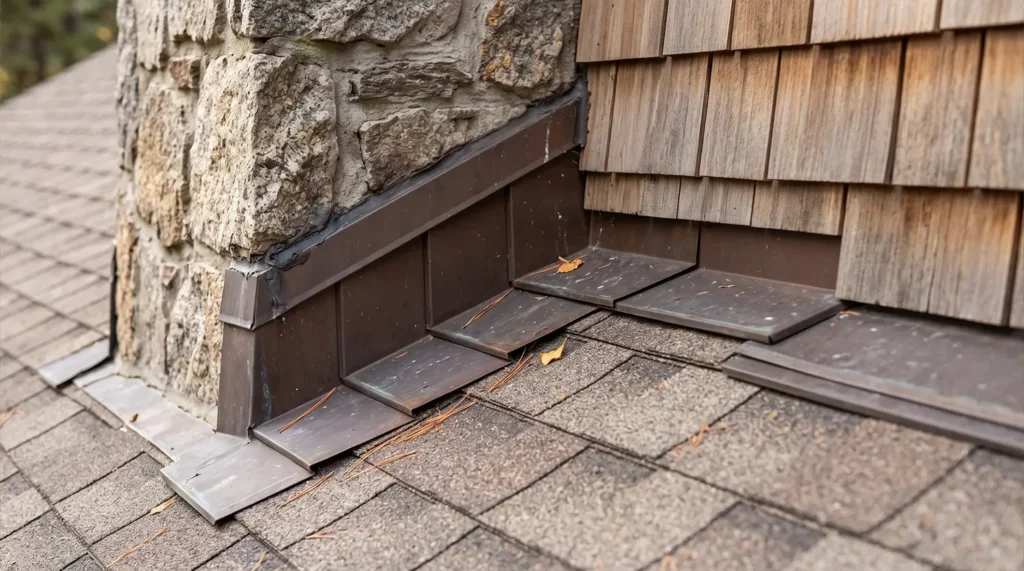
Start With Flashing, Not Just Shingles
Homeowners naturally look at shingles when thinking about roof condition, but many leaks develop around transitions rather than through the middle of an undamaged roof surface.
Flashing directs water around chimneys, walls, dormers, skylights and roof penetrations.
If flashing becomes loose, corroded, improperly sealed or separated from surrounding roofing materials, moisture can enter areas that are difficult to see from the ground.
Pay attention to any previous leak that appeared close to a chimney, wall, skylight or upper-story transition.
A bead of sealant is not automatically a permanent flashing repair. The underlying flashing configuration should be evaluated when leaks repeatedly return.
Roof Valleys Become High-Flow Areas
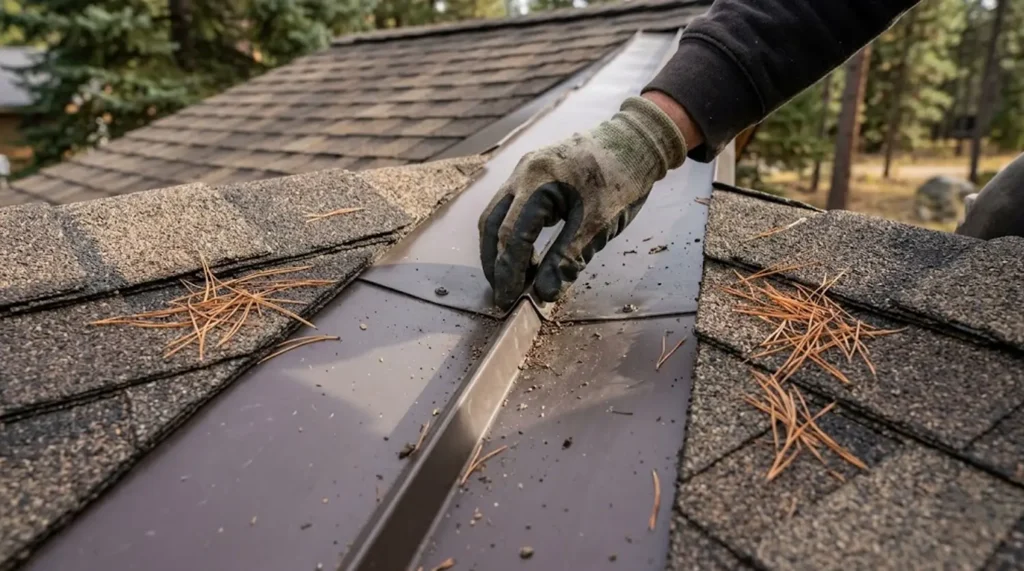
Valleys collect water from two roof slopes.
During a rain event or snowmelt, this means considerably more water may pass through a valley than across an ordinary section of roof.
Leaves, pine needles and small branches can collect in these areas during fall. That debris may slow drainage and hold moisture against roofing materials.
Homeowners should not climb onto steep or wet roofs to clear a valley themselves. But many significant debris accumulations can be spotted safely from the ground.
If a valley shows visible debris, damaged shingles, unusual staining or a history of leakage, have it checked before winter.
Inspect Roof Edges Before Ice Becomes the Problem
Roof edges experience an unusual combination of water, cold air, gutters and changing temperatures.
They are also where ice-dam symptoms tend to become visible.
Sandpoint’s current residential design criteria specifically require ice-barrier underlayment and list a 55 psf residential roof snow load. The city also specifies a 115 mph three-second wind gust for its design criteria. Sandpoint, Idaho
These figures should not be used by a homeowner to calculate how much snow an older roof can safely hold. Roof age, framing, alterations, snow drifting and other conditions matter.
Instead, the criteria illustrate an important point: snow, ice and winter moisture are structural roofing considerations in Sandpoint, not unusual events.
Gutters Need a Clear Exit Path
A gutter full of leaves or pine needles does more than create an untidy roofline.
It can restrict drainage.
During rain or snowmelt, water needs to move from the roof surface into the gutter, through the downspout and away from the building.
Watch what happens during rainfall.
If water pours over the gutter edge, flows behind the gutter, exits slowly from a downspout or pools near the foundation, the drainage system deserves attention.
Fall is also a good time to inspect whether gutters are pulling away from fascia or holding standing water.
Check Pipe Boots and Other Roof Penetrations
Plumbing vents and other roof penetrations create openings through the roofing system.
The surrounding boot or flashing is designed to keep those openings watertight.
Over time, materials can crack, separate or deteriorate.
A small problem around a penetration can cause a surprisingly persistent leak because water may follow framing or decking before becoming visible inside the home.
If an interior stain appears in approximately the same area every time it rains or snow melts, penetration flashing should be part of the inspection.
Do Not Ignore the Attic
Some winter moisture problems begin below the roofing material.
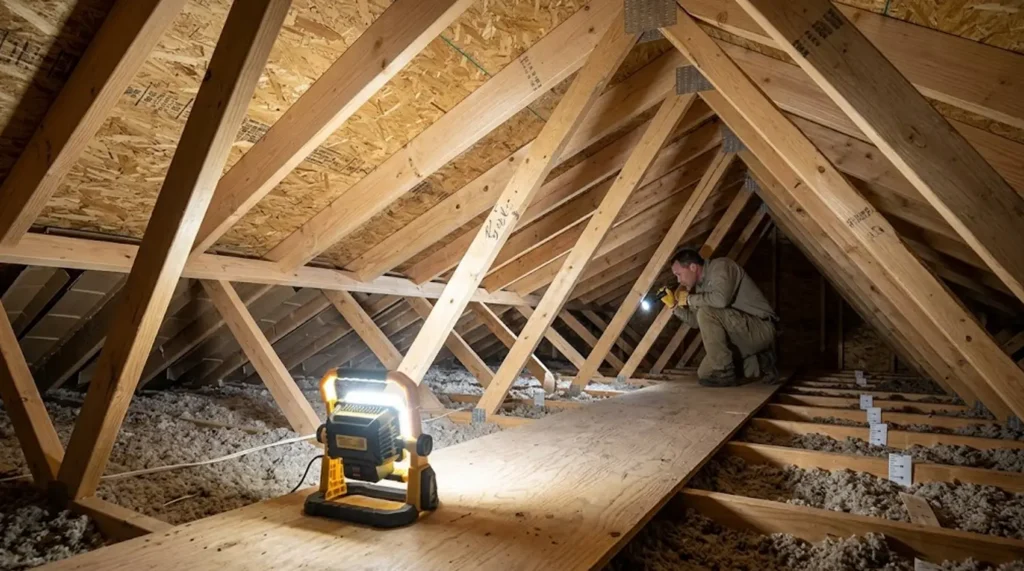
Warm, moist indoor air entering a cold attic can contribute to condensation or frost. Uneven heat loss can also warm portions of the roof surface while colder eaves remain below freezing.
That is one reason attic insulation, air sealing and ventilation are important components of winter roof performance.
Homeowners with safe attic access can look for dark staining, damp insulation, frost, condensation or musty odors.
Finding moisture does not automatically identify the cause. A professional evaluation may need to distinguish between an exterior roof leak and interior condensation.
Repair or Replace Before Winter?
Finding one problem does not automatically mean a roof needs replacement.
A localized flashing problem, isolated damaged shingle or deteriorated pipe boot may be repairable when the surrounding roofing system remains healthy.
Replacement becomes more worth discussing when the roof has recurring leaks, deterioration across multiple slopes, brittle or failing shingles, extensive storm damage or repeated repairs that no longer solve the underlying problem.
The purpose of an inspection should be to determine what is actually failing, not automatically to recommend the largest project.
Metal Roofs Need Fall Attention Too
Metal roofing can perform very well in North Idaho, but it is not maintenance-free.
Before winter, concerns may include flashing, seams, exposed fasteners on applicable systems, penetrations, snow-retention components and drainage areas.
Homes with metal roofs should also consider where sliding snow could affect walkways, entries, decks or gutters.

What Sandpoint Homeowners Should Do This Week
Use the remaining dry weather to observe your roofing system from the ground. Pay particular attention to areas that leaked last winter, changes in shingles or panels, clogged gutters, roof-valley debris and interior moisture.
If the roof looks normal and has no history of problems, winter preparation may involve routine maintenance.
If something looks different, October provides an opportunity to investigate it before the roof is covered by snow or ice.
SkyRight Roofing and Gutters provides roof inspections, roof repair, roof replacement, residential roofing, metal roofing and gutter services in Sandpoint and surrounding North Idaho communities.
To discuss a roof concern or schedule an evaluation in Sandpoint, contact SkyRight Roofing and Gutters at (208) 597-0101.
CALL US (208) 597-0101