

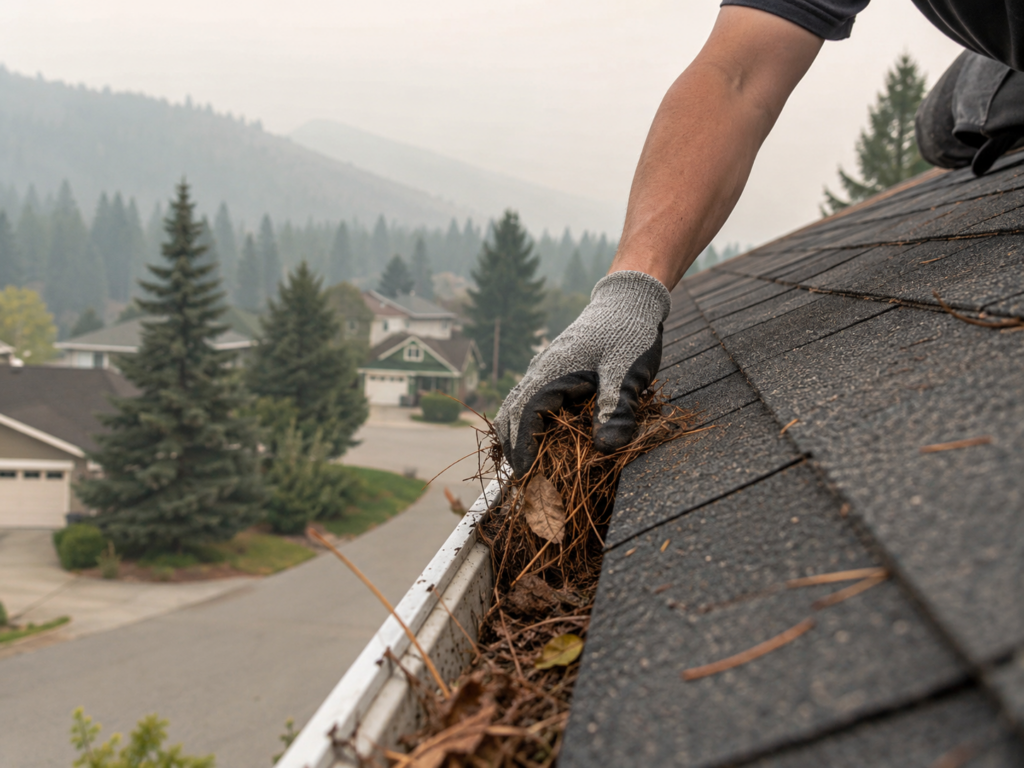
A practical safety guide for Post Falls homeowners during regional wildfire smoke, reduced air quality and elevated fire risk.
| CURRENT-CONDITIONS NOTE — AUGUST 4, 2026 Regional wildfire smoke is affecting the Inland Northwest. Idaho air-quality officials have issued an advisory for North Idaho, while the National Weather Service forecast for Post Falls includes smoke or haze. Post Falls homeowners should follow official alerts first and postpone nonessential roof work until air quality, visibility and temperatures allow safe outdoor activity. |
Wildfire conditions do not have to reach the city limits to affect homeowners in Post Falls. Smoke can travel across the region, reduce visibility and create unhealthy conditions for outdoor work. At the same time, hot and dry weather can leave pine needles, leaves and other debris around a home ready to ignite if wind-driven embers arrive from a nearby fire.
For homeowners who need local help, SkyRight provides roofing services in Post Falls, including inspections, repairs, roof replacement, metal roofing and gutter work. The most important rule during an active emergency, however, is simple: protect people first, follow evacuation instructions and never climb onto a roof in smoke, extreme heat or high wind.
What Official Local Sources Are Reporting
The Idaho Department of Environmental Quality air-quality forecast for the Coeur d’Alene region reports wildfire-smoke impacts and an active advisory. The National Weather Service forecast for Post Falls provides the latest smoke, haze, wind and temperature forecast. For fire and evacuation information west of the Idaho state line, homeowners can monitor Spokane County Wildfire Resources. These official pages should be checked again immediately before any outdoor maintenance or travel.
Why Wildfire Smoke and Embers Matter to a Roofing System
Smoke by itself does not automatically mean a roof has suffered structural damage. The larger concern is the combination of dry debris, existing roof defects, wind and airborne embers. Embers can lodge in roof valleys, collect in gutters, settle behind chimneys or reach vulnerable openings around vents and eaves. A roof with missing shingles, separated flashing or an exposed opening has less protection than a complete, well-maintained system.
Post Falls roofs already experience snow, freeze-thaw cycles, wind and seasonal debris. SkyRight’s Post Falls roof maintenance, repair and replacement guide explains how these local stresses affect shingles, flashing, drainage and attic ventilation throughout the year. Wildfire season adds another reason to keep those components maintained.
1. Put Personal Safety Ahead of Property Maintenance
Do not climb onto a roof while air quality is unhealthy, visibility is reduced or roof surfaces are extremely hot. Smoke can irritate the eyes and lungs, while heat, dehydration and poor footing increase fall risk. A homeowner should never delay an evacuation to clean a gutter, spray a roof or collect photographs.
Follow evacuation orders and emergency alerts immediately.
Keep children, older adults, pets and people with heart or lung conditions away from smoke.
Postpone nonessential exterior work during air-quality alerts and extreme heat.
Use binoculars or a camera zoom for a preliminary ground-level check.
Keep ladders clear of power lines, emergency routes and firefighting operations.
2. Clear Dry Debris From Roofs and Gutters When Conditions Are Safe
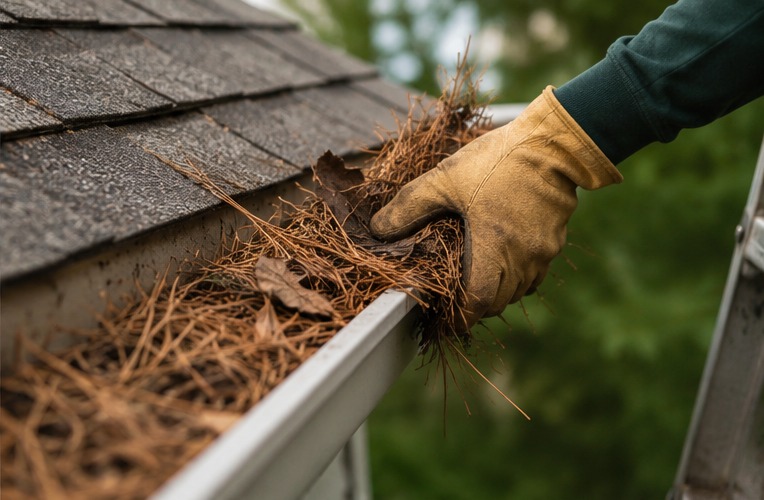
Dry pine needles and leaves can collect in gutters, roof valleys and other protected areas.
Once officials indicate that outdoor activity is safe, remove leaves, pine needles, twigs and seed pods from gutters, valleys, behind chimneys and where a roof meets a wall. A clogged gutter is both a drainage problem and a place where dry debris can accumulate. Homeowners who cannot clean gutters safely should schedule professional gutter service in Post Falls rather than working from an unstable ladder or walking on the roof.
Collected material should be bagged or disposed of according to current local rules. Do not burn yard waste or roofing debris during a burn restriction or air-quality advisory.
3. Inspect Shingles, Panels, Flashing and Roof Edges From the Ground
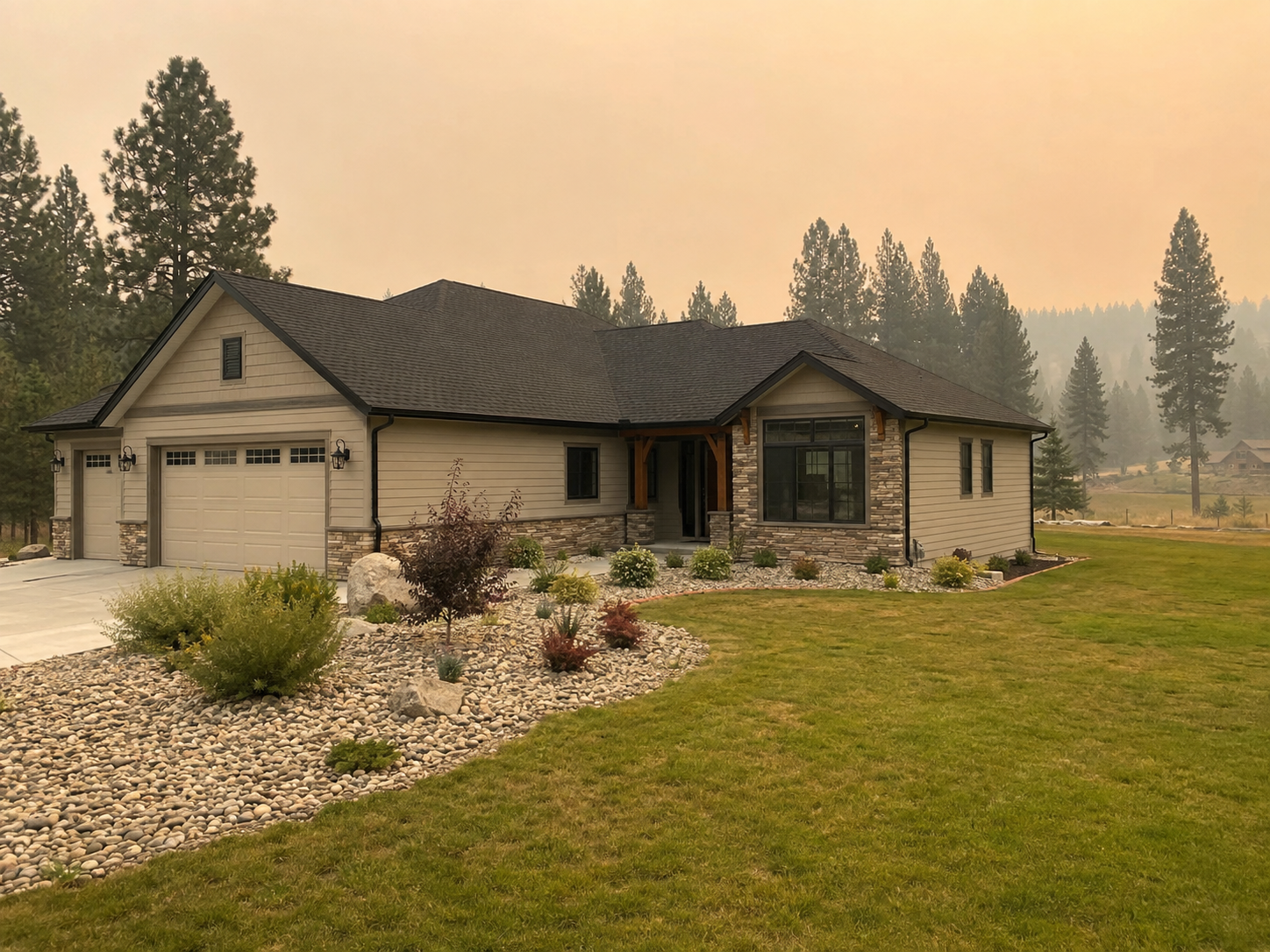
A professional inspection can identify openings and damaged components without putting a homeowner at unnecessary risk.
Look for missing shingles, lifted tabs, displaced ridge caps, loose metal trim, exposed underlayment, separated flashing, damaged fascia and gutters pulling away from the roof edge. Photograph visible concerns from a safe location and note when the problem appeared.
Not every damaged roof requires replacement. The right solution depends on the age of the roof, the size of the affected area, the condition of surrounding materials and whether water has reached the decking. Use SkyRight’s roof repair versus replacement guide to understand the decision process. Homeowners who see curling, cracking, granule loss or repeated lifting can also review common reasons roof shingles fail.
4. Pay Attention to Vents, Soffits and Other Openings
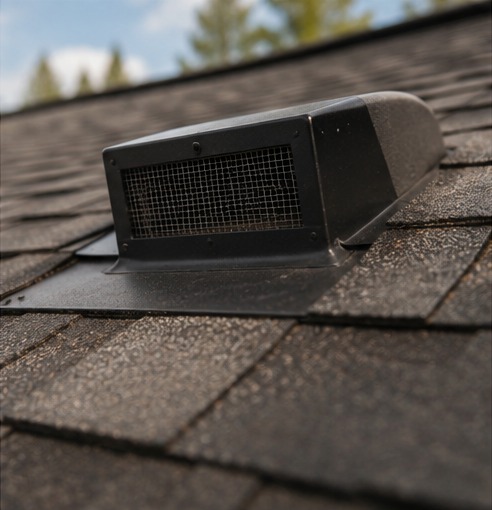
Roof vents and attic openings should be intact, properly screened and compatible with the roof’s ventilation design.
Damaged vent covers, missing screens and gaps around penetrations can allow smoke, debris or embers to reach concealed areas. Do not permanently block roof or attic ventilation. Instead, have broken components repaired with materials that preserve the intended airflow and comply with the roof system and local code.
Proper ventilation is also important outside wildfire season because it helps manage attic heat and moisture. SkyRight’s guide to roof and attic ventilation explains how intake and exhaust components work together and why random vent additions can create new problems.
5. Create a Cleaner Zone Around the Home
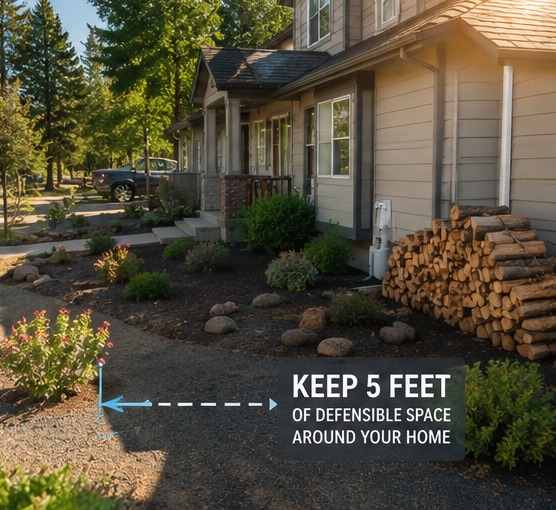
Reducing combustible material immediately next to the home complements roof and gutter maintenance.
Roof preparation is most effective when the area directly around the building is also maintained. Remove dry leaves and pine needles near siding, under decks and beside exterior stairs. Move firewood, cardboard, fuel containers, patio cushions and other combustible items away from walls and roof overhangs. Trim dead vegetation where permitted and use qualified help for branches near power lines.
A clean five-foot zone does not make a property fireproof, but it can reduce the number of combustible materials immediately next to the home and make routine inspection easier.
6. Review the Roof’s Fire Rating During Replacement Planning
Homeowners planning a future roof replacement should ask about the fire rating of the complete installed assembly, not only the visible surface material. The assembly may include the roof covering, underlayment, decking, edge details, flashing, fasteners and penetrations.
Many asphalt and metal systems can achieve strong fire performance when correctly specified and installed. A metal roofing system for a Post Falls home may offer durability and low combustibility, but no responsible contractor should describe a roof as completely wildfire-proof. Installation details and the condition of the entire property still matter.
7. Schedule an Inspection After Smoke and Heat Conditions Improve
A professional inspection is reasonable when a roof has visible damage, recurring leaks, heavy debris accumulation or components that cannot be evaluated safely from the ground. The inspection should identify the actual source of a concern and explain whether cleaning, a localized repair or broader replacement planning is appropriate.
Regular care is more effective than waiting for an emergency. SkyRight’s North Idaho roof maintenance and inspection calendar provides a seasonal schedule for checking shingles, flashing, gutters, ventilation and interior warning signs.
What a Post-Fire or Smoke-Event Roof Inspection May Include
Roof covering condition, including shingles or metal panels
Ridge caps, edges and areas vulnerable to wind uplift
Flashing around chimneys, walls, skylights and penetrations
Roof valleys and locations where debris can collect
Gutters, downspouts, fascia and drainage paths
Vent covers, screens, soffits and visible attic openings
Signs of water entry, heat exposure or impact damage
Photographs and a clear repair-versus-replacement recommendation
Frequently Asked Questions
Can wildfire smoke damage a roof?
Smoke alone does not necessarily cause structural damage. Concerns are more likely when there is heavy ash or debris, direct heat exposure, wind-driven embers or an existing opening in the roofing system.
Should I spray water on my roof?
Do not climb onto a roof or begin emergency watering without direction from local authorities. A wet roof does not make a home fireproof, and roof access during smoke, heat or wind can create a serious fall risk.
Is a metal roof fireproof?
No. Metal is noncombustible, and many properly designed metal roof assemblies can provide strong fire performance, but the complete roof system, openings and surrounding property still affect risk.
Should I clean gutters during an air-quality alert?
Wait until outdoor conditions are safe. If gutters cannot be reached securely from an appropriate ladder, arrange professional cleaning instead of walking on the roof.
When should I call a roofing contractor?
Call when you see missing materials, exposed decking, detached flashing, a gutter pulling away, water intrusion or an opening that cannot be safely evaluated from the ground. Call emergency services—not a roofer—when there is an active fire, evacuation order, downed line or immediate threat to life.
Local Roof and Gutter Assistance in Post Falls
SkyRight Roofing and Gutters provides residential roofing, commercial roofing, roof repair, roof installation, roof replacement, metal roofing, flat roofing, roof inspection and gutter services in Post Falls and surrounding North Idaho communities.
| REQUEST AN INSPECTION WHEN CONDITIONS ARE SAFE SkyRight Roofing and Gutters • 510 Clearwater Loop, Suite #100, Post Falls, ID 83854 • (208) 897-2828 • skyright.com |
Authoritative Local Sources
Idaho Department of Environmental Quality — Coeur d’Alene Area Air Quality Forecast
National Weather Service Spokane — Post Falls Detailed Forecast
Spokane County Emergency Management — Wildfire Resources