
At a Glance: How to Protect Your Roof in Winter
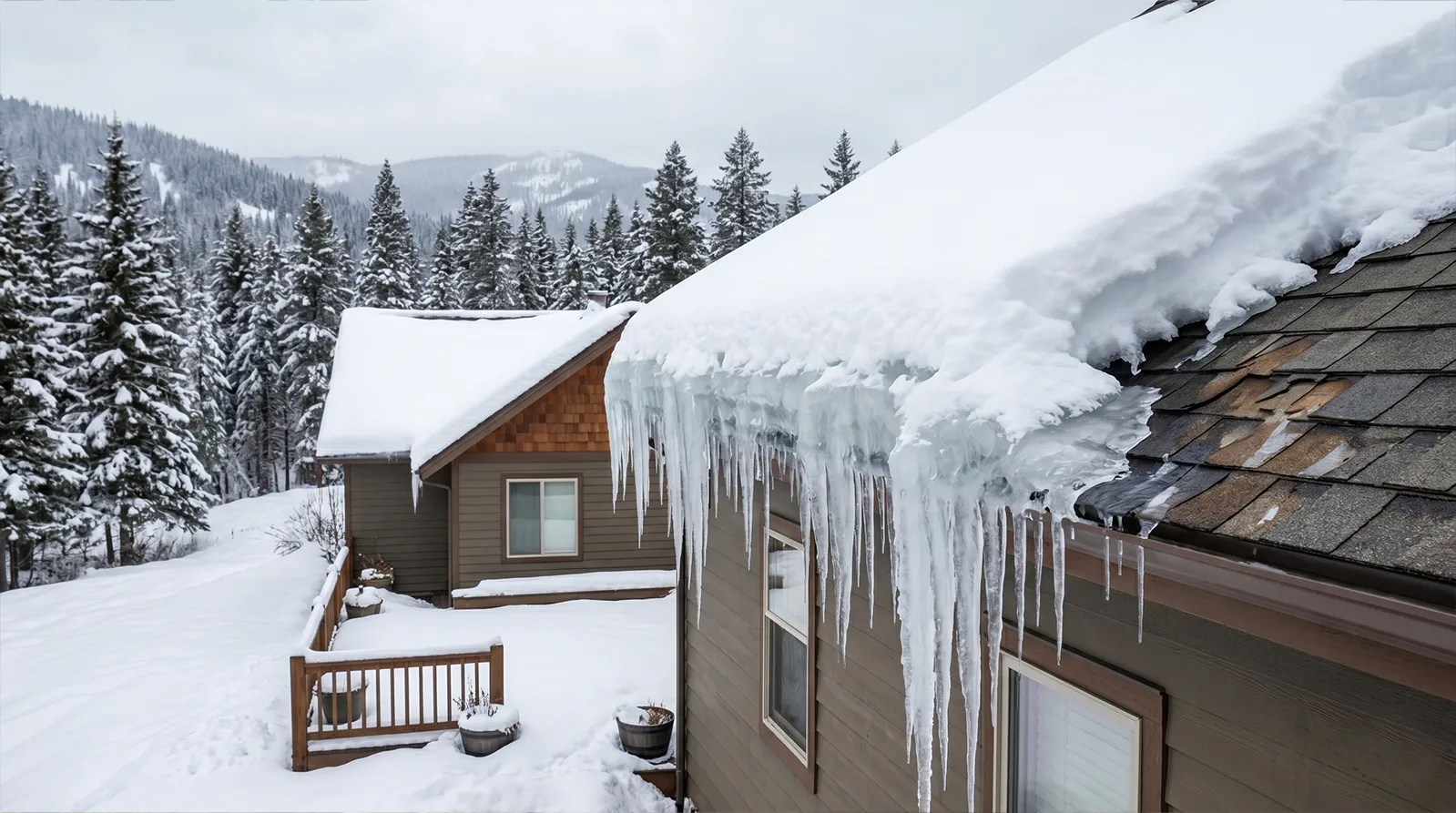
North Idaho roofs face a tough winter cycle: snow accumulation, daytime thawing, overnight freezing, ice at roof edges, heavy gutters, attic moisture, and sudden leaks during melt cycles.
The best winter roof protection plan is:
- Keep gutters and valleys clear before winter.
- Inspect the roof in fall before snow arrives.
- Watch for ice dams at eaves and gutters.
- Do not chop ice with sharp tools.
- Avoid walking on snowy or icy roofs.
- Use professional help for dangerous snow or ice buildup.
- Fix ventilation, insulation, and air leakage problems that contribute to ice dams.
- Schedule roof repair before winter if shingles, flashing, pipe boots, or gutters are already weak.
For safety, NRCA generally does not recommend that homeowners remove ice dams or shovel snow off roofs because they can injure themselves or damage roof coverings. NRCA also warns against using ice picks, shovels, or sharp-edged tools that can damage shingles and flashing.
SkyRight helps homeowners in Coeur d’Alene, Post Falls, Sandpoint, Hayden, Rathdrum, Athol, Spirit Lake, and surrounding North Idaho communities inspect, repair, and prepare roofing systems before winter damage becomes an expensive leak.
For local help, visit SkyRight’s Coeur d’Alene roofing page, Post Falls roofing page, residential roofing services in Coeur d’Alene, roof repair vs replacement guide, or roof maintenance calendar.
Quick Answer: What Causes Ice Dams?
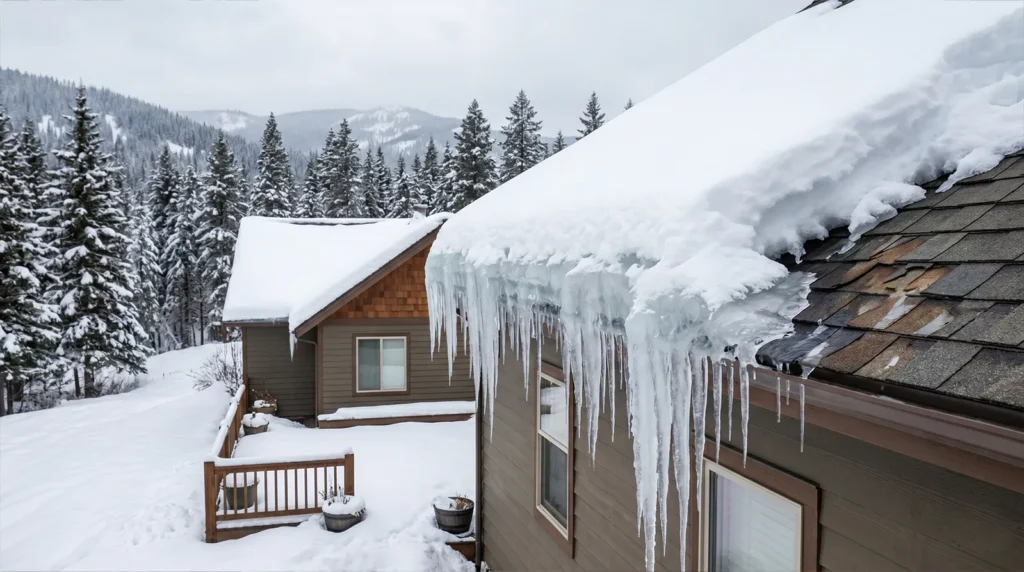
Ice dams usually form when heat from inside the home warms the roof deck, snow melts higher on the roof, and that meltwater refreezes near colder roof edges. Once ice blocks drainage, water can back up under shingles and leak into the home.
The long-term fix is usually not “more salt” or “more roof scraping.” The better solution is to control the conditions that create uneven melting:
|
Cause |
What Happens |
Better Long-Term Fix |
|
Warm attic |
Snow melts from below |
Improve air sealing, insulation, and ventilation |
|
Poor ventilation |
Roof deck stays too warm |
Balance intake and exhaust ventilation |
|
Clogged gutters |
Meltwater cannot drain |
Clean gutters and downspouts before winter |
|
Roof valleys full of debris |
Snowmelt slows down |
Clear valleys before freeze-thaw season |
|
Heat loss around can lights, attic hatches, or ductwork |
Warm air leaks into attic |
Seal air leaks and improve insulation |
|
Complex roof design |
Snow collects in valleys, dormers, and transitions |
Inspect vulnerable details before winter |
|
Poor roof-edge protection |
Water backs up near eaves |
Use proper underlayment and flashing during roof replacement |
University of Minnesota Extension explains that ice dam prevention depends heavily on controlling heat loss into the attic through air sealing, insulation, and roof ventilation; complex roof designs, skylights, recessed lights, and attic ductwork can increase ice dam risk.
What Winter Roof Protection Means
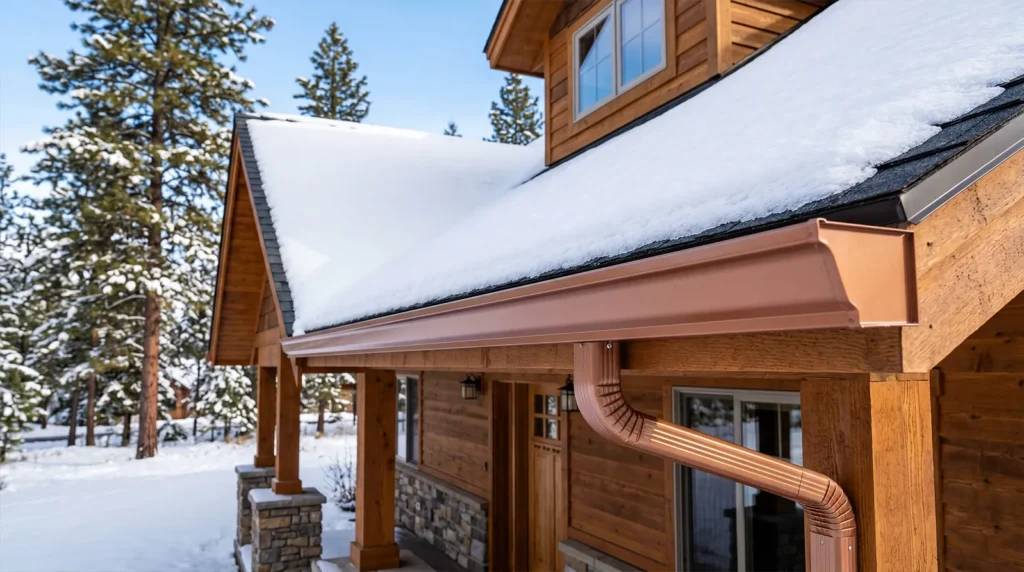
Winter roof protection means preparing the roof system before snow, ice, and freeze-thaw cycles expose weak points.
A winter-ready roof is not just a roof with new shingles. It is a complete system that manages:
- snow load;
- roof drainage;
- roof-edge ice;
- attic heat;
- attic moisture;
- air leakage;
- underlayment;
- flashing;
- gutters;
- downspouts;
- roof valleys;
- penetrations;
- ventilation;
- emergency leak response.
A roof can look fine in July and leak in January if the attic is warm, gutters are clogged, flashing is loose, or roof-edge protection is weak.
For seasonal planning, see SkyRight’s North Idaho roof maintenance and inspection calendar.
How Ice Dams Form
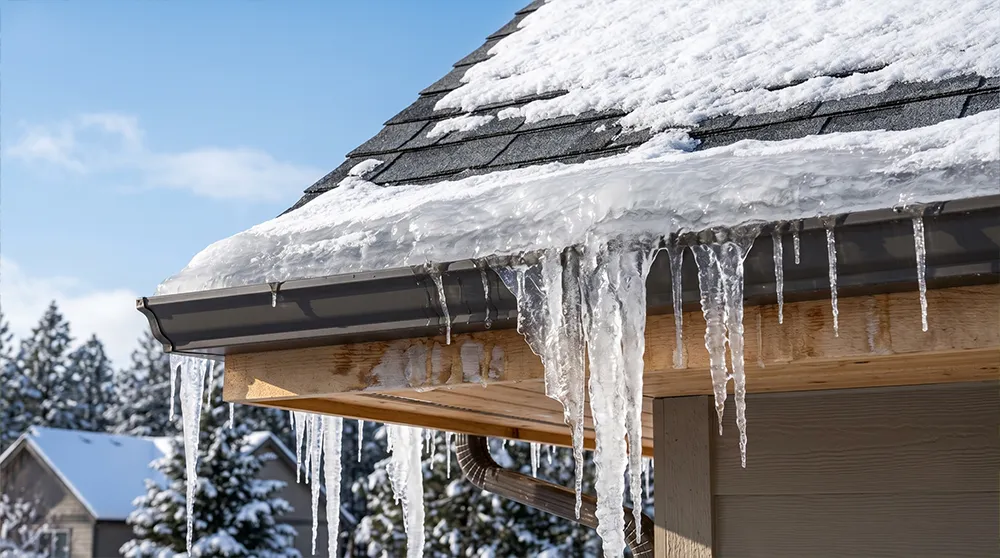
Ice dams usually form in four steps:
- Snow collects on the roof.
- Heat from the home warms the roof deck.
- Snow melts and runs down the roof.
- Meltwater reaches the colder eave or gutter area and refreezes.
Over time, that frozen ridge of ice blocks water from draining. The trapped water can back up under shingles, enter roof edges, damage insulation, stain ceilings, and create hidden moisture problems.
Where Ice Dams Usually Form
Ice dams often form near:
- eaves;
- gutters;
- roof valleys;
- dormers;
- skylights;
- low-slope transitions;
- roof-to-wall intersections;
- shaded roof edges;
- areas above heated living spaces;
- areas where attic insulation is thin or disturbed.
Why Ice Dams Are Common in North Idaho
North Idaho has the right conditions for ice dams:
- snow accumulation;
- cold nights;
- daytime thawing;
- shaded roof areas;
- wooded lots;
- steep roof transitions;
- older homes with insulation gaps;
- homes with complex rooflines;
- seasonal freeze-thaw cycles.
A single ice dam does not always mean the roof needs replacement. But repeated ice dams are a warning sign that the roof, attic, insulation, ventilation, or drainage system needs attention.
Don't wait for winter melt cycles to ruin your ceilings and walls
By the time a water stain appears on your drywall, an ice dam may have been trapping moisture behind your fascia for weeks. Stop the cycle before the heavy snow hits. Let our local team analyze your roof-edge details and reinforce your winter defense plan today.
Snow Load Basics for Homeowners
Snow load is the weight of snow and ice on the roof. Fresh powder is lighter. Wet snow, packed snow, rain-on-snow, and ice are much heavier.
Homeowners should pay attention after:
- repeated snowstorms without melting;
- wet snow followed by freezing temperatures;
- rain falling on existing snow;
- drifting snow on one roof area;
- heavy snow on low-slope roofs;
- snow piling behind dormers, valleys, or roof transitions;
- visible sagging;
- interior cracking or sticking doors after heavy snow.
FEMA’s snow load safety guidance notes that roof snow removal can be more hazardous than beneficial when not done correctly, creating risk both to people and to the roof structure.
Warning Signs of a Possible Snow Load Problem
Call a professional immediately if you notice:
- visible roof sagging;
- new ceiling cracks;
- cracking or popping sounds;
- doors or windows suddenly sticking;
- roof leaks during heavy snow;
- heavy drifted snow in one area;
- bending roof members visible in attic;
- water leaking after rain-on-snow;
- unusual movement in roof overhangs.
Do not climb onto a roof to “check the load.” Snowy and icy roofs are dangerous, and roof access can make the situation worse.

Freeze-Thaw Damage Explained
Freeze-thaw damage happens when water repeatedly melts, moves, refreezes, expands, and stresses roofing details.
This can affect:
- shingles;
- flashing;
- pipe boots;
- fasteners;
- gutters;
- fascia;
- roof valleys;
- low-slope transitions;
- chimney areas;
- skylights;
- attic moisture levels.
Common Freeze-Thaw Problems
|
Problem |
What It Looks Like |
Why It Matters |
|
Roof-edge ice |
Ice along eaves or gutters |
Water may back up under shingles |
|
Gutter ice |
Gutters fill with ice or sag |
Can damage fascia and drainage |
|
Valley ice |
Ice forms in high-water-flow areas |
Valleys become leak-prone |
|
Pipe boot cracks |
Rubber around vent pipes splits |
Small penetration leaks can start |
|
Flashing movement |
Metal details loosen or separate |
Chimneys and walls can leak |
|
Attic frost |
Frost on nails or roof decking |
Moist indoor air may be reaching attic |
|
Ceiling stains after thaw |
Water appears when snow melts |
Leak may be active only during melt cycles |
Freeze-thaw damage is often slow at first. The homeowner may only notice a stain after several winter cycles.
Fall Roof Preparation Checklist
The best time to prevent winter roof problems is before winter.
Before Snow Arrives, Check:
- missing shingles;
- loose shingles;
- cracked shingles;
- damaged ridge caps;
- cracked pipe boots;
- chimney flashing;
- wall flashing;
- skylight flashing;
- roof valleys;
- gutter attachment;
- downspout flow;
- attic ventilation;
- attic insulation gaps;
- tree branches over the roof;
- moss or debris on shaded slopes.
Fall Roof Prep Table
|
Task |
Why It Helps in Winter |
|
Clean gutters |
Reduces overflow, ice buildup, and roof-edge water problems |
|
Clear valleys |
Keeps snowmelt moving through high-flow areas |
|
Check flashing |
Reduces leak risk at chimneys, walls, and skylights |
|
Inspect pipe boots |
Prevents small winter leaks around roof penetrations |
|
Review ventilation |
Helps keep the roof deck colder and reduces ice dam risk |
|
Trim branches |
Reduces debris, impact damage, and shaded ice buildup |
|
Document roof condition |
Helps compare before and after storm damage |
|
Repair weak areas |
Prevents small issues from becoming winter leaks |
For gutter-related winter prep, visit SkyRight’s gutter services page or gutter services in Coeur d’Alene.
What to Watch During Winter
Homeowners do not need to climb on the roof to monitor winter roof health. Many warning signs can be seen from the ground or inside the home.
Exterior Winter Warning Signs
Look for:
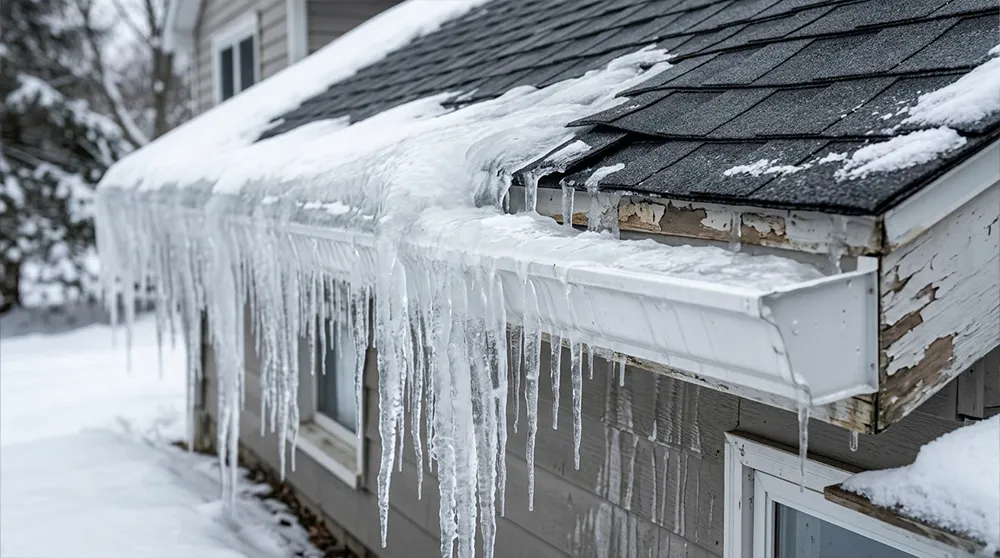
- large icicles at gutters;
- ice at roof edges;
- gutters pulling away;
- downspouts blocked by ice;
- snow drifting heavily in one area;
- shingles visible below ice ridges;
- roof valleys packed with snow;
- bent or sagging gutters;
- branches sitting on the roof;
- water spilling over gutters during thaw.
Interior Winter Warning Signs
Look for:
- new ceiling stains;
- damp drywall;
- bubbling paint;
- musty odors;
- attic frost;
- wet insulation;
- stains near chimneys;
- stains near skylights;
- moisture around bathroom fans;
- water during thaw cycles.
A winter leak is not always a roof surface failure. It may be an ice dam, flashing problem, ventilation problem, attic air leak, gutter issue, or combination of several problems.
Safe Snow and Ice Removal Rules
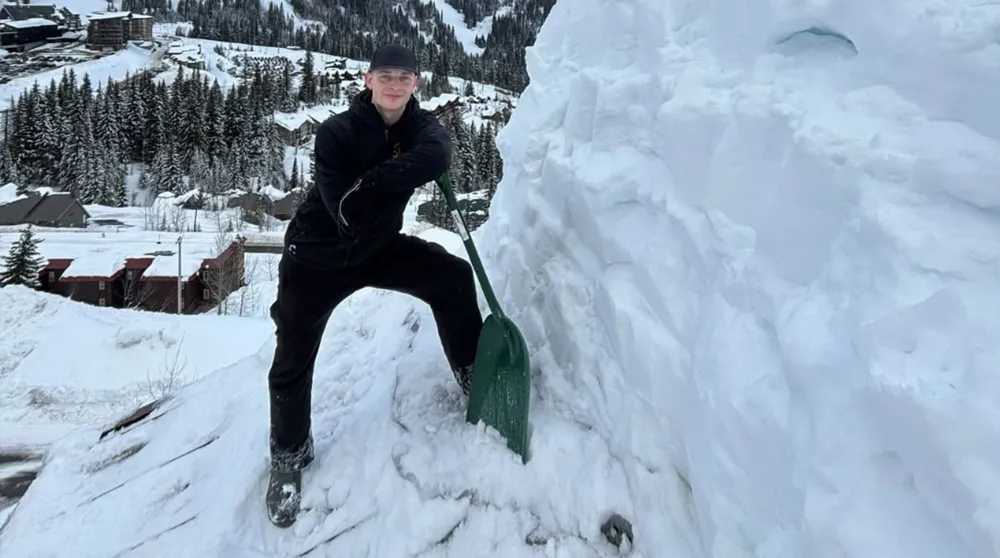
Winter roof work is dangerous. OSHA warns that workers removing snow from rooftops face serious hazards, including falls from roof edges, skylights, ladders, and aerial lifts. OSHA recommends using methods that avoid going onto roofs when possible and using appropriate fall protection and trained workers when roof access is required.
Safer Homeowner Actions
From the ground, homeowners may be able to:
- visually inspect the roof;
- photograph visible ice or snow problems;
- clear snow from around downspout exits;
- keep walkways below eaves clear;
- use a roof rake from the ground only if safe;
- stop if snow or ice is falling toward them;
- call a professional for steep, tall, icy, or complex roofs.
When to Call a Professional
Call a professional if:
- the roof is steep;
- the home is more than one story;
- ice dams are large;
- snow is heavy and wet;
- gutters are filled with ice;
- there is an active leak;
- the roof has skylights;
- the roof is metal and shedding snow suddenly;
- there is concern about structural stress;
- the roof is difficult to access safely.
Professional roof snow removal and ice dam removal costs vary widely. Angi’s 2026 data lists professional roof snow removal around $200–$600 per visit, while ice dam removal averages about $1,200, with many homeowners spending around $650–$2,400 depending on size, method, labor rates, and emergency conditions.
Pricing disclaimer: These are general planning ranges only, not a SkyRight quote. Exact cost depends on roof size, pitch, access, snow depth, ice thickness, weather, urgency, roof material, and safety requirements.
Stay safe on the ground. Leave the dangerous ice removal to us.
Chopping at frozen eaves with sharp tools can shatter cold shingles and destroy underlying membranes, turning an ice issue into an immediate structural leak. SkyRight handles dangerous heavy snow removal and ice mitigation safely and professionally.
What Not to Do to an Icy Roof
Do not damage the roof while trying to protect it.
Avoid These Winter Roof Mistakes
|
Mistake |
Why It Is Risky |
|
Chopping ice with an axe or pick |
Can puncture shingles, flashing, gutters, and underlayment |
|
Using metal shovels aggressively |
Can scrape granules and damage roofing materials |
|
Walking on icy shingles |
Fall risk and possible roof surface damage |
|
Using salt directly on shingles |
Can damage roofing materials, landscaping, metal, and gutters |
|
Ignoring attic heat loss |
The ice dam may return |
|
Only clearing gutters after ice forms |
The root cause may be above the gutter |
|
Waiting until water enters the ceiling |
Hidden damage may already be spreading |
|
Letting large icicles hang over entries |
Falling ice can injure people and damage property |
|
Assuming metal roofs never have winter problems |
Snow slides, trim, gutters, and penetrations still need attention |
The safest winter roof protection plan is preventive: prepare in fall, monitor in winter, and repair roof system weaknesses before snow returns.
Gutters and Ice Dam Prevention
Gutters do not cause every ice dam, but clogged or frozen gutters can make winter roof-edge problems worse.
Gutter Issues That Increase Winter Risk
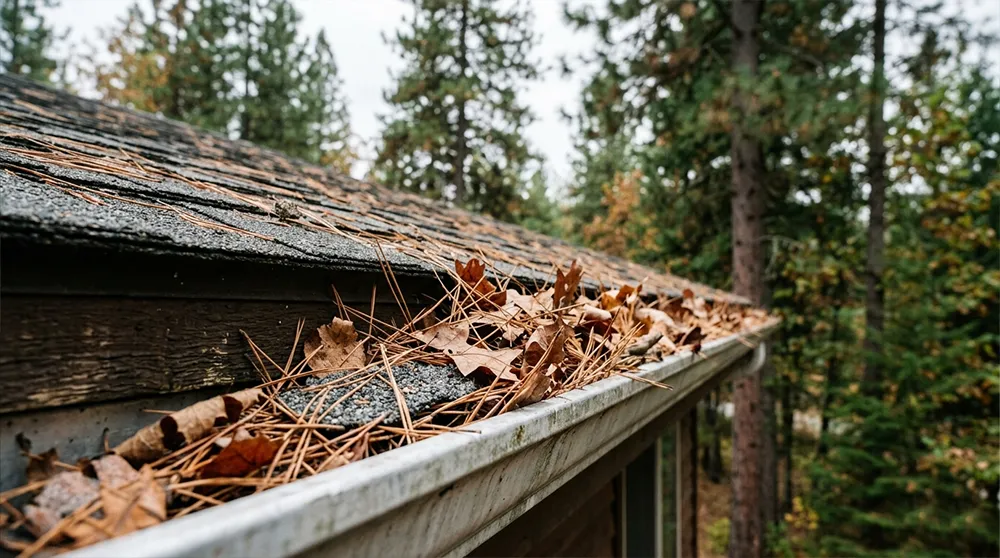
- leaves and pine needles;
- granules in gutters;
- poor gutter slope;
- downspouts clogged with debris;
- downspouts buried in snow;
- gutters pulling away from fascia;
- undersized drainage for roof area;
- ice-filled gutters;
- roof valleys dumping too much water into one section.
Gutter Winter Checklist
|
Gutter Task |
Best Timing |
Why |
|
Clean gutters |
Late fall |
Prevents blocked drainage before snow |
|
Check downspouts |
Fall and after storms |
Keeps meltwater moving away from the home |
|
Inspect fascia |
Fall |
Finds hidden water damage behind gutters |
|
Watch overflow |
During thaw |
Shows where water is blocked |
|
Clear ground snow near downspouts |
Winter |
Helps water exit during melt cycles |
|
Repair sagging gutters |
Before winter |
Reduces ice weight damage |
For drainage support, visit SkyRight’s gutter services page.
Ventilation, Insulation, and Attic Moisture
Many ice dam problems begin inside the home.
Warm indoor air can leak into the attic through:
- attic hatches;
- recessed lights;
- bathroom fans;
- ductwork;
- plumbing penetrations;
- wiring penetrations;
- top plates;
- poorly sealed ceiling areas;
- gaps around chimneys;
- missing insulation.
When warm attic air heats the underside of the roof deck, snow can melt unevenly. That meltwater can refreeze at colder eaves and create ice dams.
Pacific Northwest National Laboratory’s Building America Solution Center describes air sealing, insulation, and roof ventilation as key strategies for reducing ice dam formation in cold snowy climates.
Attic Warning Signs
Look for:
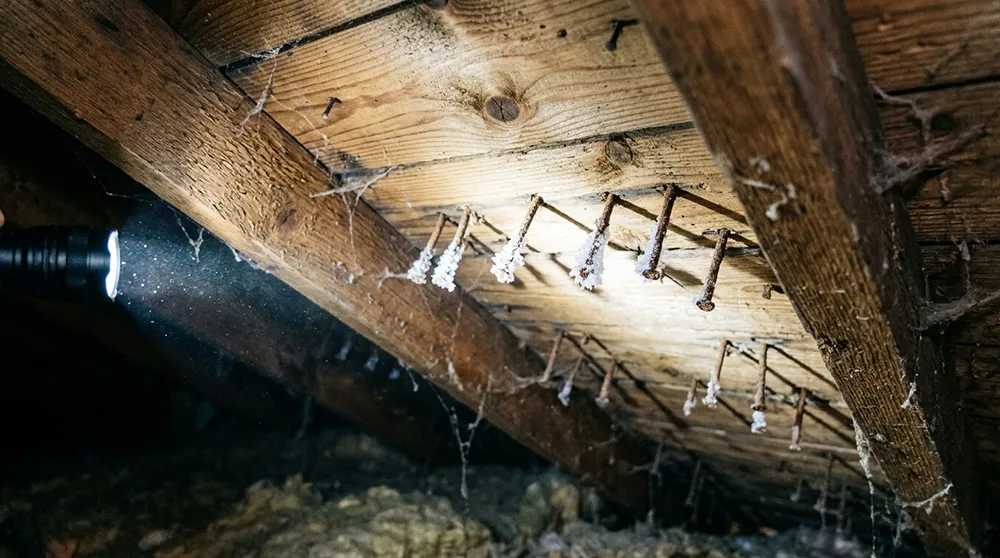
- frost on nail tips;
- wet insulation;
- damp roof decking;
- dark stains on sheathing;
- musty smell;
- bathroom fan exhausting into attic;
- blocked soffit vents;
- insulation pulled away from eaves;
- uneven snow melt patterns on the roof.
For more information, read SkyRight’s article on how attic ventilation affects roof longevity in cold and humid conditions or SkyRight’s guide to roof and attic ventilation.
Ice and Water Protection: What It Does and Does Not Do
Ice and water protection is a self-adhered underlayment used in vulnerable roof areas, often near eaves, valleys, roof penetrations, and other leak-prone transitions.
It can help protect the roof deck if water backs up under shingles, but it is not a magic solution.
Ice and Water Protection Helps With:
- eaves;
- valleys;
- roof penetrations;
- low-slope transitions;
- skylights;
- chimneys;
- dormers;
- areas with snow and ice exposure.
Ice and Water Protection Does Not Replace:
- proper ventilation;
- attic air sealing;
- adequate insulation;
- correct flashing;
- clear gutters;
- good roof design;
- timely roof maintenance;
- professional installation.
During a roof replacement, homeowners should ask where ice and water protection will be installed and why.
For asphalt roofing system planning, read SkyRight’s asphalt shingle and residential roofing materials guide.
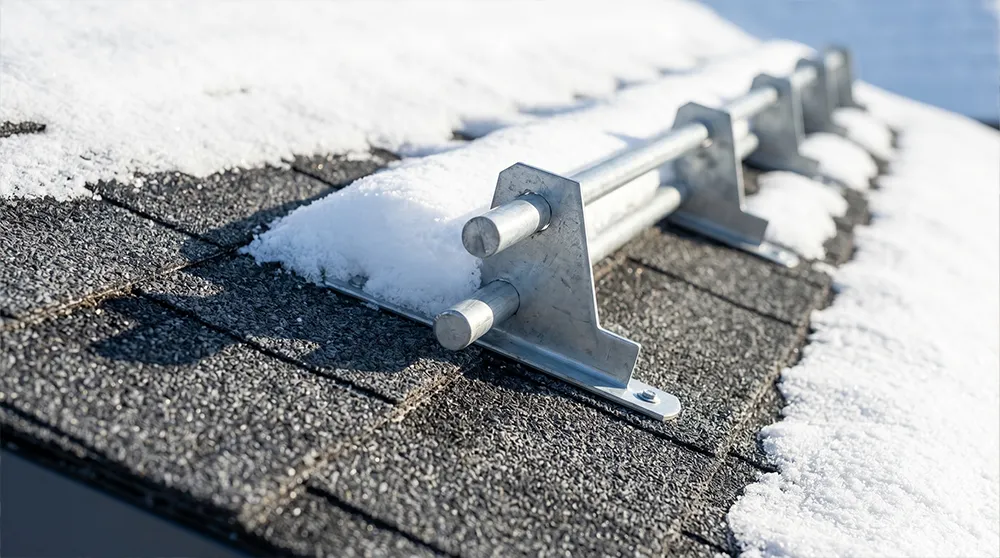
Asphalt Shingle Roofs in Winter
Asphalt shingle roofs can perform well in North Idaho when installed and maintained properly.
Winter Risks for Asphalt Roofs
- ice dams at eaves;
- granule loss from aggressive snow removal;
- lifted shingles from wind;
- cracked pipe boots;
- valley leaks;
- freeze-thaw stress around flashing;
- moss and debris holding moisture;
- attic heat causing uneven snow melt.
Asphalt Roof Winter Tips
- clean gutters before winter;
- inspect pipe boots and flashing in fall;
- avoid sharp tools on shingles;
- use caution with roof rakes;
- monitor granules at downspouts;
- address attic ventilation issues;
- repair lifted or missing shingles before snow.
For asphalt roof materials, visit SkyRight’s asphalt shingle materials guide.
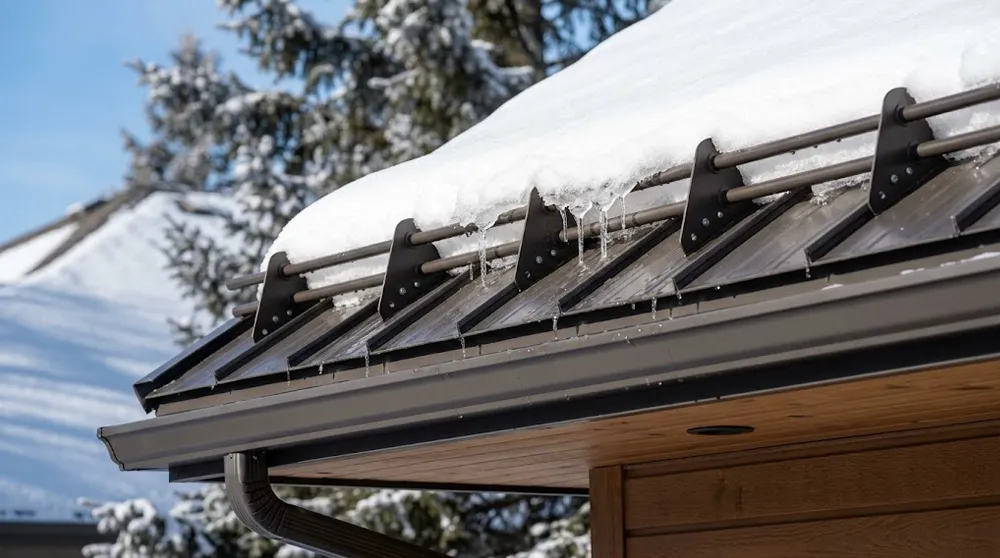
Metal Roofs in Winter
Metal roofs can be a strong option for snow regions, but they have their own winter considerations.
Winter Risks for Metal Roofs
- sudden snow sliding;
- damaged gutters from sliding snow;
- fastener or trim issues;
- ice at valleys or transitions;
- snow guards needed near entries;
- leaks around penetrations;
- condensation if ventilation is poor.
Metal Roof Winter Tips
- review snow-shedding paths;
- keep entries and walkways protected;
- inspect fasteners and trim;
- make sure gutters are designed for snow movement;
- check penetrations before winter;
- consider snow-management details where needed.
For metal roofing help, visit SkyRight’s metal roofing services page or metal roofing in Coeur d’Alene.
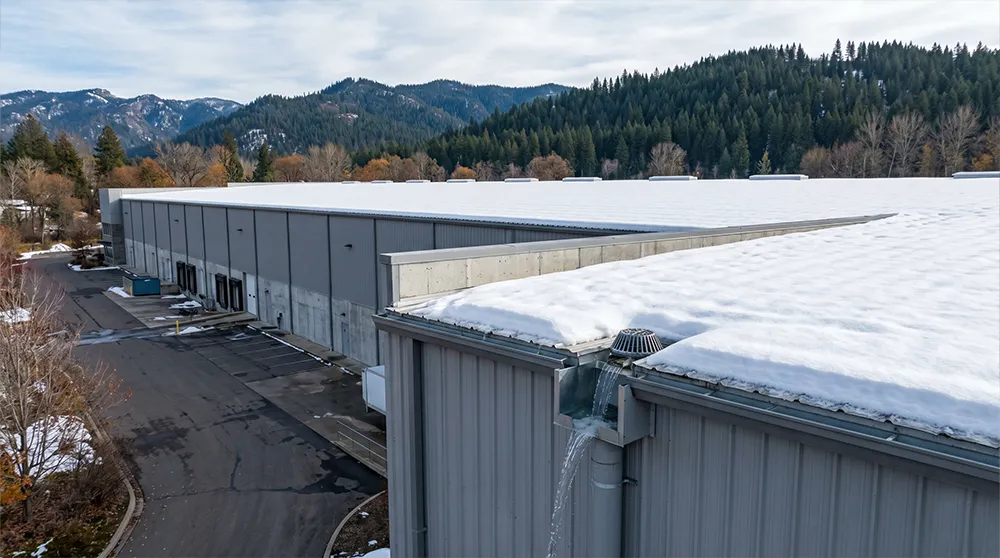
Flat and Low-Slope Roofs in Winter
Flat and low-slope roofs need special attention because snow and water do not drain the same way they do on steeper roofs.
Winter Risks for Flat Roofs
- ponding water;
- heavy snow accumulation;
- clogged drains;
- frozen scuppers;
- membrane punctures;
- seam stress;
- rooftop equipment leaks;
- ice buildup around drains;
- snow drifting against walls or parapets.
Flat Roof Winter Tips
- inspect drains before winter;
- clear debris from drainage paths;
- monitor snow accumulation;
- avoid puncturing the membrane;
- use professional snow removal when needed;
- check rooftop penetrations and seams;
- inspect after thaw cycles.
Flat roofing should not be treated like asphalt shingles. The membrane, seams, drainage, and roof access requirements are different.
Winter Roof Repair vs Replacement
Winter roof problems do not always mean full replacement. The right answer depends on whether the issue is isolated or system-wide.
Repair May Be Enough When:
- one pipe boot is leaking;
- one flashing detail has failed;
- a few shingles are missing;
- gutters need repair;
- one valley needs attention;
- attic ventilation can be improved;
- the roof is otherwise healthy.
Replacement May Be Better When:
- leaks happen in several rooms;
- shingles are brittle or curling;
- there is widespread granule loss;
- decking is soft or rotten;
- repeated ice dams have caused hidden damage;
- flashing failures are widespread;
- the roof is near the end of its service life;
- storm damage affects multiple slopes.
For a deeper decision framework, read SkyRight’s roof repair vs replacement guide.
North Idaho Winter Roof Scenarios
These examples are planning scenarios, not quotes.
Scenario 1: Coeur d’Alene Home With Ice at the Eaves
Home profile: Asphalt shingle roof, icicles along gutters, water stain near an exterior wall after thawing.
Likely issue: Ice dam or roof-edge drainage problem.
Best next step: Inspect gutters, roof edge, attic ventilation, insulation, and eave protection.
Why: The visible ice is only the symptom. The cause may be attic heat, clogged gutters, poor roof-edge details, or several factors together.
Scenario 2: Post Falls Home After Wind and Snow
Home profile: Open lot, missing shingles after a winter wind event, snow still on parts of the roof.
Likely issue: Wind damage combined with winter exposure.
Best next step: Do not walk the roof. Photograph visible damage from the ground and schedule a professional inspection.
Why: Lifted or missing shingles can allow water intrusion during melt cycles, even if the home is not leaking yet.
Scenario 3: Sandpoint or Rural Home With Heavy Tree Cover
Home profile: Snow, pine needles, shaded roof areas, moss, and gutters that clog every fall.
Likely issue: Moisture retention and drainage problems.
Best next step: Seasonal roof maintenance, gutter cleaning, valley clearing, branch trimming, and inspection before winter.
Why: Tree debris slows drainage and holds moisture, which can increase winter ice and roof-edge problems.
Scenario 4: Metal Roof With Snow Sliding Into Gutters
Home profile: Metal roof, large snow slides, gutters bending, ice near walkways.
Likely issue: Snow management and gutter stress.
Best next step: Review snow-shedding paths, gutter attachment, trim details, and possible snow-management options.
Why: Metal roofs can shed snow suddenly, which may protect the roof surface but create risks at gutters, entries, decks, and walkways.
Read more on the metal roofing services page.
Scenario 5: Older Roof With Repeated Winter Leaks
Home profile: 20+ year old asphalt roof, repeated stains during thaw cycles, brittle shingles, granules in gutters, old flashing.
Likely issue: System-wide aging plus winter stress.
Best next step: Compare repair against replacement.
Why: Repeated winter leaks often mean the roof is no longer reliable as a complete system.
Winter Roof Protection Cost Planning
Winter roof protection can involve inspection, maintenance, repair, snow removal, ice dam removal, gutter service, ventilation improvements, or full replacement planning.
|
Service or Issue |
General Planning Range |
Notes |
|
Basic roof inspection |
$100–$400 |
Depends on roof size, report needs, access, and inspection type |
|
Gutter cleaning or maintenance |
$150–$500+ |
Depends on home size, height, debris level, and access |
|
Professional roof snow removal |
$200–$600 per visit |
Can increase with steep roofs, emergency timing, or heavy snow |
|
Ice dam removal |
$650–$2,400 average range |
Large ice dams, steam removal, and emergency work can cost more |
|
Small winter roof repair |
$400–$2,000 |
Pipe boots, missing shingles, flashing, or small leak areas |
|
Complex winter repair |
$2,000–$5,000+ |
Valleys, decking, flashing, storm damage, or steep access |
|
Full roof replacement |
Varies widely |
Best estimated after inspection |
Pricing disclaimer: These are general planning ranges only, not a SkyRight quote. Winter work can cost more because snow, ice, access, safety setup, emergency timing, and hidden damage can increase labor and risk.
Winter Roof Emergency Checklist
If water is actively entering the home:
- Move furniture and valuables away from the leak.
- Place a bucket or container under active dripping.
- Photograph the ceiling stain, water path, and room damage.
- Check the attic only if it is safe and accessible.
- Do not climb onto the roof.
- Do not chop ice from the roof edge.
- Call a roofing professional.
- Contact your insurance company if storm damage may be involved.
- Save receipts for temporary protection or emergency work.
- Schedule permanent repair after the source is diagnosed.
A temporary dry-in or emergency response may reduce immediate water intrusion, but it is not always the final repair.

Before Winter: Homeowner Checklist
Use this checklist in September, October, or early November.
|
Checklist Item |
Done |
|
Gutters cleaned |
|
|
Downspouts flowing |
|
|
Roof valleys cleared |
|
|
Missing shingles repaired |
|
|
Pipe boots inspected |
|
|
Flashing checked |
|
|
Ridge caps checked |
|
|
Tree branches trimmed |
|
|
Attic ventilation reviewed |
|
|
Attic moisture checked |
|
|
Bathroom fans venting properly |
|
|
Roof photos documented |
|
|
Repair needs scheduled |
|
|
Snow-shedding areas reviewed |
|
|
Walkways below roof edges considered |
|
|
Contact info for roofer saved |
The best winter roof repair is the one you do before the leak starts.
During Winter: Homeowner Checklist
Use this checklist after snowstorms, heavy wind, rain-on-snow, or thaw cycles.
|
Checklist Item |
What to Look For |
|
Roof edges |
Ice dams, icicles, water backup |
|
Gutters |
Overflow, sagging, ice buildup |
|
Downspouts |
Blocked exits or frozen discharge |
|
Ceiling |
New stains or bubbling paint |
|
Attic |
Frost, wet insulation, musty smell |
|
Yard |
Shingles or roof pieces |
|
Valleys |
Snow and ice buildup |
|
Walkways |
Falling ice or snow risk |
|
Metal roof areas |
Sudden snow slide zones |
|
Interior walls |
Water stains after thaw |
If you see active leaks, sagging, heavy ice, or storm damage, schedule a professional inspection.
Final Recommendation: Prevent Ice Dams Before They Form
The safest and most effective winter roof strategy is prevention.
For North Idaho homes, that means:
- clean gutters before winter;
- inspect flashing and pipe boots;
- clear valleys and debris;
- review attic ventilation;
- reduce attic heat loss;
- watch for ice at roof edges;
- avoid damaging the roof with sharp tools;
- call a professional for dangerous snow or ice;
- repair weak roof details before winter;
- compare repair vs replacement if winter leaks keep returning.
Ice dams and freeze-thaw leaks are rarely just “roof surface” problems. They are usually roof system problems involving heat, drainage, flashing, ventilation, and maintenance.
Ready to prepare your roof for winter? Schedule a winter roof inspection with SkyRight.
Stop fighting recurring icicles—invest in a permanent winter solution
Repeated freeze-thaw issues indicate that your roof deck is staying too warm due to improper ventilation or air leaks. From high-performance underlayments to balanced airflow tuning, we build systems engineered to withstand dynamic North Idaho winters.
FAQ: Winter Roof Protection, Ice Dams, Snow Loads, and Freeze-Thaw Damage
What causes ice dams on a roof?
Ice dams usually form when heat from inside the home warms the roof deck, snow melts higher on the roof, and meltwater refreezes near colder eaves or gutters. The ice blocks drainage and can force water back under shingles.
How do I prevent ice dams without damaging my roof?
The safest prevention plan is to clean gutters before winter, improve attic air sealing, insulation, and ventilation, clear roof valleys, repair flashing problems, and avoid chopping ice with sharp tools. Professional help is recommended for large ice dams or dangerous roof access.
Should I remove snow from my roof?
Not always. Roof snow removal can be dangerous and may damage the roof if done incorrectly. Homeowners should avoid climbing on snowy or icy roofs. If snow load, ice dams, or leaks are a concern, call a professional.
Can I use a shovel or axe to remove ice from my roof?
No. Sharp tools can damage shingles, flashing, gutters, and underlayment. Chopping ice can also create serious fall and falling-ice hazards.
Are icicles always a sign of a roof problem?
Small icicles can happen during winter, but large icicles, repeated roof-edge ice, gutter ice, and ceiling stains after thaw cycles may indicate ice dams, poor drainage, attic heat loss, or ventilation issues.
Can clogged gutters cause ice dams?
Clogged gutters can make roof-edge ice and drainage problems worse. They can trap meltwater, add weight to gutters, and contribute to overflow or fascia damage. However, many ice dams also involve attic heat loss and roof deck temperature.
What are signs of a snow load problem?
Warning signs include visible roof sagging, ceiling cracks, popping sounds, doors or windows suddenly sticking, leaks during heavy snow, and heavy drifted snow in one roof area. If these signs appear, call a professional immediately.
Do metal roofs get ice dams?
Metal roofs can still have winter problems, especially around valleys, penetrations, gutters, snow-slide zones, and poorly ventilated attic spaces. Metal roofs may shed snow more quickly, which can create gutter, entryway, and walkway hazards.
Is ice and water shield enough to stop ice dams?
No. Ice and water protection can help reduce leak risk in vulnerable areas, but it does not solve attic heat loss, poor ventilation, clogged gutters, bad flashing, or roof design problems that contribute to ice dams.
Who should I call for winter roof problems in Coeur d’Alene or Post Falls?
SkyRight provides winter roof inspections, roof repair guidance, gutter support, asphalt roofing, metal roofing, and roof replacement planning for homeowners in Coeur d’Alene, Post Falls, Sandpoint, Hayden, Rathdrum, Athol, Spirit Lake, and nearby North Idaho communities.