
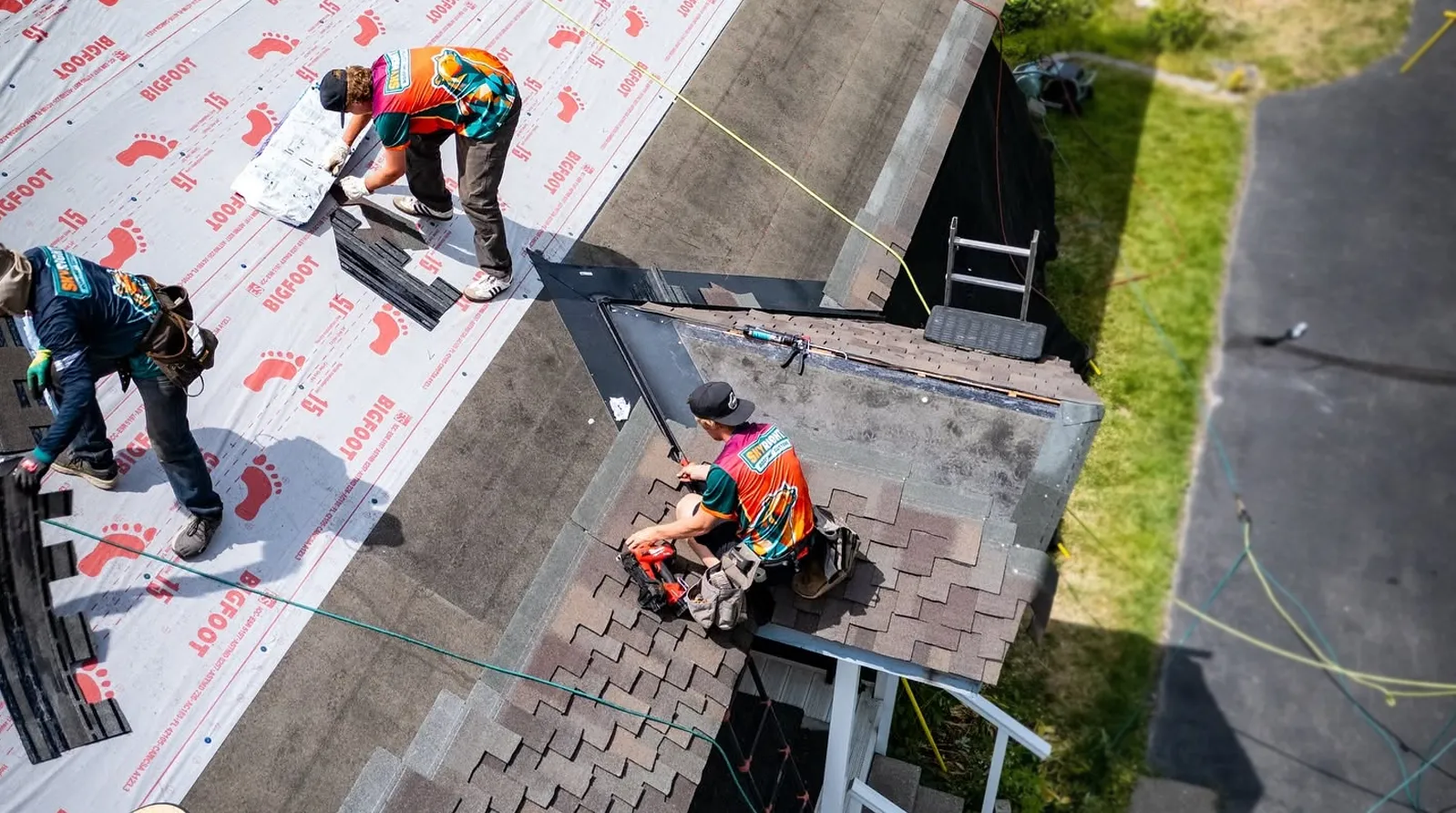
At a Glance: Should You Repair or Replace Your Roof?
Most roof problems start with one question: Can this roof be repaired, or is it time to replace it?
For many North Idaho homes, roof repair makes sense when the damage is isolated, the roof is still within its expected service life, the decking is solid, and the leak source is clear. Roof replacement makes more sense when the roof has widespread damage, repeated leaks, old shingles, soft decking, storm damage across multiple slopes, poor ventilation, or repair costs that are getting close to replacement value.
For planning purposes in 2026, many roof repairs fall around $400-$2,000, while more complex repairs can exceed $3,000 depending on the leak source, roof pitch, material, access, emergency timing, and hidden water damage. Angi’s 2026 roof repair data lists average roof repair costs around $394-$1,962, while roof replacement is typically much higher, which is why repair is often worth considering when the damage is limited.
Quick decision rule: If the roof has one clear problem, inspect it for repair. If the roof has a pattern of problems, inspect it for replacement.
SkyRight helps homeowners in Coeur d’Alene, Post Falls, Sandpoint, Hayden, Rathdrum, Athol, Spirit Lake, and surrounding North Idaho communities diagnose roof leaks, storm damage, missing shingles, flashing failures, ventilation issues, and replacement needs.
For local help, visit SkyRight’s roof repair services in Coeur d’Alene, roofing services in Post Falls, or residential roofing services in Coeur d’Alene.
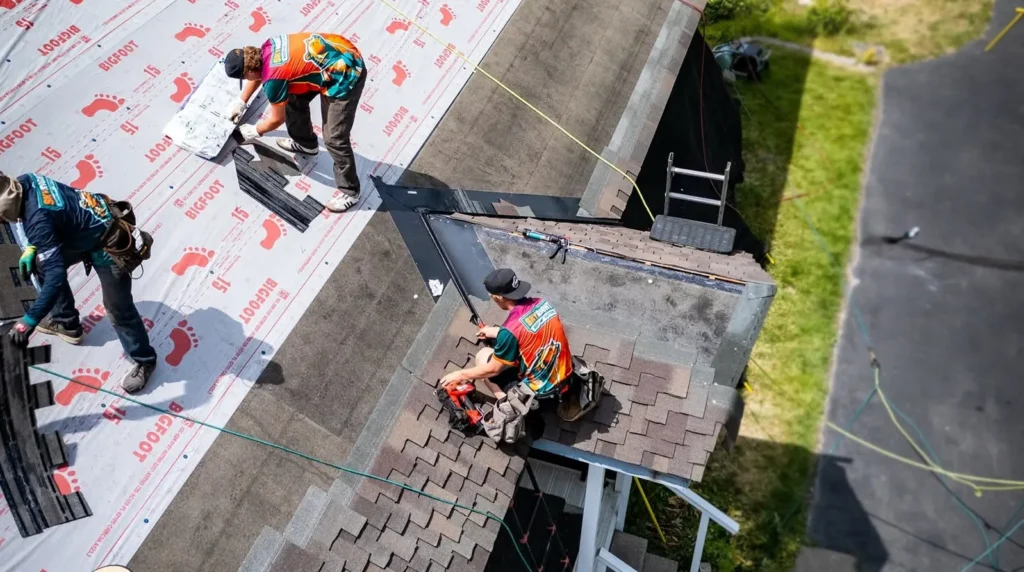
Quick Answer: When Should You Repair vs Replace a Roof?
Use this simple guide.
|
Situation |
Better First Step |
Why |
|---|---|---|
|
One missing shingle after wind |
Repair inspection |
The problem may be isolated |
|
Small leak around one pipe boot |
Repair inspection |
Pipe boots can often be replaced without replacing the roof |
|
Leak around chimney or wall flashing |
Repair inspection |
Flashing may be the main failure point |
|
Several leaks in different rooms |
Replacement inspection |
Multiple leaks usually suggest system-wide failure |
|
Widespread granule loss |
Replacement inspection |
Shingle surface may be near the end of its life |
|
Curling, cracking, brittle shingles |
Replacement inspection |
Material aging is usually widespread |
|
Soft or rotten roof decking |
Replacement or major repair |
The roof structure under the shingles may be compromised |
|
Hail or wind damage across multiple slopes |
Storm damage inspection |
Insurance documentation may be needed |
|
Roof is near the end of its useful life |
Replacement inspection |
Repairs may only delay the inevitable |
|
Repair estimate is high compared with replacement |
Replacement comparison |
Repeated repairs can become more expensive over time |
Important disclaimer: This guide provides planning information only. The right answer depends on the roof’s age, material, pitch, ventilation, storm exposure, decking condition, leak history, and inspection findings. A final repair vs replacement recommendation requires an on-roof inspection.
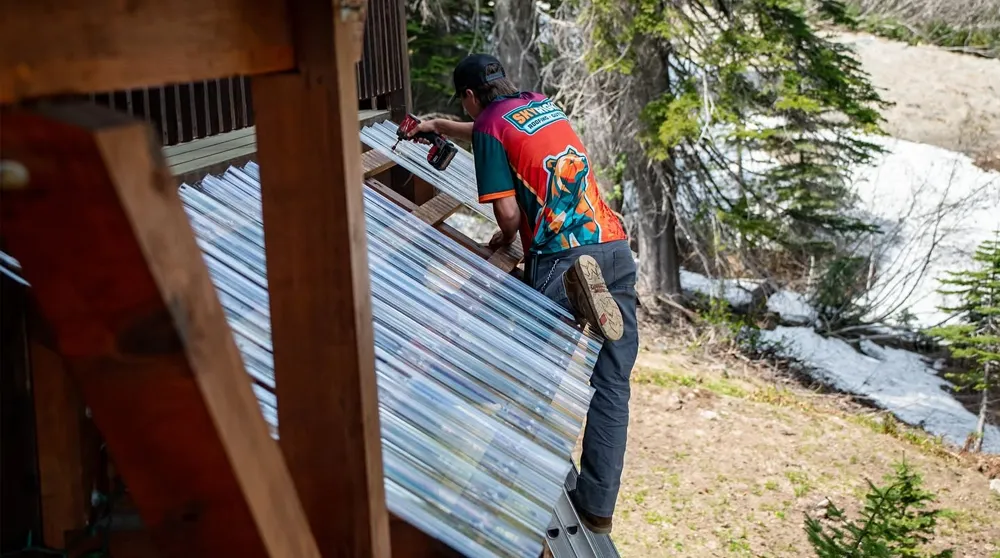
What Counts as Roof Repair?
Roof repair means fixing a specific failure point without replacing the entire roof system.
- replacing missing shingles
- sealing or replacing pipe boots
- repairing flashing around chimneys or walls
- fixing a small valley leak
- replacing damaged ridge caps
- repairing lifted shingles
- addressing a localized leak
- patching limited storm damage
- correcting a small roof penetration issue
- repairing gutter-related roof edge problems
A roof repair is usually best when the roof is still in generally good condition and the problem is isolated.
For example, a five-year-old roof with one damaged pipe boot is usually a repair candidate. A 22-year-old asphalt shingle roof with leaks in three rooms is usually a replacement candidate.

What Counts as Roof Replacement?
Roof replacement means removing the existing roofing material, inspecting the roof deck, repairing damaged decking, installing new underlayment, replacing critical accessories and flashing where needed, and installing a new roofing system.
Replacement may be the smarter option when:
- the roof is near the end of its service life
- shingles are brittle, curling, cracked, or losing granules
- leaks are recurring
- damage appears across multiple slopes
- there are multiple old roof layers
- roof decking is soft or rotten
- ventilation problems have shortened roof life
- storm damage is widespread
- repair costs are getting too high
- the homeowner wants better curb appeal or resale confidence
For pricing context, read SkyRight’s North Idaho roof replacement cost guide.
Roof Repair vs Roof Replacement Cost Ranges
Roof repair usually costs much less than replacement, but that does not automatically mean repair is the better long-term choice.
For 2026 planning purposes, many professional roof repairs fall in these general ranges:
|
Roof Issue |
Planning Repair Range |
Notes |
|---|---|---|
|
Replace a few missing shingles |
$300-$900 |
Depends on access, pitch, material match, and minimum service pricing |
|
Pipe boot replacement |
$300-$800 |
Often repairable if decking is dry and surrounding shingles are healthy |
|
Small flashing repair |
$500-$1,500 |
Chimneys, walls, skylights, and valleys can be more complex |
|
Minor roof leak repair |
$400-$2,000 |
Depends on how long the leak has been active |
|
Emergency tarp or temporary dry-in |
$300-$1,000+ |
Often temporary, not a permanent roof repair |
|
Valley leak repair |
$800-$2,500+ |
May require removing shingles and underlayment in a larger area |
|
Storm damage repair |
$500-$3,000+ |
Depends on scope, material, insurance documentation, and access |
|
Major localized repair with decking |
$1,500-$5,000+ |
Can become a replacement discussion if damage is widespread |
These numbers are general planning ranges, not a SkyRight quote. Roof repair pricing changes based on roof pitch, material, access, snow or ice conditions, emergency timing, hidden decking damage, and how much of the roof must be opened to fix the actual problem. Published 2026 roof leak repair ranges commonly show minor to moderate leak repairs from a few hundred dollars to around $1,500-$2,500 depending on the source and severity. Source: WeatherShield Roofers roof leak repair cost guide.
The Real Cost Question: Repair Now or Replace Soon?
The cheapest repair today can become expensive if it only delays replacement for a few months.
Use this table to compare the decision.
|
Question |
Repair Is More Likely If… |
Replacement Is More Likely If… |
|---|---|---|
|
How old is the roof? |
The roof is relatively young |
The roof is near or past its expected service life |
|
How many leaks exist? |
One leak source is confirmed |
Leaks are appearing in multiple areas |
|
What do the shingles look like? |
Most shingles are flexible and intact |
Shingles are brittle, curled, cracked, or heavily worn |
|
Is the decking solid? |
Decking is dry and firm |
Decking is soft, rotten, or delaminated |
|
Was there storm damage? |
Damage is limited to a small area |
Damage affects multiple slopes or roof features |
|
Is the repair cost low? |
Repair cost is modest and solves the source |
Repair cost is high and may not solve future problems |
|
Are you selling the home? |
The roof has limited, documentable issues |
The roof may become an inspection objection |
|
Will the material match? |
Matching shingles are available |
Repairs will look patchy or mismatched |
|
Is insurance involved? |
Damage is localized and below deductible |
Covered storm damage may justify a larger scope review |

How to Diagnose a Roof Leak
A roof leak does not always appear directly below the source. Water can enter at one point, travel along rafters or decking, and show up somewhere else inside the home.
A good leak diagnosis looks at:
- interior water stains
- attic moisture paths
- roof penetrations
- flashing
- valleys
- shingles
- gutters
- roof edge details
- ventilation
- recent storm direction
- snow and ice buildup
- previous repair attempts
A ceiling stain is a symptom. The roof inspection needs to find the source.
A small water stain can hide months of unseen structural wood rot
Water rarely drips straight down from its source—it travels along rafters, decking, and insulation barriers first. Stop guessing where your leak starts. Let our certified team trace it directly to the source before it compromises your drywall and framing.
Common Roof Leak Sources
Many roof leaks come from details, not from the middle of the roof field.
|
Leak Source |
What Usually Happens |
Repair or Replacement? |
|---|---|---|
|
Pipe boot failure |
Rubber boot cracks or separates around plumbing vent |
Often repairable |
|
Chimney flashing |
Step flashing, counterflashing, or sealant fails |
Often repairable if shingles are healthy |
|
Valley leak |
High water-flow area fails due to wear, debris, or poor installation |
Depends on scope |
|
Skylight leak |
Flashing, curb, seal, or surrounding shingles fail |
Often repairable, sometimes replacement |
|
Missing shingles |
Wind lifts or removes shingles |
Repairable if localized |
|
Ice dam leak |
Water backs up under shingles near eaves |
May require ventilation and insulation review |
|
Nail pop |
Nail backs out and creates an entry point |
Repairable if isolated |
|
Ridge cap failure |
Exposed ridge area cracks or lifts |
Repairable if roof is otherwise healthy |
|
Wall flashing leak |
Roof-to-wall transition fails |
Often repairable but detail-sensitive |
|
Old shingle wear |
Granule loss, cracking, and brittleness allow water intrusion |
Often replacement |
Roof Leak Warning Signs Inside the Home
Call for a roof inspection if you notice:
- brown ceiling stains
- bubbling paint
- damp drywall
- musty odors
- attic moisture
- wet insulation
- daylight through roof boards
- water dripping during rain
- stains around bathroom fans or vents
- stains near chimneys or skylights
- recurring leaks after previous repairs
Do not assume the leak is small just because the stain is small. A small stain can indicate a slow leak that has been active for months.
Roof Damage Warning Signs Outside the Home
From the ground, look for:
- missing shingles
- shingles lying in the yard
- lifted shingle edges
- uneven roof surfaces
- exposed nail heads
- cracked pipe boots
- damaged ridge caps
- bent or missing flashing
- clogged or overflowing gutters
- granules collecting in gutters
- tree branches touching the roof
- sagging roof areas
- moss or algae growth on shaded slopes
For safety, homeowners should avoid walking on the roof. A professional inspection is safer and more reliable, especially on steep, wet, icy, or storm-damaged roofs.
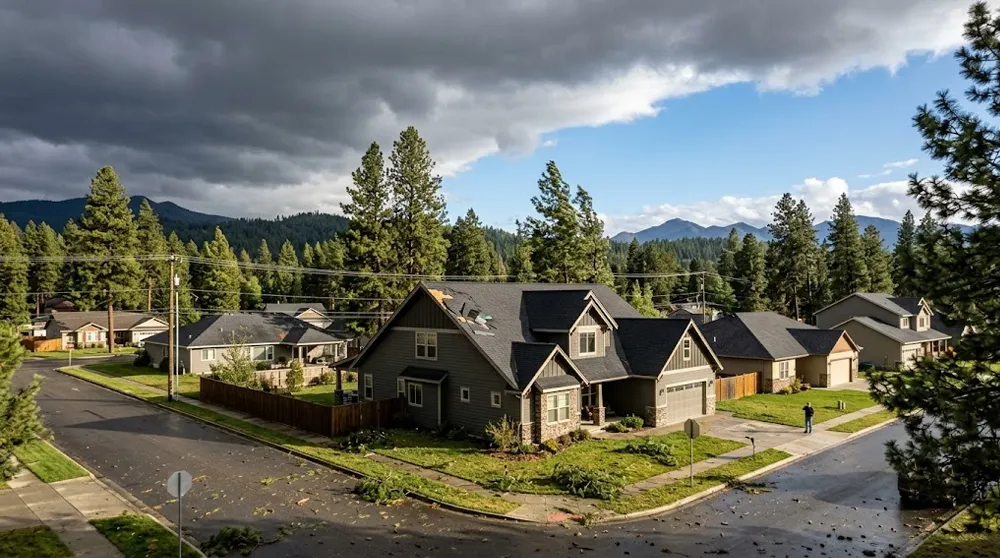
Storm Damage: Wind, Hail, Snow, and Falling Debris
Storm damage can be obvious, but it can also be subtle. A roof may look normal from the ground while shingles are creased, seals are broken, flashing is damaged, or hail impacts have weakened the surface. NOAA’s Storm Events Database tracks severe weather events including wind, hail, tornadoes, and other storm reports. Storm dates and documented weather events can help homeowners connect roof damage to a specific event when insurance may be involved.
Wind Damage
Wind can damage shingles by lifting edges, breaking seals, creasing tabs, removing shingles, or exposing underlayment. Wind damage is often worse on roof edges, corners, ridges, and exposed slopes.
Common wind damage signs include:
- missing shingles
- lifted shingles
- creased shingles
- loose ridge caps
- debris impact marks
- exposed underlayment
- shingles scattered around the property
Hail Damage
Hail damage may show up as bruising, granule loss, dents in soft metals, or impact marks on vents, gutters, flashing, and shingles.
Common hail indicators include:
- circular impact marks
- granule loss in random patterns
- dents on roof vents or gutters
- damaged ridge caps
- exposed asphalt or fiberglass
- bruised shingles that feel soft on inspection
Snow and Ice Damage
North Idaho roofs must handle snow, ice, and freeze-thaw cycles. Problems can happen when snow melts, refreezes at the eaves, and pushes water under shingles.
Snow and ice-related issues include:
- ice dams
- attic condensation
- water backing up near eaves
- damaged gutters
- roof edge leaks
- heavy snow load stress
- leaks during thaw cycles
Falling Debris and Tree Damage
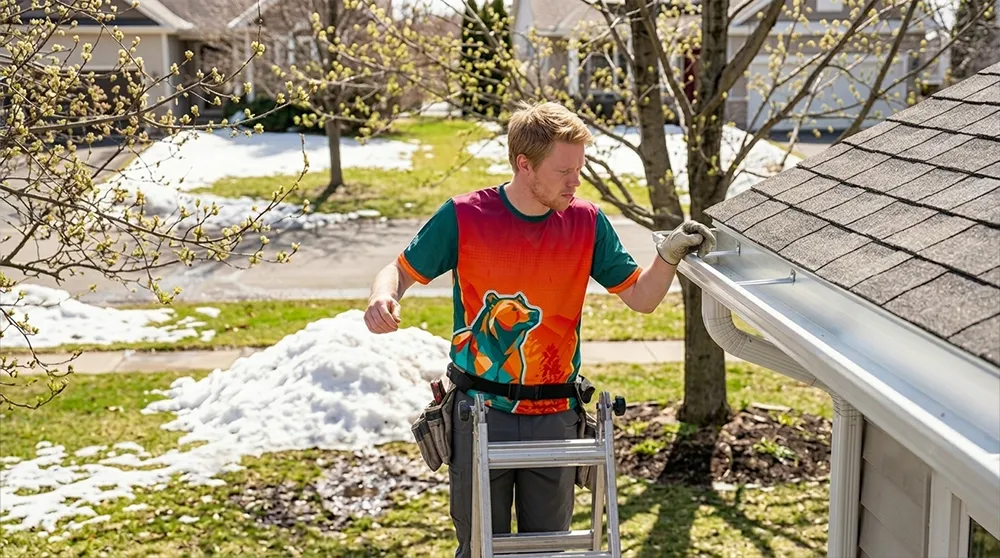
Tree branches can damage shingles, puncture roof surfaces, scrape granules, crack pipe boots, and block gutters. After a windstorm, homeowners should check the yard, gutters, and roof edges for branches and debris.
Insurance and Roof Damage
Homeowners insurance may cover roof repair or replacement when damage is caused by a covered event, such as wind, hail, fire, or falling debris. It usually does not cover normal wear and tear, aging materials, neglect, or poor maintenance. Liberty Mutual explains that wind, hail, fire, and certain water damage may be covered under a standard homeowners policy, while aging roofs, poor maintenance, normal wear and tear, flooding, and earthquakes are usually not included.
Allstate similarly notes that homeowners insurance generally helps with sudden, accidental damage, but usually does not cover damage from lack of maintenance or wear and tear.
That means the cause of the damage matters.
|
Damage Cause |
Insurance More Likely? |
Notes |
|---|---|---|
|
Sudden windstorm |
Possible |
Depends on policy, deductible, exclusions, and documentation |
|
Hail damage |
Possible |
Requires inspection and evidence of storm-related damage |
|
Tree falls on roof |
Possible |
Usually treated differently than gradual wear |
|
Old shingles fail |
Unlikely |
Usually considered age-related maintenance |
|
Long-term leak ignored |
Unlikely |
Often considered maintenance or neglect |
|
Poor installation |
Usually not insurance |
May relate to workmanship or warranty |
|
Flooding |
Usually separate coverage |
Standard homeowners policies often exclude flood |
|
Earthquake damage |
Usually separate coverage |
Depends on policy endorsements |
What to Do After Storm Damage
- Check the property safely from the ground.
- Take photos of visible damage, debris, ceiling stains, and interior leaks.
- Write down the storm date and approximate time.
- Avoid permanent repairs until damage is documented.
- Use temporary protection if needed to prevent more water intrusion.
- Save receipts for temporary repairs.
- Schedule a roof inspection.
- Contact your insurance company if you believe the damage may be covered.
The Texas Department of Insurance advises homeowners after storms to report damage, take photos and video, avoid throwing damaged items away until instructed, make temporary repairs to prevent further damage, save receipts, and avoid permanent repairs before the insurance adjuster sees the damage.
Don't let a bad patch job compromise your future storm insurance claim
Insurance companies require photographic evidence and clear documentation linking damage to specific wind or hail events. Before you apply temporary sealants that hide the true loss, get a comprehensive, insurance-ready damage evaluation from SkyRight.
Repair vs Replacement Scenarios for North Idaho Homes
These scenarios are planning examples, not SkyRight quotes.
Scenario 1: Small Pipe Boot Leak in Coeur d’Alene
- Home profile: 10-year-old asphalt shingle roof, one ceiling stain near a bathroom, dry decking around the leak, shingles otherwise in good condition.
- Likely recommendation: Roof repair.
- Planning range: Around $300-$900, depending on access, pitch, pipe boot type, and whether surrounding shingles need replacement.
- Why: A single pipe boot failure is often repairable when the roof is otherwise healthy.
Scenario 2: Missing Shingles After Wind in Post Falls
- Home profile: 14-year-old asphalt roof, several missing shingles on one slope after a wind event, no interior leak yet, no obvious widespread granule loss.
- Likely recommendation: Storm damage inspection first; repair may be possible if damage is localized.
- Planning range: Around $500-$2,000+, depending on how many shingles are missing, whether the seals are broken around nearby shingles, and whether matching material is available.
- Why: Wind damage can be more extensive than it looks from the ground. The inspection should check for lifted, creased, and unsealed shingles, not just the missing ones.
Scenario 3: Multiple Leaks on an Older Roof in Sandpoint
- Home profile: 22-year-old asphalt shingle roof, stains in two rooms, granules in gutters, brittle shingles, moss on shaded slopes, older flashing.
- Likely recommendation: Roof replacement inspection.
- Planning range: Repair could become expensive and temporary. Replacement should be compared against repeated repair costs.
- Why: Multiple leaks and widespread aging usually mean the roof system is failing, not just one detail.
Scenario 4: Hail or Impact Damage Across Multiple Slopes
- Home profile: Roof looked fine before a storm, but after hail or debris impact there are dents on soft metals, damaged ridge caps, granule loss, and impact marks across multiple slopes.
- Likely recommendation: Storm damage documentation and insurance-aware roof inspection.
- Planning range: Depends on damage severity, policy coverage, deductible, roof age, material, and whether insurance approves repair or replacement.
- Why: Widespread storm damage may require more than a small patch. Documentation and cause-of-loss clarity are important.
Scenario 5: Leak Around Chimney or Wall Flashing
- Home profile: Water stain appears after heavy rain or snowmelt near a chimney, dormer, or sidewall.
- Likely recommendation: Flashing inspection and possible localized repair.
- Planning range: Around $800-$2,500+, depending on whether shingles must be removed, whether flashing needs replacement, and whether decking is damaged.
- Why: Flashing repairs are detail-sensitive. Sealant alone is rarely a long-term solution if the flashing system is wrong.

When Roof Repair Is Usually the Right Choice
Roof repair is usually the right first step when:
- the roof is not near the end of its life
- the damage is limited to one area
- the leak source is clear
- shingles around the repair area are still flexible
- the roof deck is solid
- matching materials are available
- the repair cost is reasonable
- there is no widespread storm damage
- the homeowner wants to extend the roof’s life safely
Good repairs solve the source, not just the symptom.
When Roof Replacement Is Usually the Better Choice
Roof replacement is usually the better choice when:
- leaks keep coming back
- there are leaks in multiple areas
- shingles are brittle, curled, cracked, or missing granules
- the roof has storm damage across multiple slopes
- decking is soft or rotten
- there are multiple old roofing layers
- ventilation problems have caused widespread damage
- flashing failures are part of a larger aging roof system
- repair costs are getting close to replacement cost
- the roof is becoming a concern for resale or insurance
A roof that needs repeated repairs is often telling the homeowner that the system is near the end of its useful life.
The Risk of Temporary Roof Repairs
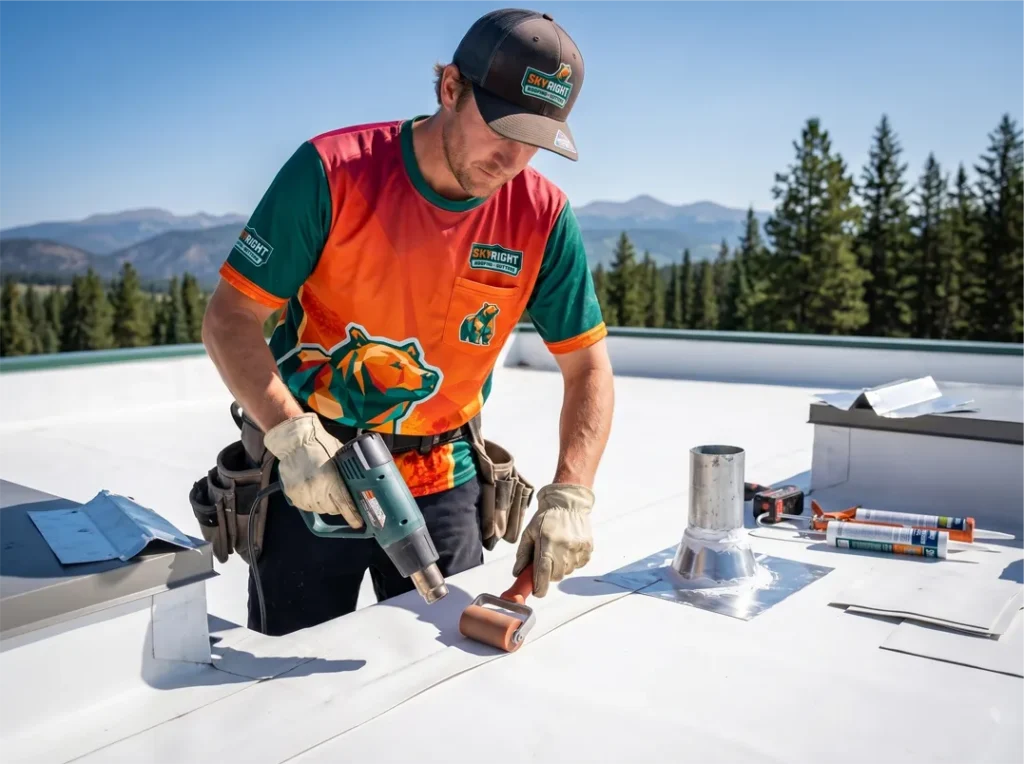
Temporary repairs can be useful in an emergency, but they are not the same as a permanent fix.
Temporary repairs may include:
- tarping
- temporary sealant
- temporary patching
- emergency dry-in
- short-term leak control
Temporary repairs are meant to reduce active water intrusion until the real repair can be completed. They should not be treated as a long-term roofing solution.
Sealant alone is especially risky when used as a substitute for proper flashing, shingle replacement, underlayment repair, or ventilation correction.
Roof Repairs That Often Fail Again
Some repairs fail because they only address the visible symptom.
Common weak repairs include:
- caulking over bad flashing
- replacing one shingle when surrounding shingles are brittle
- patching a valley without fixing the underlayment
- sealing a pipe boot that should be replaced
- ignoring attic condensation and blaming the roof surface
- repairing shingles without checking ventilation
- patching a leak without checking decking
- replacing storm-damaged shingles without checking nearby lifted shingles
A reliable roof repair should answer: Why did this leak happen, and what prevents it from happening again?
Gutters, Drainage, and Roof Leaks
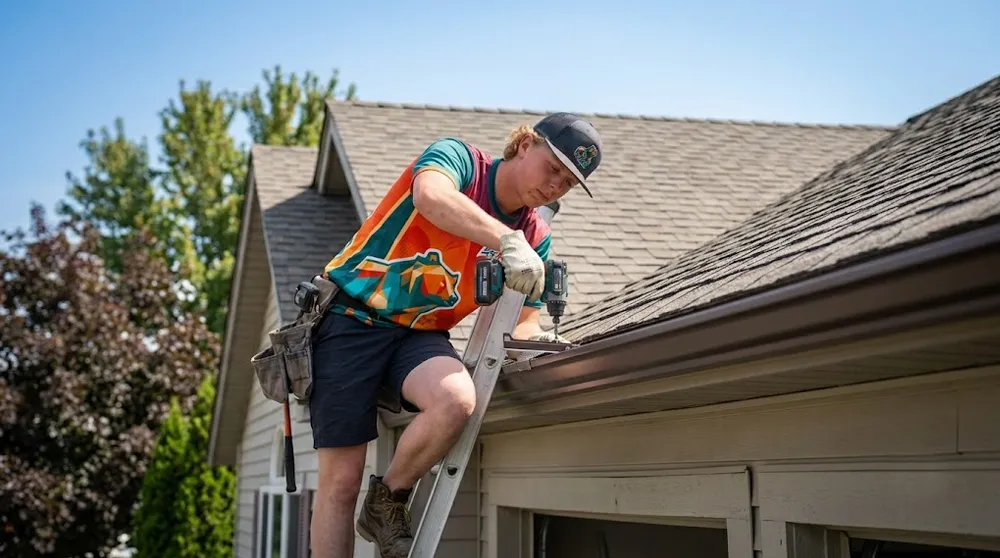
Not every water problem is caused by the roof surface. Gutters and drainage can also contribute to roof-edge leaks, fascia damage, siding stains, foundation moisture, and ice problems.
Gutter-related roof issues include:
- clogged gutters
- undersized gutters
- loose gutters pulling away from fascia
- downspouts discharging near the foundation
- water backing up under roof edges
- ice buildup at eaves
- damaged fascia behind gutters
If roof repair involves edge leaks, gutter condition should be reviewed too.
SkyRight provides gutter services for homeowners who need better water management around the roofline.
Roof Ventilation and Leak-Like Symptoms
Some roof leaks are actually condensation problems. Poor ventilation can allow warm, moist indoor air to collect in the attic, condense on cold surfaces, and create stains, damp insulation, or mold concerns.
Ventilation-related symptoms can include:
- attic frost
- wet insulation without a clear roof opening
- moisture around nails
- musty attic odors
- mold-like staining on roof decking
- recurring winter moisture
- ice dam problems
A roof inspection should check both exterior roof damage and attic conditions when possible.
For more detail, read SkyRight’s guide to roof and attic ventilation.
Asphalt, Metal, and Flat Roof Repair Differences
Different roof materials require different repair approaches.
|
Roof Type |
Common Repairs |
Key Concern |
|---|---|---|
|
Asphalt shingles |
Missing shingles, pipe boots, flashing, ridge caps, granule loss |
Matching shingles and surrounding material condition |
|
Metal roofing |
Fasteners, seams, trim, penetrations, snow-related damage |
Correct metal system details and expansion movement |
|
Flat roofing |
Seams, punctures, ponding water, membrane damage |
Drainage and membrane compatibility |
|
Gutters |
Leaks, sagging, clogs, downspout issues |
Water management and fascia protection |
For asphalt material decisions, visit SkyRight’s asphalt shingle and residential materials guide. For metal roofing questions, visit SkyRight’s metal roofing page.

How SkyRight Inspects Roof Repair and Replacement Needs
A good roof inspection should look at the full system, not only the visible leak.
SkyRight’s inspection process may include:
- exterior roof surface review
- shingle condition check
- storm damage review
- flashing inspection
- pipe boot and penetration review
- valley inspection
- ridge and hip review
- gutter and drainage review
- attic ventilation review when accessible
- visible decking concerns
- leak source tracing
- repair vs replacement recommendation
The goal is not to sell the biggest project. The goal is to identify whether repair will solve the problem or whether replacement is the more responsible recommendation.
What a Good Roof Repair Estimate Should Include
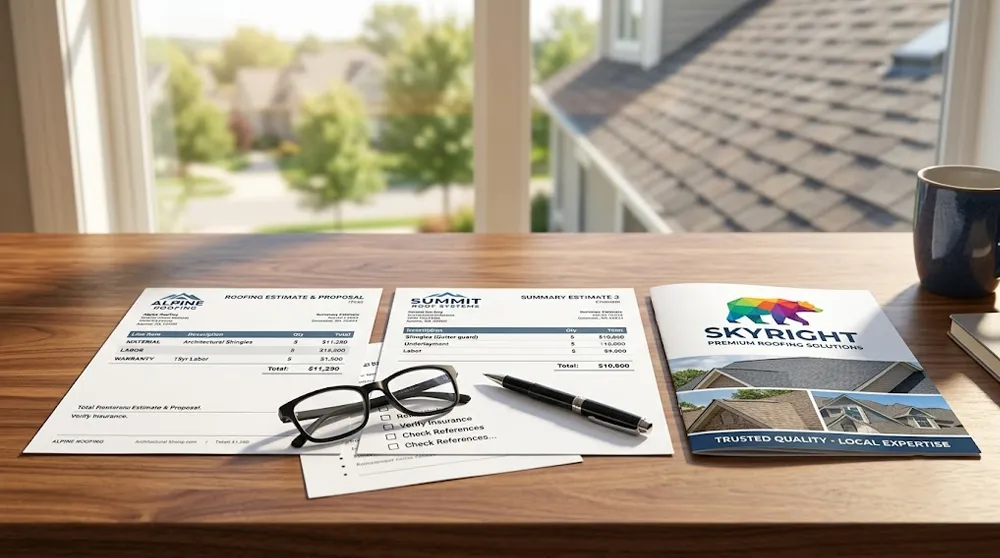
A good roof repair estimate should clearly explain:
- the suspected source of the leak
- the repair area
- the material being replaced
- whether shingles will be removed
- whether flashing will be repaired or replaced
- whether pipe boots or vents are included
- whether decking damage is expected
- what could change the price
- whether the repair is temporary or permanent
- whether matching shingles are available
- whether the repair carries a workmanship warranty
- when replacement should be considered instead
Avoid vague estimates that only say “fix leak.” A leak is the symptom. The estimate should describe the cause and the repair method.
Questions to Ask Before Approving Roof Repair
Before approving a roof repair, ask:
- What caused the leak?
- Is the damage isolated or widespread?
- Is the roof near the end of its life?
- Will this repair solve the source or only slow the leak?
- Are surrounding shingles still flexible enough to repair?
- Is the decking damaged?
- Does the flashing need to be replaced?
- Are gutters contributing to the problem?
- Is ventilation contributing to the problem?
- Should I compare repair cost against replacement?
- Is insurance involved?
- What happens if hidden damage is found?
These questions help prevent paying for a repair that does not last.
Final Recommendation: Repair the Problem, Replace the System
The best decision depends on whether the issue is isolated or systemic.
Choose repair when the roof is mostly healthy and the problem is limited. Choose replacement when the roof is aging, failing in multiple areas, repeatedly leaking, or damaged beyond a practical repair scope.
For North Idaho homeowners, the smartest first step is a professional inspection that separates:
- leak symptoms from leak sources
- storm damage from normal wear
- repairable details from system-wide failure
- short-term patching from long-term protection
If your roof is leaking, missing shingles, showing storm damage, or creating interior stains, schedule a roof inspection with SkyRight.
FAQ: Roof Repair, Leaks, Storm Damage, and Replacement Decisions
Should I repair or replace my roof?
Repair usually makes sense when the damage is isolated, the roof is not too old, the decking is solid, and the leak source is clear. Replacement usually makes sense when the roof has widespread damage, repeated leaks, old shingles, soft decking, or storm damage across multiple slopes.
How much does roof repair cost in North Idaho?
For planning purposes, many roof repairs fall around $400-$2,000, while complex repairs can exceed $3,000. The exact cost depends on the leak source, roof pitch, material, access, emergency timing, and hidden water damage.
Is a roof leak always a sign I need a new roof?
No. A roof leak can come from a repairable issue such as a pipe boot, flashing detail, missing shingle, nail pop, or small storm-damaged area. However, repeated leaks or leaks in multiple areas often point toward replacement.
What is the most common cause of roof leaks?
Common causes include failed pipe boots, chimney flashing problems, wall flashing leaks, valley issues, missing shingles, old sealant, ice dams, poor ventilation, and damaged roof penetrations.
Can storm damage be repaired instead of replacing the roof?
Yes, if the damage is localized. If wind, hail, or debris damage affects multiple slopes or a large portion of the roof, replacement may be more appropriate. Insurance documentation may also be needed.
Does homeowners insurance cover roof leaks?
Insurance may cover a roof leak if it was caused by a covered sudden event, such as wind, hail, fire, or falling debris. It usually does not cover leaks caused by age, wear and tear, poor maintenance, or long-term neglect.
What should I do immediately after storm damage?
Safely check the property from the ground, take photos and videos, document the storm date, protect the home from further water intrusion if needed, save receipts, schedule a roof inspection, and contact your insurance company if the damage may be covered.
Is it worth repairing an old roof?
It depends on the roof condition and repair cost. A small repair may make sense if the roof still has useful life left. If the roof is brittle, leaking repeatedly, or near the end of its lifespan, replacement may be the better investment.
Can gutters cause roof leaks?
Yes. Clogged, loose, damaged, or undersized gutters can contribute to roof-edge leaks, fascia damage, ice buildup, and water backing up near the roofline. Gutter condition should be checked when roof edge leaks are present.
Who should I call for roof repair in Coeur d’Alene or Post Falls?
SkyRight provides roof inspections, roof repair guidance, and roof replacement recommendations for homeowners in Coeur d’Alene, Post Falls, Sandpoint, Hayden, Rathdrum, Athol, Spirit Lake, and nearby North Idaho communities.
Repair the isolated detail or replace the aging system? Get an honest answer.
We don’t believe in selling a full roof replacement when a solid, targeted flashing or pipe boot repair is all your home needs. Get a transparent look at your roof’s health with our multi-point system inspection. No high-pressure sales, just clear facts.