
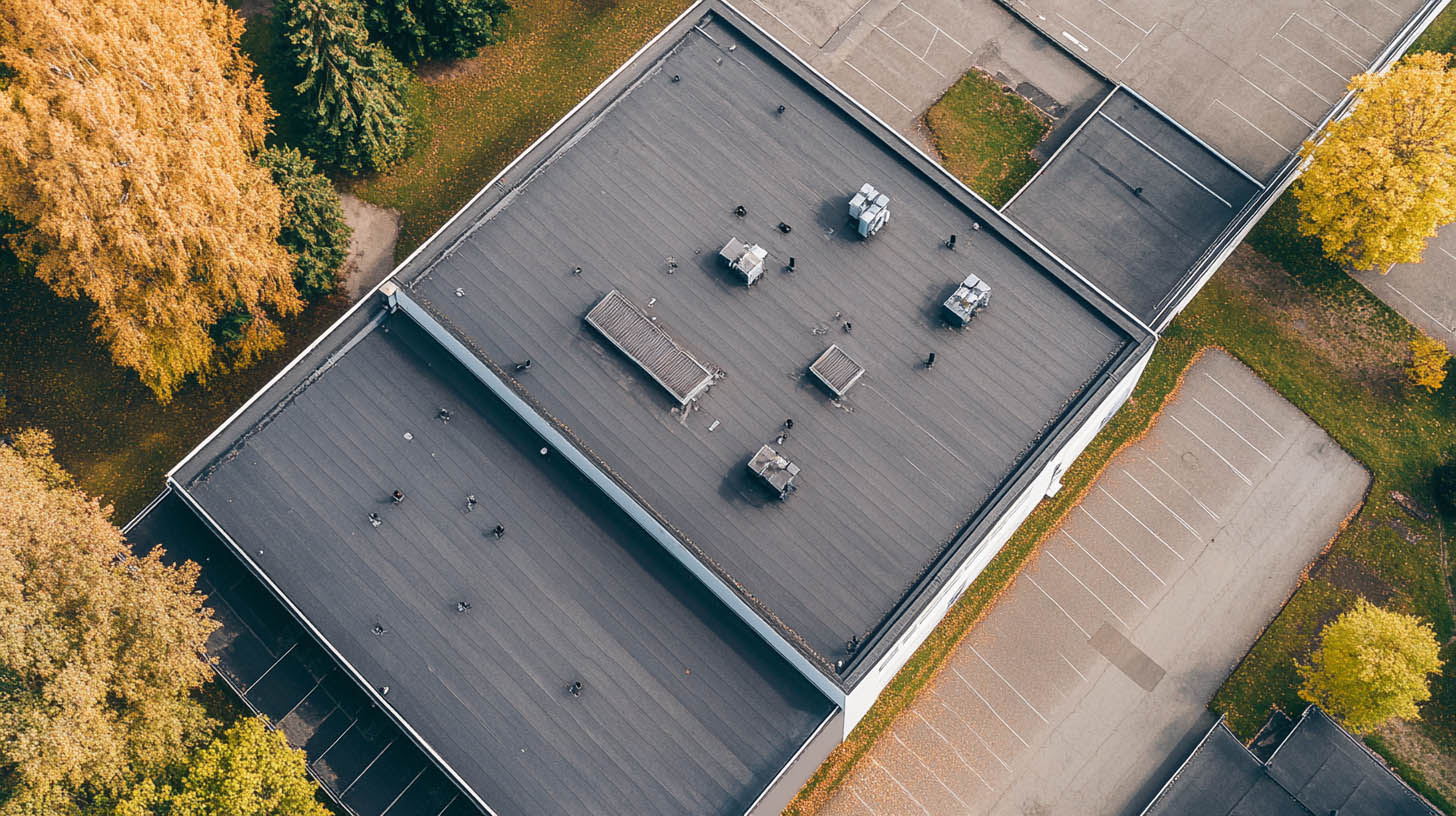
Commercial roofs play a critical role in protecting businesses from harsh weather conditions and ensuring operational continuity.At SkyRight, based in Sandpoint, ID, we specialize in high-quality roof replacements that enhance durability and performance. This guide outlines when and why commercial roof replacements are necessary and how to maintain your roof for long-term efficiency.
When Is It Time to Replace a Commercial Roof?
Water Damage
Leaks and excess moisture are common reasons for roof replacement. Signs include:
- Stains on walls or ceilings.
- Blisters caused by trapped moisture in membrane-style roofs.
- Structural weakening from prolonged standing water.
Wind Damage
Strong winds can separate roof seams, tear materials, or scatter debris that penetrates the roof. These issues often necessitate emergency repairs or full replacements.
Age of the Roof
The average lifespan of commercial roofs ranges from 20 to 30 years, depending on materials and maintenance. Lack of regular inspections can accelerate wear and lead to early replacements.
Types of Commercial Roofs and Their Benefits
Metal Roofs
Made from materials like aluminum, copper, and steel, metal roofs are:
- Durable: Resistant to extreme weather conditions.
- Eco-Friendly: Recyclable and energy-efficient.
However, they may require protective coatings to prevent corrosion.
Membrane Roofs (TPO, PVC, EPDM)
These flat roofing materials are:
- Lightweight: Easy to install.
- Flexible: Suitable for buildings with various designs.
Shingles
While more common in residential buildings, shingles (asphalt, ceramic, or metal) can be used for steep commercial roofs. They are:
- Affordable: Cost-effective for smaller properties.
- Easy to Replace: Quick and straightforward repairs.
The Importance of Regular Roof Maintenance
Proactive maintenance extends the life of your roof and reduces repair costs. Biannual inspections—especially before extreme seasons like summer and winter—identify issues early. Maintenance activities include:
- Clearing drains and gutters to prevent standing water.
- Checking for cracks, leaks, and uplifted shingles.
- Evaluating sealant conditions around vents and HVAC units.
What to Expect During a Roof Inspection
A thorough inspection involves:
- Interior Checks: Identifying water stains and structural damage.
- Surface Evaluation: Looking for blisters, cracks, and rust.
- Core Sampling: Analyzing roof layers for moisture saturation.
If moisture saturation exceeds 30%, a replacement is often the best option.
Unique Insights
Did You Know? A properly maintained commercial roof can last over 50 years, offering significant savings on repair and replacement costs.
SkyRight: Leaders in Commercial Roof Replacement
SkyRight is your trusted partner for comprehensive roofing solutions. Recognized as Bonner County’s #1 rated roofing company in 2023 and an Owens Corning Preferred Contractor, we provide reliable services to keep your business protected.
What’s Next?
If you want to learn 10 essential tips to protect your roof from damage, click here.
FAQs
Q1: How often should a commercial roof be replaced?
Typically every 20-30 years, but regular inspections may extend its lifespan.
Q2: What are the signs of roof failure?
Visible leaks, increased utility bills, and warped materials are common indicators.
Q3: Can maintenance delay the need for replacement?
Yes, proactive maintenance can prevent minor issues from escalating.
Q4: Are metal roofs suitable for commercial properties?
Yes, metal roofs are durable and ideal for buildings in extreme climates.
Q5: How long does a commercial roof replacement take?
Replacement timelines vary by roof size and material but generally range from a few days to several weeks.If you want to read a blog about understanding the basics of commercial roof inspections, click here.