
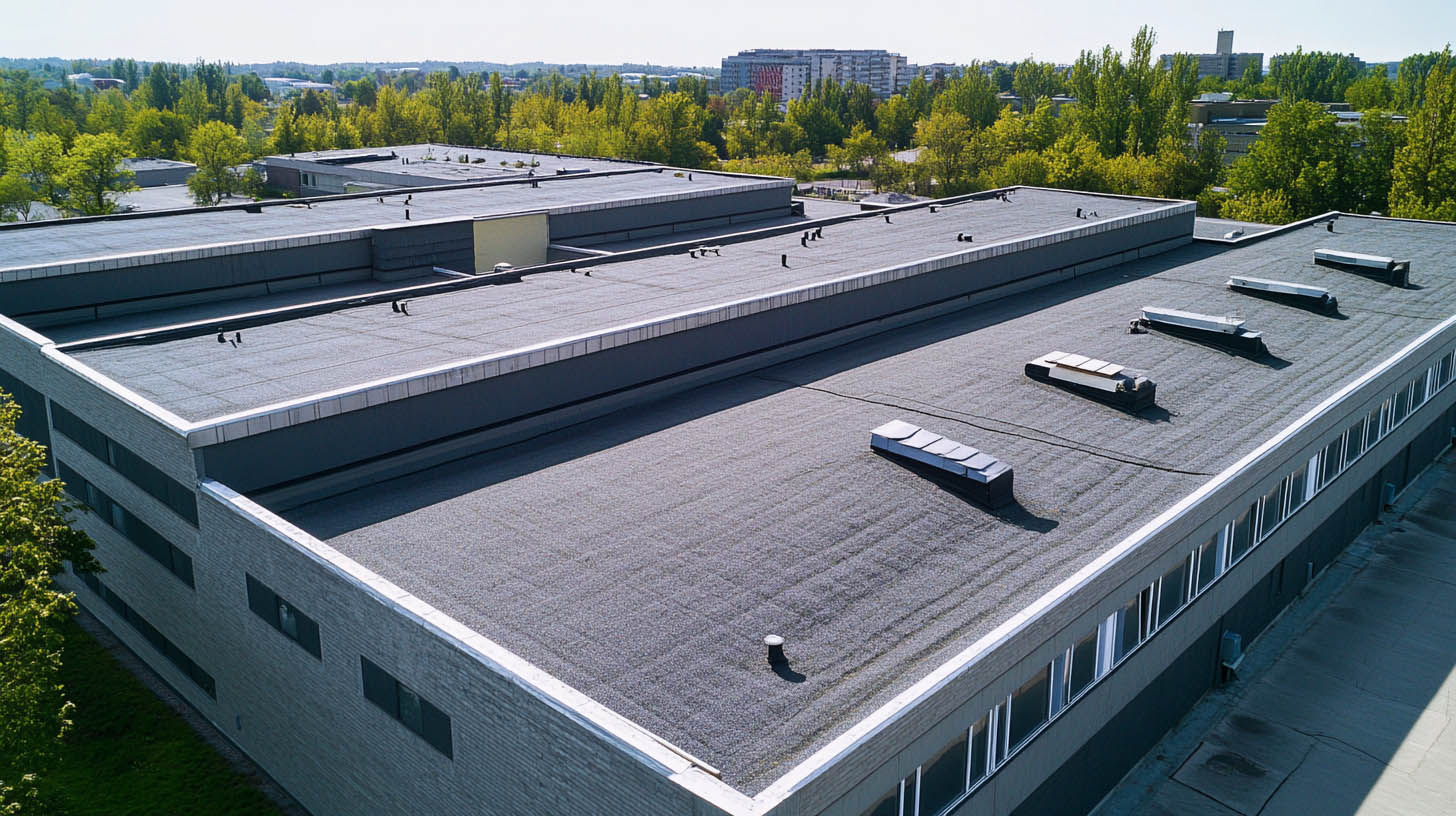
Roofing needs vary significantly between homes and commercial buildings. At Skyright, based in Coeur d’Alene, ID, we understand the distinct requirements of each, from materials and design to installation and maintenance. Here’s a comprehensive guide to help you understand the key differences between residential and commercial roofing.
Materials Used in Residential vs. Commercial Roofing
Residential roofs commonly feature asphalt shingles due to their cost-effectiveness, weather resistance, and ease of installation. Other materials include wood shakes, metal, ceramic, tile, and slate. These materials suit sloped roofs, which are standard in residential architecture.
Commercial roofs, often flat or gently sloped, use materials better suited for such designs. These include:
- Modified bitumen
- Single-ply coverings like PVC, TPO, and EPDM
- Sprayed polyurethane foam
- Tar and gravel
Material selection for commercial roofing depends on factors like durability, cost, and the building’s functional needs.
Differences in Roof Design
Residential roofs are sloped, enhancing aesthetic appeal and aiding water runoff. These roofs typically include features like chimneys, skylights, and solar panels, but their size and complexity are relatively modest.
Commercial roofs are predominantly flat to accommodate large HVAC systems, industrial piping, water tanks, and solar panels. These flat designs prioritize practicality and cost-efficiency over aesthetics.
Installation and Cost
Commercial roofs, being larger and more complex, require additional layers, including insulation, decking, and protective coatings. Their installation involves specialized labor, equipment, and safety measures, often taking weeks to complete. Residential roofs are simpler, with a typical project finishing in a few days.
The cost difference is significant, with commercial roofs being far more expensive due to size, material requirements, and labor intensity.
Maintenance Challenges
Residential roofs are easier to inspect and maintain due to their proximity and sloped design. Small leaks are quickly noticeable and relatively simple to repair. Conversely, issues in commercial roofs may go unnoticed for extended periods due to their size and lack of visibility. When leaks occur, they often penetrate multiple layers, necessitating more extensive repairs.
Unique Insights
Did You Know? More than 80% of U.S. homes have asphalt shingle roofs, while commercial buildings predominantly use materials like TPO or modified bitumen for flat roofing systems.
The Importance of Professional Inspections
Both roof types benefit from biannual inspections to catch and address issues early. However, commercial roofs require more frequent and thorough checks due to their complexity and larger surface areas.
SkyRight: Experts in Residential and Commercial Roofing
SkyRight specializes in delivering tailored solutions for both residential and commercial roofing needs. Recognized as Bonner County’s #1 rated roofing company in 2023 and an Owens Corning Preferred Contractor, we ensure durable, high-quality roofing systems for every type of property.
FAQs
Q1: Can commercial roofs use asphalt shingles?
Rarely, as shingles are unsuitable for flat roofs and don’t provide the needed protection or durability.
Q2: How long does it take to install a commercial roof?
Installation can take weeks due to the roof’s size, complexity, and additional safety measures.
Q3: What materials are best for flat commercial roofs?
TPO, PVC, and EPDM are commonly used for their durability and cost-effectiveness.
Q4: How often should a commercial roof be inspected?
Ideally, commercial roofs should be inspected biannually, with additional checks after major storms.
Q5: Are residential roofs more affordable to maintain?
Yes, due to their smaller size and simpler design, residential roofs are typically less expensive to repair and maintain.If you want to read a blog about fall roof maintenance tips for homeowners, click here.