
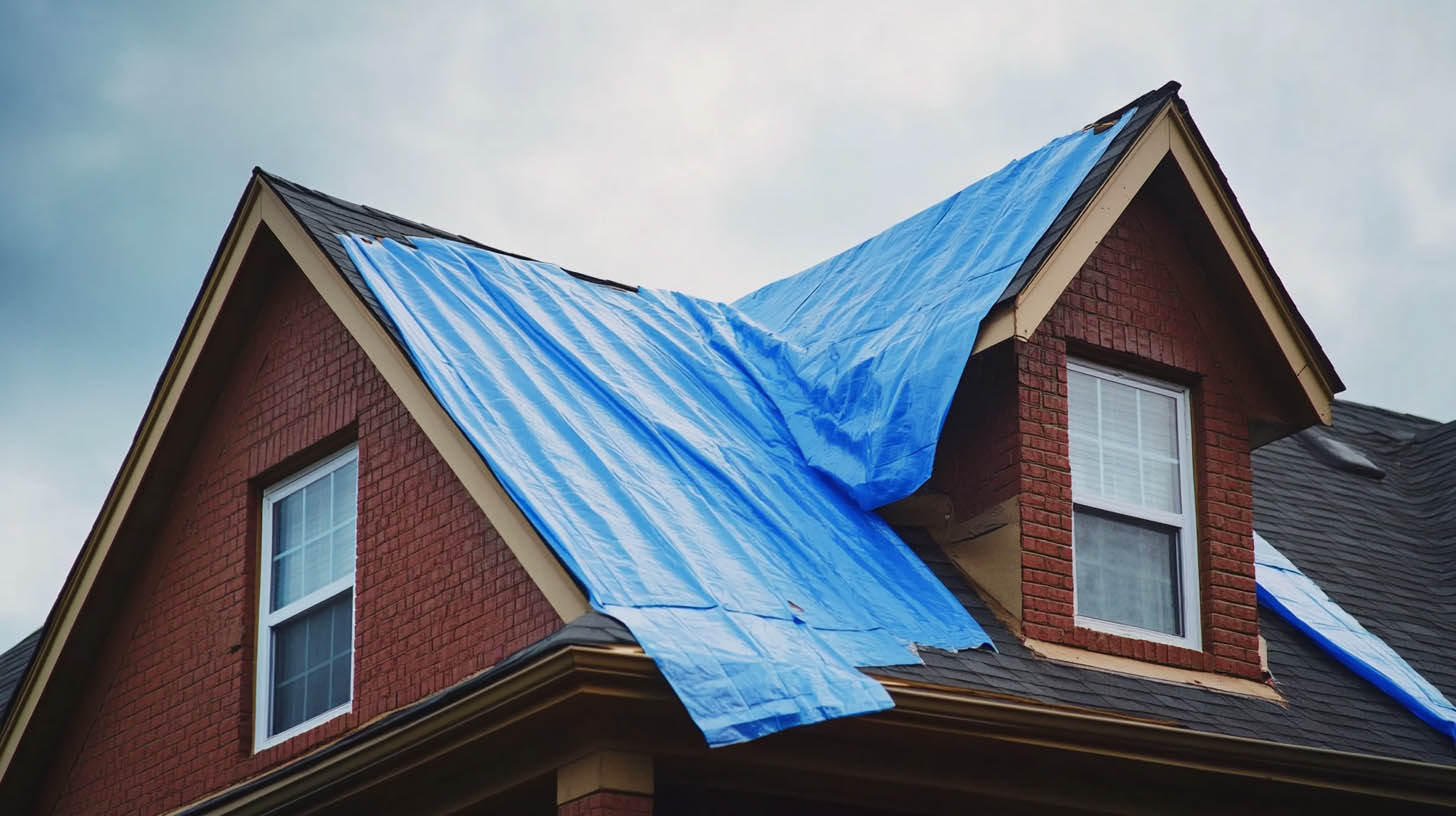
Partner with SkyRight, based in Sandpoint, ID, for expert advice and long-term roofing solutions. When roof leaks threaten your home, a tarp offers a quick and effective temporary solution.
Step-by-Step Guide for Tarping a Roof
1. Assess the Roof Leak
- Identify water entry points by inspecting ceilings, walls, and attic spaces for water stains or mold.
- Evaluate the severity of the leak and decide if immediate tarping is necessary based on weather conditions and damage extent.
2. Gather Necessary Tools and Materials
- Tarp: Choose a durable, waterproof tarp, preferably made of polyethylene or canvas.
- Securing Tools: Use nails, clips, ropes, or bungee cords.
- Ladder: Ensure it’s sturdy and tall enough to safely access your roof.
- Safety Gear: Wear gloves, a helmet, and non-slip footwear.
Preparing for Installation
1. Clean and Measure
- Clear debris like leaves, loose shingles, and branches from the roof.
- Measure the damaged area and cut the tarp to size, leaving a few extra inches for full coverage.
2. Anchor an Anchor Board
For flat roofs, attach a sturdy board to the roof as a stable anchor point for securing the tarp.
3. Check Weather Conditions
Avoid tarping during strong winds or heavy rain. Safety should always come first.
Securing the Tarp
1. Position the Tarp
- Extend the tarp beyond the damaged area for comprehensive coverage.
- For peaked roofs, drape the tarp over the ridge to cover both sides evenly.
2. Secure the Edges and Corners
- Use nails, clips, or ropes to secure the tarp at regular intervals (12–18 inches).
- Reinforce with wooden boards if available for added stability.
3. Tighten the Tarp
Ensure the tarp is taut to prevent water pooling and wind damage. Regularly inspect and adjust tension as needed.
Safety Precautions
- Always use a stable ladder with three points of contact.
- Wear safety gear, including gloves, goggles, and a helmet.
- Use a safety harness for added protection on steep or tall roofs.
A Trusted Partner: SkyRight
SkyRight is your go-to expert for temporary and permanent roofing solutions. As an Owens Corning Preferred Contractor and Bonner County’s #1 roofing company in 2023, we guarantee exceptional service and results.
Unique Fact
According to the Federal Emergency Management Agency (FEMA), improper tarp installations during storms contribute to over 10% of secondary roof damages annually. Ensuring proper installation minimizes this risk.
FAQs
1. Can I secure a tarp without nails?
Yes, use ropes or bungee cords tied to secure points like chimneys or vents.
2. How long can a tarp serve as a temporary fix?
A tarp can provide protection for weeks, but it’s crucial to schedule permanent repairs promptly.
3. What is the best material for a roof tarp?
Heavy-duty polyethylene tarps are ideal due to their durability and water resistance.If you want to read a blog about seven steps for effective seasonal roof maintenance, click here.