
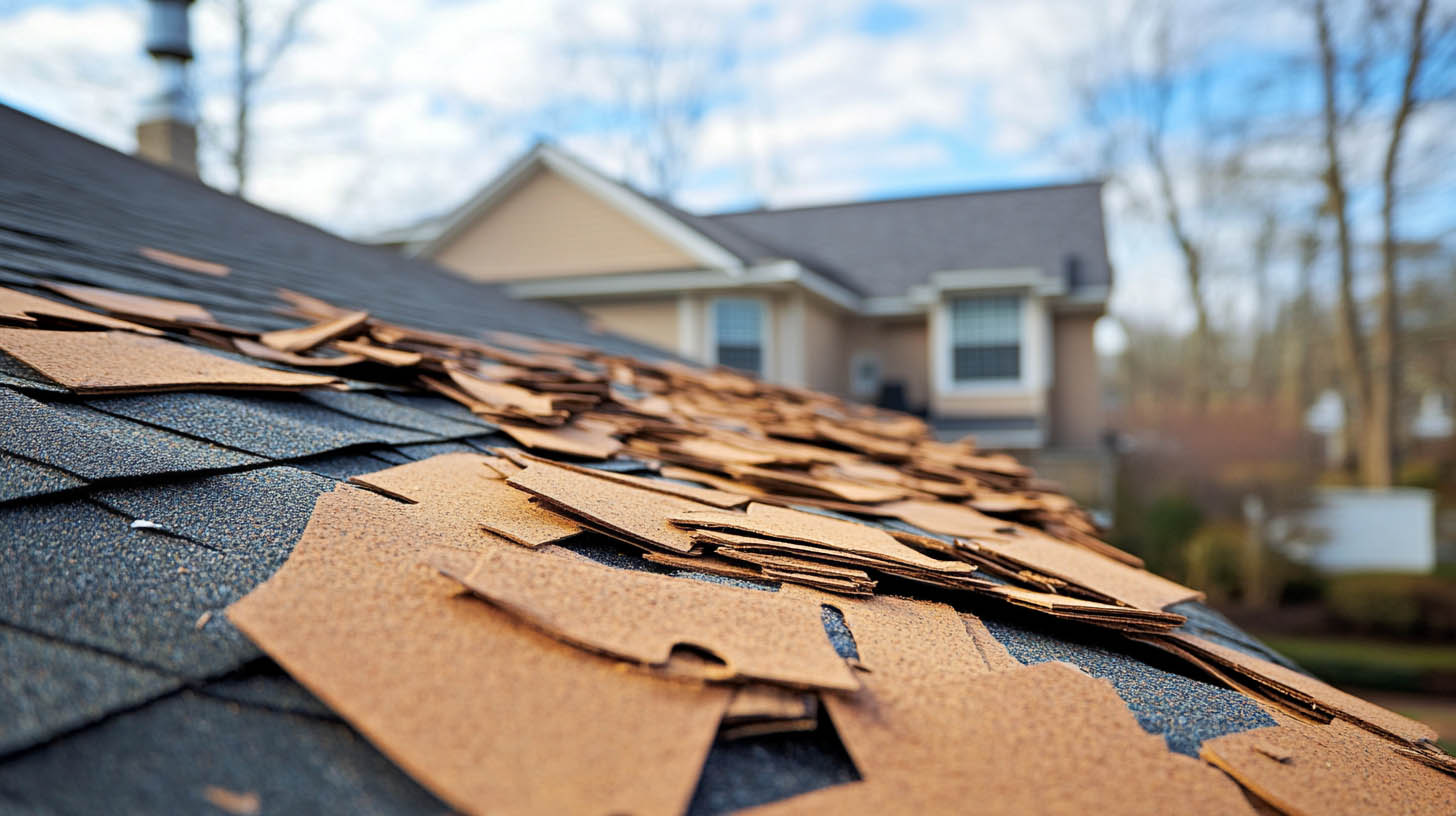
SkyRight, Sandpoint’s trusted roofing company, understands the challenges that storm season presents for roofs. Storms can cause various types of damage, each with unique consequences for the structural integrity of your home. Understanding these effects is key to protecting your property.
Types of Storm Damage to Roofs
1. Wind Damage
High winds dislodge shingles, flashing, and gutters. This leaves roofs vulnerable to leaks and further structural issues.
2. Water Damage
Rain can seep into cracks, leading to leaks and moisture buildup. Over time, this fosters mold growth and damages roofing materials.
3. Hail Damage
Hailstones can puncture shingles and other roof components, weakening their protective capabilities.
4. Debris Impact
Storm debris, such as tree branches, can dent or puncture roofs, requiring immediate attention to prevent worsening damage.
5. Snow and Ice
Heavy snow can overload a roof, causing sagging or collapse. Ice dams obstruct proper drainage, leading to water leaks.
Preventive Measures for Storm Seasons
- Regular Inspections: Professional inspections before and after storm season ensure that minor issues are addressed promptly.
- Roof Reinforcement: Upgrading materials and reinforcing weak areas can minimize storm impact.
- Clear Gutters: Clean gutters improve drainage and reduce the risk of water-related issues.
- Trimming Surrounding Trees: Reducing overhanging branches prevents debris impact.
Signs Your Roof Needs Immediate Attention
- Missing or curled shingles
- Persistent leaks or water stains
- Visible sagging or structural instability
- Clogged or detached gutters
Why Choose SkyRight?
SkyRight is Sandpoint’s #1-rated roofing company, offering expertise in storm damage prevention and repair. Certified by Owens Corning, our team ensures your roof withstands even the harshest storm conditions.
FAQs
Q: Can minor wind damage lead to bigger problems?
A: Yes, small issues like missing shingles can escalate into leaks and structural damage.
Q: How often should roofs be inspected during storm season?
A: Roofs should be inspected at least twice—once before and once after the season.
Q: Are there specific materials that perform better during storms?
A: Metal and impact-resistant shingles are highly durable and better withstand storm damage.
Q: How can ice dams be prevented?
A: Proper insulation and ventilation can reduce the likelihood of ice dams forming.
Q: Will insurance cover storm-related roof damage?
A: Most policies cover storm damage, but thorough documentation is essential for claims.
Conclusion
Storm season can take a significant toll on your roof, but proactive measures and timely repairs can mitigate the risks. Trust SkyRight for professional assessments and reliable solutions to protect your home year-round.
If you want to read a blog about signs that you may need a new roof, click here.