
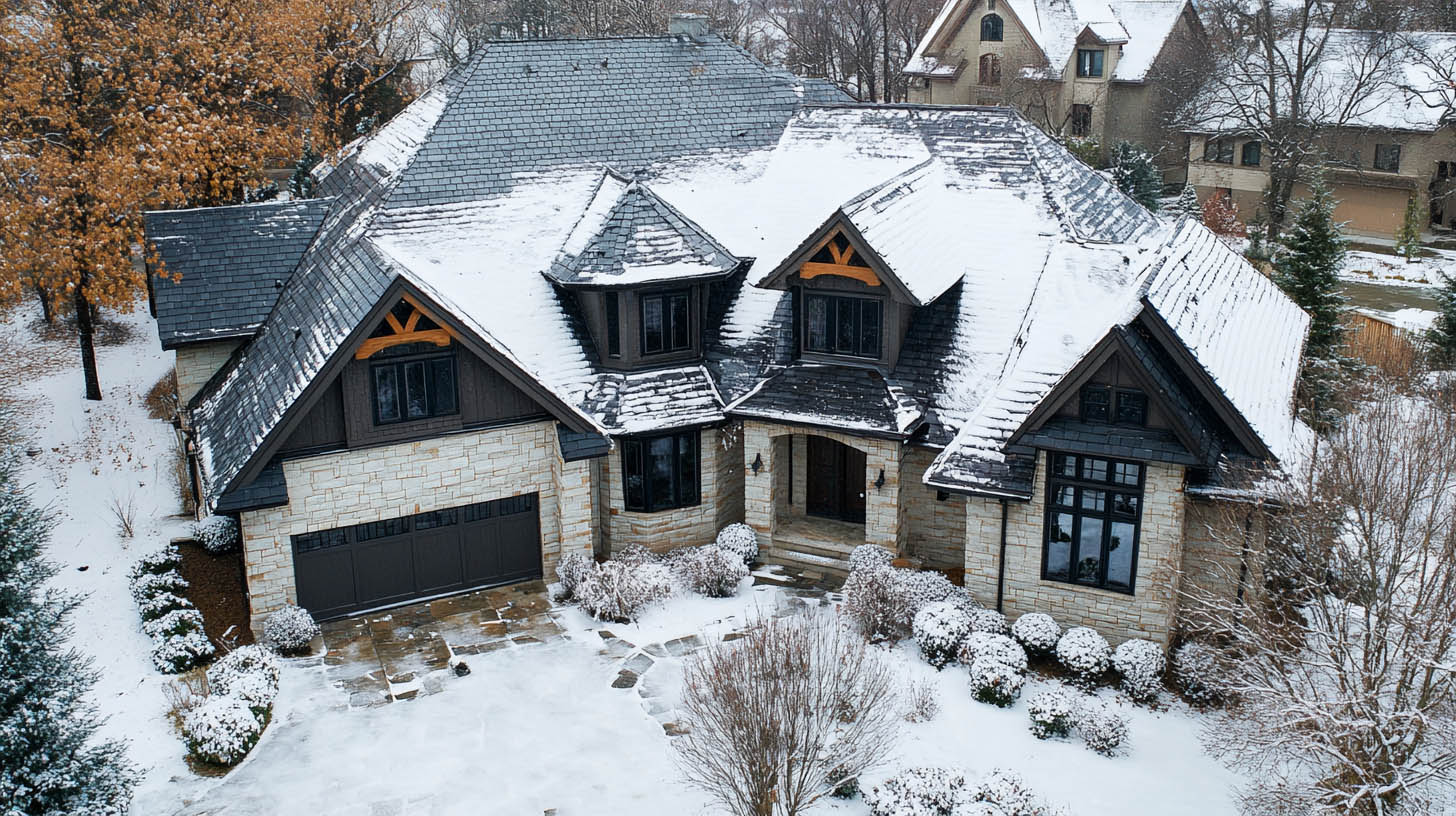
Choosing the right roofing material for cold climates is crucial to ensuring durability and efficiency during harsh winter conditions.At Skyright, based in Coeur d’Alene, ID, we understand the unique challenges posed by heavy snow, ice, and freezing temperatures. Here’s a guide to the best materials and designs for winter-proof roofs.
Who Benefits from Winter Roofing Materials?
Homes and businesses in regions with heavy snowfall and freezing temperatures, such as Alaska, Minnesota, and North Dakota, require roofing materials specifically designed to endure extreme cold. With snowfall levels exceeding 170 inches in some areas and temperatures dipping below zero, investing in the right materials can save on repairs and energy costs.
Why Cold Temperatures Affect Roofing
Temperatures below 40°F can cause standard roofing materials to become brittle or lose adhesion. Materials like metal, slate tiles, and wood shingles are better suited for winter conditions as they resist cracking and maintain their structural integrity.
Features of a Cold Climate Roof
An ideal winter roof retains warmth by preventing excessive heat loss, which minimizes ice buildup and protects against leaks. The right roof design also ensures efficient snow shedding, reducing stress on the structure and extending the roof’s lifespan.
Recommended Roofing Materials for Winter
Metal Roofing
Metal roofs are highly durable, withstanding extreme weather conditions, including snowstorms and ice. They are lightweight, recyclable, and have a lifespan of up to 50 years. Common materials include copper, zinc, aluminum, and titanium. Proper installation ensures snow and ice easily slide off, preventing excessive weight on the structure.
Asphalt Shingles
While cost-effective and widely used, asphalt shingles are less durable in snowy climates. Fiberglass asphalt shingles offer better resistance to wind and wet weather. Laminated shingles add durability but require careful installation during winter to prevent cracking.
Slate and Tile Roofing
Slate and tiles are excellent insulators and resist cold temperatures effectively. However, they are heavier and may require reinforced support structures to handle the weight of snow accumulation.
The Importance of Roof Pitch
A roof’s pitch plays a critical role in snow management. Steeper slopes (30 degrees or more) facilitate snow shedding, reducing the risk of structural damage. While steep roofs are more effective for snow-prone areas, proper maintenance, such as using a roof rake, is still necessary to prevent buildup.
Unique Insights
Did You Know? Metal roofing materials like copper and zinc are completely recyclable, making them an eco-friendly choice for sustainable construction in cold climates.
Why Hire Professionals for Winter Roofing
Professional roofers ensure proper installation of winter-appropriate materials, minimizing risks associated with icy surfaces and brittle materials. Expert contractors also have the tools and expertise to tackle complex projects safely and efficiently during winter months.
SkyRight: Your Winter Roofing Experts
SkyRight is committed to delivering the highest quality roofing solutions for winter climates. Recognized as Bonner County’s #1 rated roofing company in 2023 and an Owens Corning Preferred Contractor, our team ensures your roof is built to withstand the harshest conditions.
FAQs
Q1: Which roofing material is best for heavy snowfall?
Metal roofs are the most durable and low-maintenance choice for snow-heavy regions.
Q2: Can asphalt shingles handle extreme cold?
Fiberglass asphalt shingles are effective, but proper installation is crucial to avoid cracking.
Q3: What is the ideal roof pitch for snowy climates?
A pitch of 30 degrees or more is recommended to facilitate snow shedding.
Q4: Are metal roofs energy efficient?
Yes, metal roofs provide excellent insulation and reduce heating costs in winter.
Q5: How often should snow be removed from roofs?
Snow should be cleared when accumulation exceeds 20 pounds per square foot or after heavy snowfall.If you want to read a blog about whether roofing work can be done during winter, click here.