
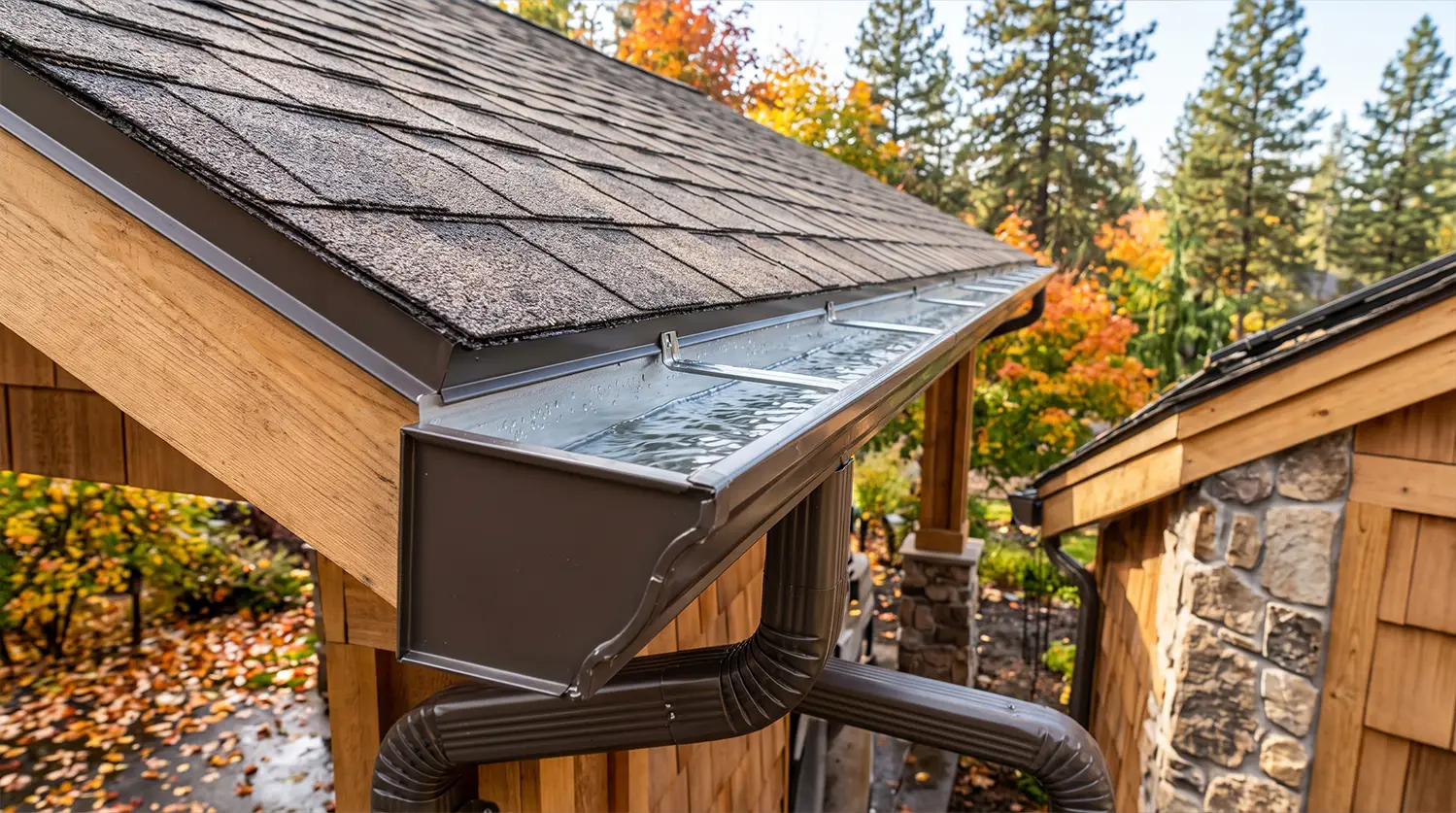
Leaf season is a useful time to look at how water leaves your roof. A pile of leaves near the street may be ready for collection while smaller pieces of debris remain in a gutter outlet, collect against a downspout opening, or hide along a roof edge. When rain arrives, those small obstructions can show up as overflow, staining, or water pooling beside the house.
For Coeur d’Alene homeowners, the practical task is to follow the path of runoff from the roof edge to the ground. Start with observations you can make safely from a window or the yard. Record where water goes, when a problem appears, and whether the same spot overflows during more than one rain. That information makes a professional gutter assessment more productive.
This guide explains what to watch during November leaf pickup season, how to distinguish gutter symptoms from roof concerns, and when to arrange help. For service options, see SkyRight’s gutter services in Coeur d’Alene.
How the November leaf pickup schedule fits into your plan
The City of Coeur d’Alene’s leaf pickup page lists November 12 as the start of its 2026 collection. Crews begin south of Sherman Avenue and work north, making one pass through each street. The city asks residents to keep leaves and pine needles about one foot away from the curb so water can continue flowing.
Use the city’s current page to confirm instructions for your street. Its schedule gives you a convenient reminder to inspect private drainage areas around your home and decide whether gutter service is needed. Arrange that work directly with your contractor. SkyRight’s roofing and gutter services are scheduled separately from municipal collection.
A roof can continue collecting leaves after a street has been serviced. Trees over a building may shed at different times, and wind can move debris into previously clear areas. A check after the main leaf drop, followed by observation during rain, gives you more useful information than a single calendar date.
Watch the whole drainage path from a safe position
Choose a location on the ground where you can see the roof edge without standing beneath falling debris or a visibly loose gutter. A window may offer a better view of an upper roof section. Keep away from ladders, slippery surfaces, and areas where water or ice is dropping overhead.
During rain, look for the first place the water changes direction. Does it spill over the front of the gutter, run behind it, escape through a joint, or arrive at the downspout and then spread across a walkway? Each pattern gives a contractor a different starting point.
| Observation | Useful detail to record | Next step |
|---|---|---|
| Water spills over one short gutter section | Location, rain intensity, and whether the same spot repeats | Arrange assessment of debris, outlet flow, and gutter alignment |
| Water appears behind the gutter | Photos of the roof edge and any staining visible from the ground | Ask for the gutter attachment and roof edge to be evaluated together |
| A downspout discharges onto a walking route | Where the water spreads and whether it remains after rain | Discuss a suitable discharge arrangement for the property |
| A gutter section hangs low or pulls away | Approximate location and visible movement | Keep people clear and request professional evaluation |
| Interior staining appears after rain | Room, time noticed, and whether the mark changes | Request a roofing assessment as well as a drainage review |
Separate a gutter symptom from a roof edge concern
Overflow alone does not establish the cause of a problem. Debris may restrict a gutter, but a leaking joint, a damaged section, an unsuitable slope, or a roof edge detail may also need attention. Water can travel along materials before it becomes visible, which means the wet spot you see may be some distance from its entry point.
Describe the observation before deciding what needs replacing. “Water runs down the fascia near the rear corner during steady rain” gives more useful information than a conclusion that the entire gutter system has failed. A short video from a safe position can show the timing and direction of the flow.
If you notice ceiling stains, damp attic materials visible from an existing safe access point, or changes around a skylight, include those details in the service request. SkyRight’s Coeur d’Alene roofing services can help you discuss roof and gutter concerns together.
Check where the downspouts finish
The drainage route continues after water leaves the downspout. From the yard, look for visible blockages at accessible discharge openings, disconnected sections, persistent puddles, and runoff that crosses an entrance. Avoid reaching into concealed drains or attempting to clear a buried system without knowing its layout.
Take a photograph that shows the outlet and the surrounding ground. A close view of a downspout may miss the important detail that water is flowing back toward the building or into a low area beside a door. A wider image helps a contractor understand the site.
Properties differ in grading, landscaping, drainage connections, and available discharge routes. Ask for a solution based on the existing arrangement and the condition of the system. Extending an outlet or changing its direction should account for nearby structures, paths, and neighboring property.

Gutter guards still need observation
A gutter guard can change how debris reaches a gutter. Its performance depends on its design, installation, nearby trees, roof layout, and maintenance. Leaves can collect on top of some guards, and smaller material may still reach an outlet or settle in areas that are difficult to see.
If your home has guards, tell the contractor what type is installed and when it was last inspected. Include a photograph taken from a safe location if the product is visible. Ask whether the observed overflow comes from debris on the surface, material inside the gutter, an outlet restriction, or another installation detail.
When considering new guards, discuss access for future maintenance, compatibility with the existing roof edge, and how the system handles the debris around your home. The best questions relate to the actual property and the service work it will continue to need.
Plan the work around leaf drop and changing weather
A simple sequence keeps observations and service requests organized.
- Make a baseline record. Photograph visible gutter sections, downspout outlets, and existing stains before the main leaf drop is over.
- Check the city’s collection instructions. Keep your curbside leaf placement consistent with the current municipal guidance.
- Watch one rain event safely. Record the first location where runoff spills, backs up, or crosses a route people use.
- Send a focused request. Provide the address, affected side of the building, photographs, and a description of when the problem appears.
- Review the result. After work is complete, observe the same areas during suitable weather and report any continuing symptoms.
If you will be away during the holidays, share the contact plan with someone who can check the property from a safe location. Give them clear instructions about who to call and how to report a new stain or visible overflow. A dated record is easier to follow than a series of unrelated messages.
Keep winter roof preparation in view
Leaf cleanup is one part of preparing a building for winter. Gutters, roof edges, flashing, attic conditions, and the roof covering all influence how a home handles moisture. Clearing a drainage restriction may improve runoff while a separate roof defect still requires repair.
For a broader seasonal review, use SkyRight’s Coeur d’Alene winter roof preparation checklist. Bring any unresolved roof or attic concerns to the contractor’s attention when you schedule service. This helps connect the visible drainage symptoms with the rest of the building.
Avoid using an online photograph or a neighbor’s roof as a measure of your own roof’s condition. Roof shapes, drainage details, materials, and past repairs differ. Ask for an assessment that explains the observed condition, proposed work, and any follow-up that may be needed.
Questions homeowners ask during leaf pickup season
Should I wait until every leaf has fallen before requesting gutter service?
Base the timing on the condition you can observe and the trees around your home. Repeated overflow, a detached section, or water near an entrance deserves attention while leaves are still falling. A contractor can discuss whether a follow-up check would be useful later in the season.
Does the city’s leaf pickup include cleaning gutters?
Municipal leaf collection follows the city’s curbside program. Arrange work on your home’s gutters and downspouts directly with a service provider. Check the city page for collection instructions and ask your contractor to define the scope of private-property work in the estimate.
Can one overflowing corner cause a problem?
A repeated overflow at one location is worth documenting. The effect depends on where the water goes, the condition of adjacent materials, and how often it happens. Show the contractor the entire route from the gutter to the ground.
Why does water still overflow after a recent cleaning?
New debris may have arrived, or the cause may involve an outlet, alignment, joint, guard, or roof edge. Keep the service record and photograph the continuing symptom during rain. Ask for an explanation of the cause before choosing additional work.
What information should I have ready when I call?
Provide your address, the location of the problem, when you first noticed it, whether it changes during rain, and any previous service details. Ground-level photographs and a short video can help. Mention interior water marks and visible damage when you request the visit.
Arrange a gutter assessment in Coeur d’Alene
If leaf season has revealed overflowing gutters, a questionable downspout outlet, or a loose section, contact SkyRight Roofing and Gutters to discuss an assessment. Call (208) 418-9606 and describe the issue you can see.
Ask for an estimate that explains the recommended work and whether the roof edge or another part of the drainage route needs further evaluation. A clear scope helps you plan the immediate repair and the observations to make as winter approaches.