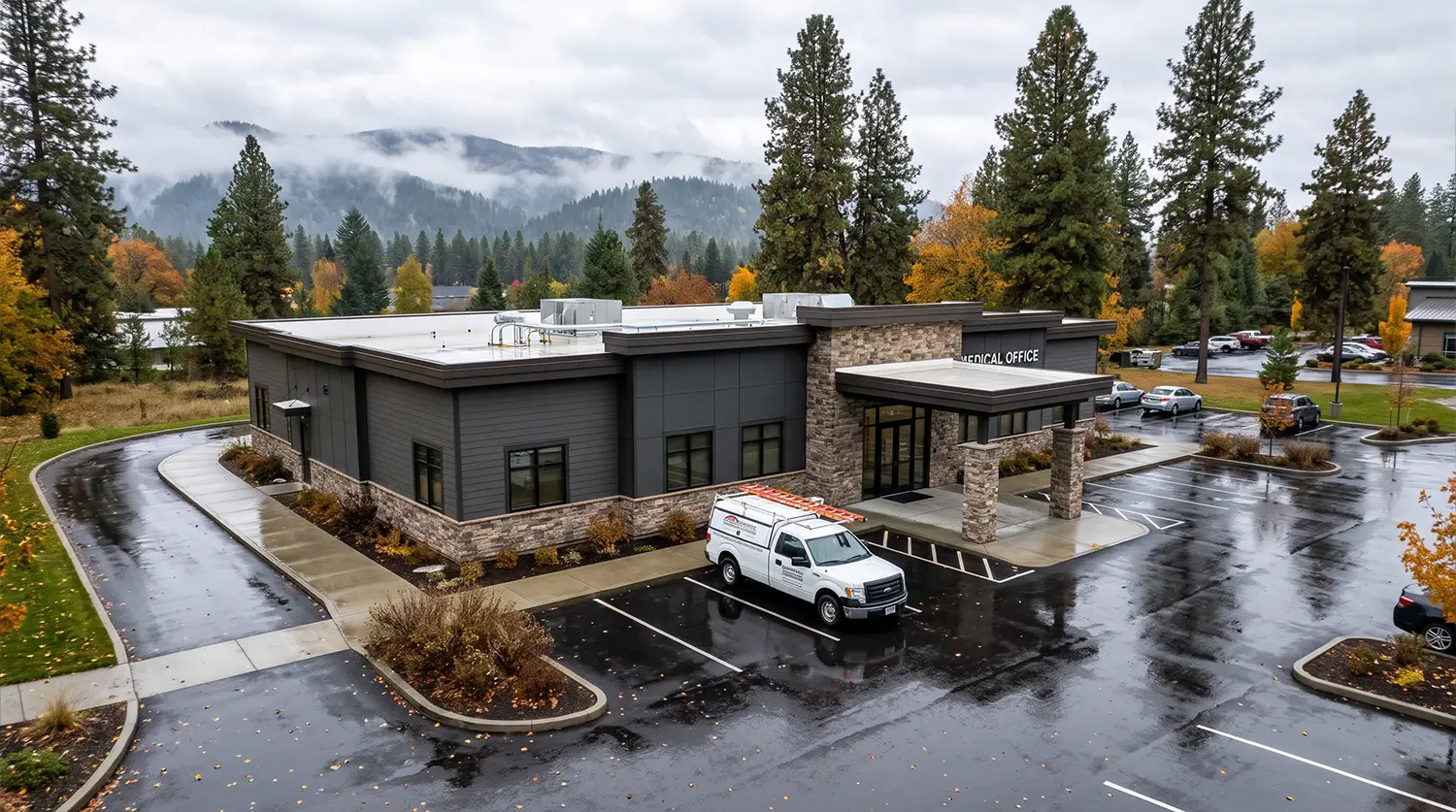
Early November is an important maintenance period for commercial property owners in Post Falls, Idaho.
As autumn moves toward winter, flat and low-slope roofing systems must manage fallen leaves, rainwater, changing temperatures, and eventually snow and snowmelt.
Even a small drainage problem can become more serious when water repeatedly collects around the same vulnerable area.
For local businesses, taking time to inspect drainage systems before winter may help reduce the likelihood of unexpected roofing repairs and interruptions to building operations.
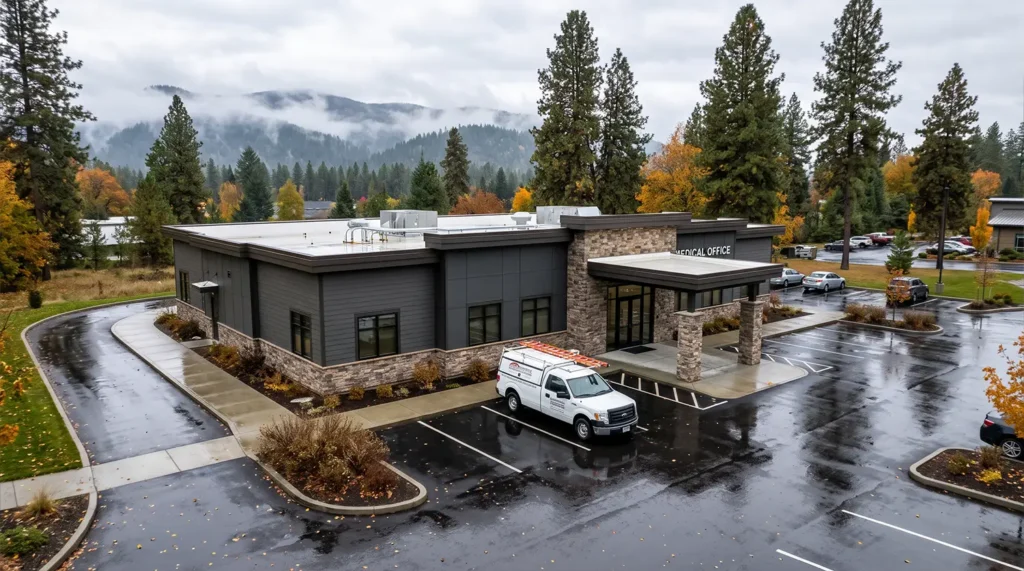
November 2026 Weather Update for Post Falls
The National Weather Service Spokane forecast issued November 3, 2026, calls for mostly dry conditions through Wednesday, followed by periods of light rain across the Inland Northwest later in the week.
Snow is expected primarily at higher elevations during the incoming weather systems.
For Post Falls commercial property managers, the forecast provides a useful opportunity to check roof drainage and look for existing damage before more demanding winter conditions arrive.
The forecast does not indicate an imminent major snowstorm in Post Falls. Rather, it highlights the value of routine preventive maintenance during North Idaho’s transition into winter.
Property owners can monitor updated conditions through the National Weather Service Spokane office.
Why Flat Roof Drainage Is Especially Important in North Idaho
Many commercial properties use low-slope roofing systems, including TPO, EPDM, PVC, modified bitumen, and other roofing assemblies.
These roofs are designed to direct water toward drains, scuppers, or other designated drainage points.
Unlike steep residential roofs, low-slope roofing systems may not shed water as quickly. Proper drainage is therefore an essential part of their performance.
A flat roof is not necessarily completely level. It should be designed with appropriate slopes and drainage provisions for the building.
In Post Falls, commercial roofs may face several seasonal challenges:
- Fall leaves and pine needles accumulating near drains
- Moisture collecting around rooftop HVAC equipment
- Seams and flashing exposed to repeated wetting
- Winter snow accumulation followed by melting
- Temperature fluctuations that affect existing cracks and deteriorated materials
The National Roofing Contractors Association has also highlighted the importance of effective roof drainage and scheduled roof maintenance.
For property owners evaluating their options, SkyRight provides flat roofing services in Post Falls, including roof inspections and repairs.
Contact Us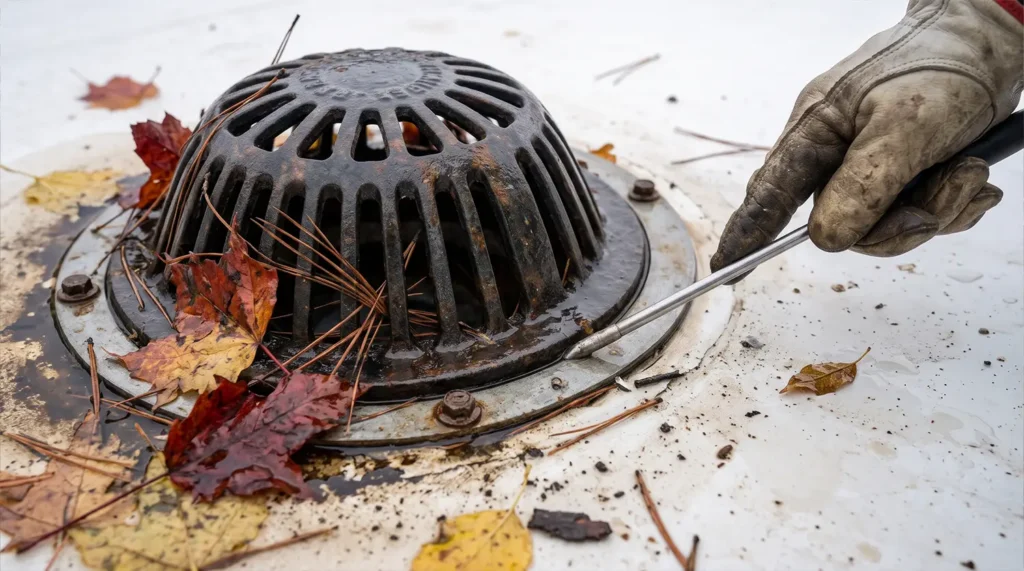
Five Areas to Check on a Commercial Flat Roof
1. Roof Drains and Scuppers
Commercial roofs depend on properly maintained drainage outlets.
An internal roof drain carries water through the building’s drainage system, while a scupper allows water to exit through an opening at the roof edge or parapet wall.
Both can become obstructed by leaves, dirt, and other debris.
A qualified inspector should evaluate whether drainage outlets are accessible, clear, properly connected, and functioning as designed.
Secondary or overflow drainage systems also deserve attention where they are installed.
Warning sign: Water repeatedly collects in the same area after rain, or drainage outlets appear blocked.
2. Standing Water and Low Areas
Some water may remain temporarily after rainfall. However, water that persists long after surrounding areas have dried deserves investigation.
Standing water may indicate:
- Blocked drains
- Inadequate slope
- Depressed roof areas
- Damaged insulation or roofing components
- Problems with an existing drainage design
Property managers should document the approximate location and duration of standing water rather than assuming that every puddle requires roof replacement.
A roofing professional can determine whether the condition requires cleaning, repair, drainage improvements, or further evaluation.
3. Seams and Roof Penetrations
Roofing materials must maintain watertight connections around seams, vents, pipes, walls, and other penetrations.
These areas are particularly important on low-slope commercial roofing systems.
Roof penetrations may include HVAC equipment, exhaust systems, plumbing vents, and electrical conduits.
Loose flashing, damaged membrane seams, and failed details around equipment curbs can create pathways for moisture.
A professional inspection should identify the source of the problem before repairs are recommended.
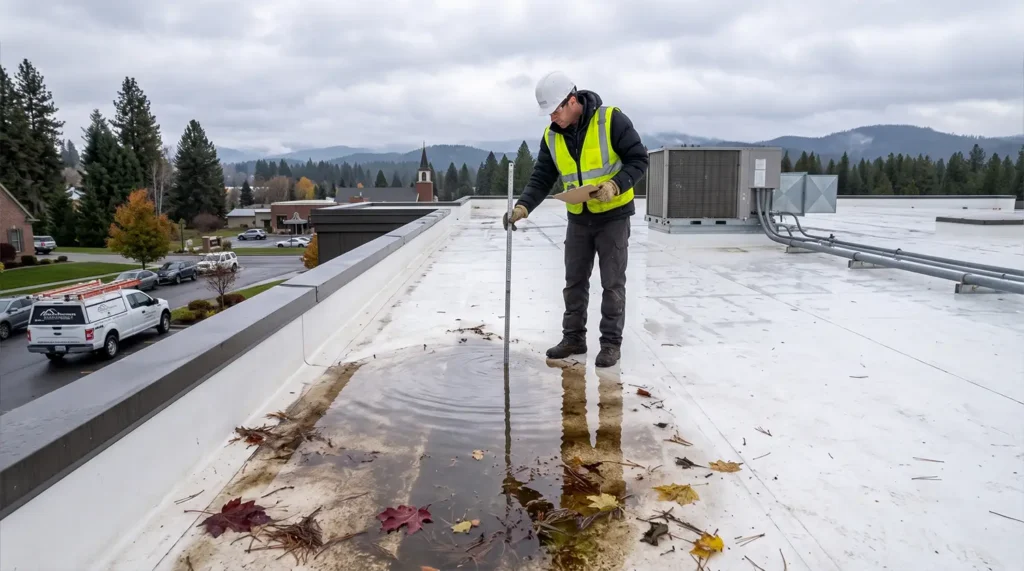
4. Rooftop HVAC Equipment
Heating and cooling equipment adds complexity to many commercial roofs.
Water may collect near equipment supports, flashing transitions, or areas where the roof surface changes elevation.
Service technicians may also access these areas throughout the year, making it important to look for accidental punctures or damaged walkways.
Property managers should coordinate roofing inspections and HVAC maintenance without allowing untrained personnel to perform unsafe roof work.
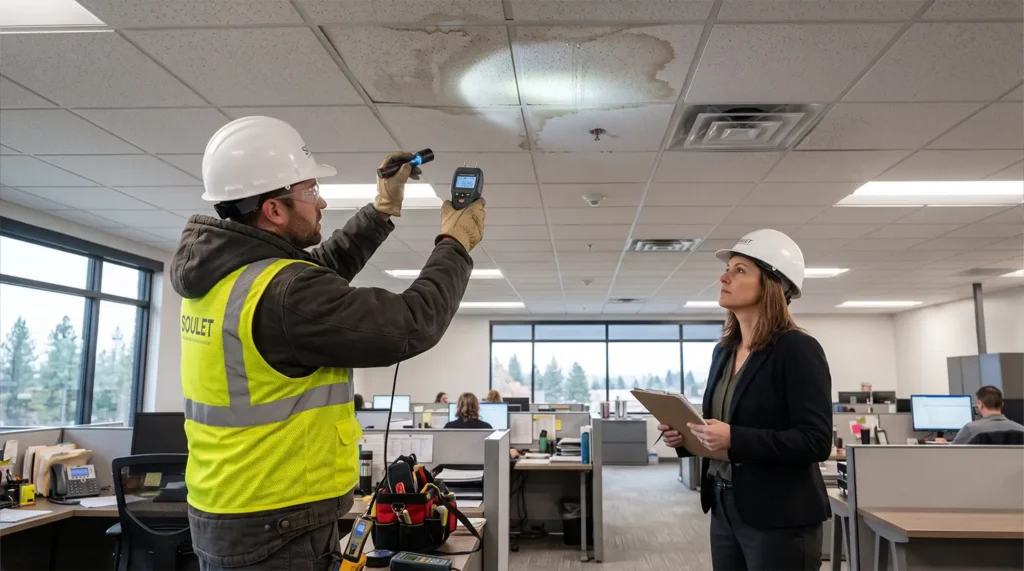
5. Interior Ceilings and Building Walls
Not every commercial roof leak is immediately visible from outside.
Sometimes the first warning sign appears inside the building.
Look for ceiling discoloration, damp insulation, bubbling paint, unexplained moisture, or stains near walls and rooftop equipment locations.
Water can travel through a roof assembly before becoming visible indoors, so an interior stain does not always identify the exact entry point.
Building owners should photograph visible damage and document when it appears, particularly during or after rainfall.
What Should a Post Falls Property Manager Do Before Winter?
A practical commercial roof maintenance plan starts with documentation.
First, review previous roof repairs, warranty information, and any known drainage problems. Properties with recurring leaks may need additional attention.
Second, arrange for qualified personnel to inspect drainage outlets, visible membrane conditions, flashing, and rooftop penetrations. Do not send untrained employees onto the roof.
Third, document any recommended work and prioritize active leaks, blocked drainage, or damaged components.
Finally, retain inspection photographs and repair records. These documents may be useful for future maintenance planning, warranty discussions, and evaluations of the roof’s condition.
For a broader explanation of roof systems and their maintenance requirements, see SkyRight’s commercial roofing systems overview.
Should You Repair or Replace a Commercial Flat Roof?
Not every leak requires a full replacement.
An isolated puncture, localized seam failure, or damaged flashing detail may be repairable when the surrounding roofing materials remain serviceable.
However, repeated moisture intrusion, widespread membrane deterioration, saturated insulation, or significant drainage deficiencies may require a more comprehensive solution.
The best approach depends on the existing system, roof age, condition, warranty requirements, and underlying causes of the problem.
SkyRight’s Post Falls roofing services can help property owners begin evaluating their roofing needs.
CALL US (208) 897-2828Frequently Asked Questions
How often should commercial flat roofs be inspected in Post Falls?
A common maintenance approach is to schedule professional inspections in spring and fall, with additional checks after significant weather events or when active leaks appear. The appropriate schedule also depends on the roofing system and manufacturer requirements.
Is standing water on a flat roof always a problem?
Brief water accumulation is not necessarily evidence of failure. Persistent or recurring ponding can indicate drainage or roof-slope issues and should be evaluated by a qualified roofing professional.
Can a commercial roof leak without obvious exterior damage?
Yes. Water may enter around seams, penetrations, flashing, or concealed roofing defects. Identifying the source often requires more than a visual inspection from inside the building.
Does a clogged roof drain mean the entire roof needs replacement?
No. An obstructed drain may simply require professional cleaning and evaluation. However, a drainage problem that has caused prolonged moisture exposure or underlying damage may require additional repairs.
Schedule a Commercial Roof Inspection in Post Falls
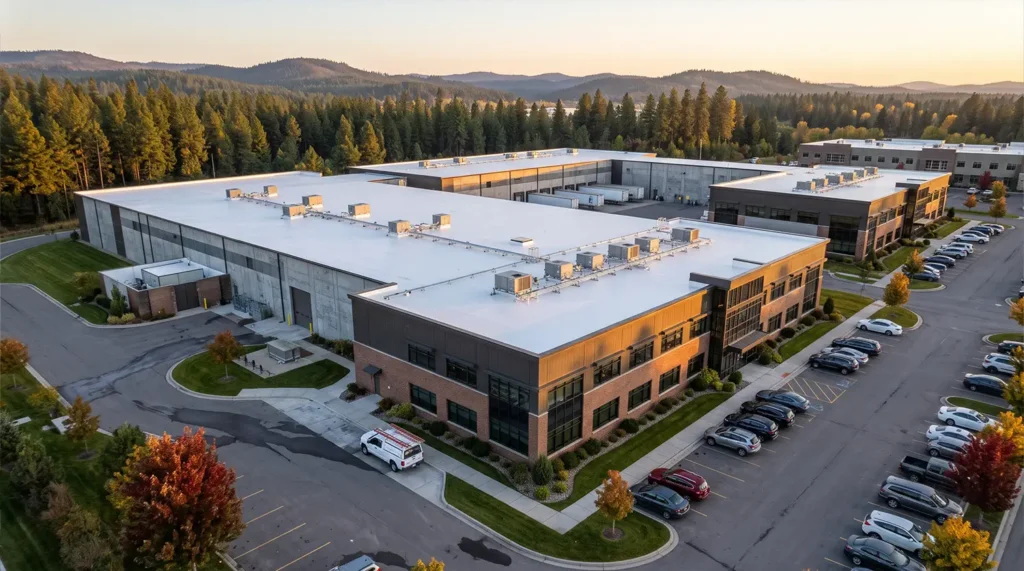
November is a useful time to address roof drainage concerns before North Idaho’s colder winter weather develops.
A professional evaluation can help determine whether a roofing system needs maintenance, localized repairs, or additional investigation.
SkyRight Roofing and Gutters serves commercial and residential property owners in Post Falls and surrounding communities.
SkyRight Roofing and Gutters — Post Falls
510 Clearwater Loop, Suite #100, Post Falls, ID 83854
Phone: (208) 897-2828
Explore Flat Roofing Services in Post Falls | Contact SkyRight