
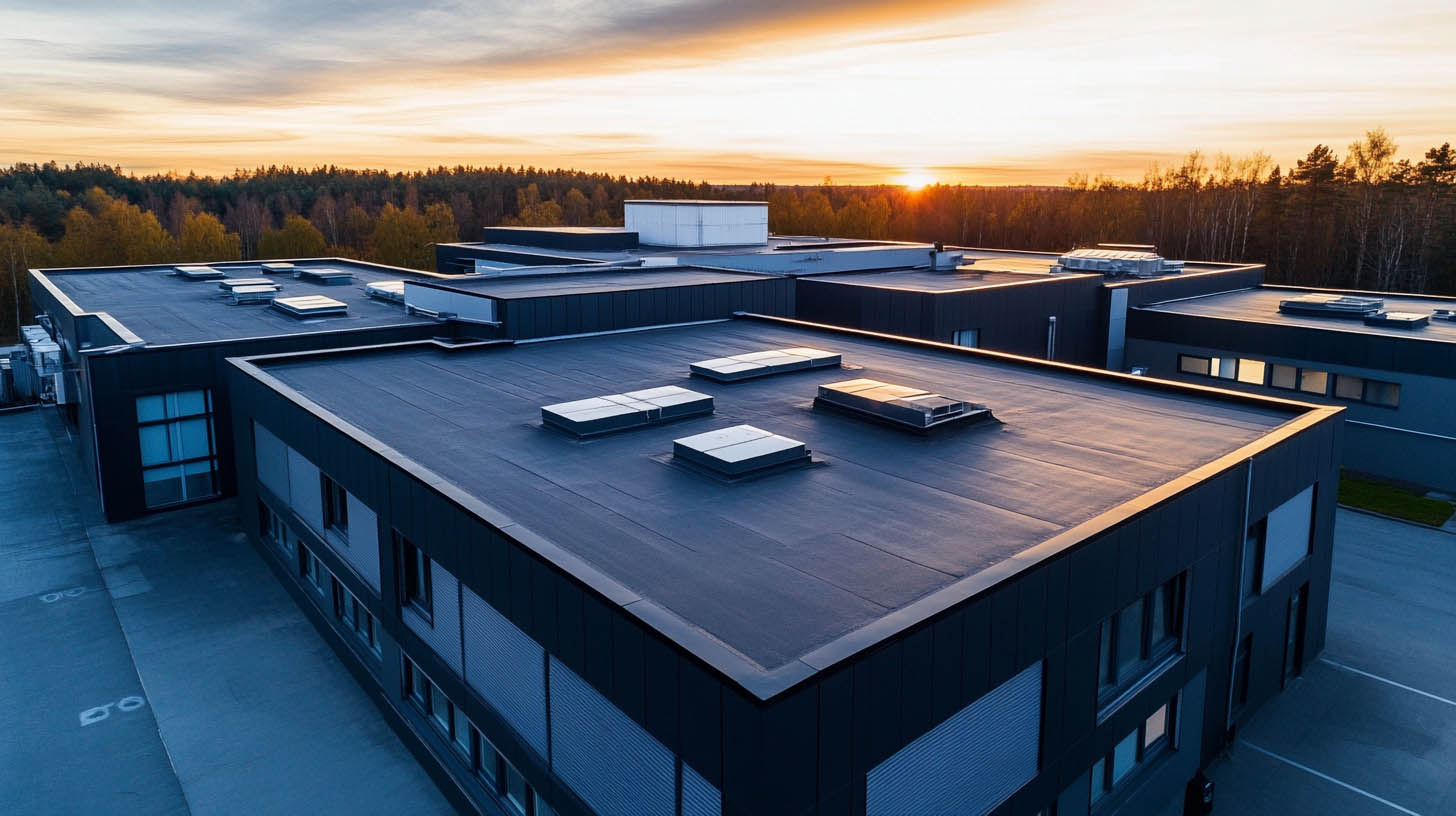
Selecting the appropriate roof type for a commercial building is critical for long-term performance, durability, and cost-efficiency. At SkyRight, based in Sandpoint, ID, we provide expert insights to help you make informed decisions. Here’s a guide to the different commercial roof types, their benefits, and their suitability for various business needs.
Flat vs. Sloped Commercial Roofing
1. Flat Roofing
Flat roofs are the most common choice for commercial buildings. They are cost-effective, easier to maintain, and ideal for housing HVAC systems discreetly.
- Advantages:
- Affordable installation and repairs.
- Easy access for maintenance.
- Versatile for various applications, including solar panel installation.
- Disadvantage:
- Limited drainage capability, requiring efficient water management solutions.
2. Sloped Roofing
Sloped roofs, while common in residential settings, are less prevalent in commercial structures. Their primary advantage lies in superior drainage performance.
- Advantages:
- Enhanced water runoff.
- Aesthetic appeal for certain building styles.
- Disadvantages:
- Higher installation and maintenance costs.
- Less practical for equipment placement.
Types of Commercial Flat Roofing
1. Metal Roofing
Metal roofs are constructed from corrugated sheets, available in materials like steel, aluminum, and copper.
- Pros:
- Exceptional durability, lasting over 40 years.
- Resistant to pests and mildew.
- Energy-efficient, reducing heating and cooling costs.
- Cons:
- Expensive to install.
- Prone to denting from hail or falling debris.
2. Built-Up Roofing (BUR)
BUR systems are composed of alternating layers of asphalt and fabric, topped with crushed stone.
- Pros:
- Customizable thickness for added durability.
- Low maintenance, with a lifespan of 20-30 years.
- Cons:
- Time-intensive installation.
- Costly corrections if improperly installed.
3. Modified Bitumen
This rubber-like roofing uses layers of asphalt, polymer, and fiberglass to create a durable, waterproof barrier.
- Pros:
- Excellent temperature resistance.
- Faster installation than BUR systems.
- Cons:
- Shorter lifespan of 10-20 years compared to other options.
4. Membrane Roofing
Single-layer membranes, such as TPO, PVC, and EPDM, are lightweight and cost-effective.
- TPO:
- Affordable and eco-friendly.
- Versatile and easy to mold to building shapes.
- PVC:
- Long-lasting and highly resistant to punctures.
- Higher installation costs.
- EPDM:
- Durable, with excellent waterproofing capabilities.
- Susceptible to shrinkage in extreme weather.
Factors to Consider
- Climate: EPDM is better for cold climates, while reflective materials like TPO suit hot regions.
- Budget: Evaluate both initial installation costs and long-term maintenance expenses.
- Building Use: Consider flat roofs for efficient HVAC system placement and sloped roofs for superior water management.
Did You Know? TPO roofing is among the fastest-growing options in commercial roofing, thanks to its affordability and eco-friendly features.
SkyRight’s Commitment to Excellence
As a trusted contractor, SkyRight offers comprehensive roofing solutions tailored to your commercial needs. Certified as Bonner County’s #1 rated roofing company in 2023 and an Owens Corning Preferred Contractor, we deliver unmatched expertise and quality service.
FAQs
Q1: What is the lifespan of a metal roof?
Metal roofs can last over 40 years with proper maintenance.
Q2: Are flat roofs more cost-effective than sloped roofs?
Yes, flat roofs typically cost less to install and maintain, making them ideal for commercial buildings.
Q3: Can membrane roofing withstand harsh weather?
Yes, options like PVC are durable and puncture-resistant, suitable for extreme conditions.
Q4: What’s the best roofing type for cold climates?
EPDM is highly effective in colder regions due to its insulating properties.
Q5: How often should commercial roofs be inspected?
Annual inspections are recommended, with additional checks after severe weather events.If you want to read a blog about signs that your roof has been damaged by a storm, click here.