
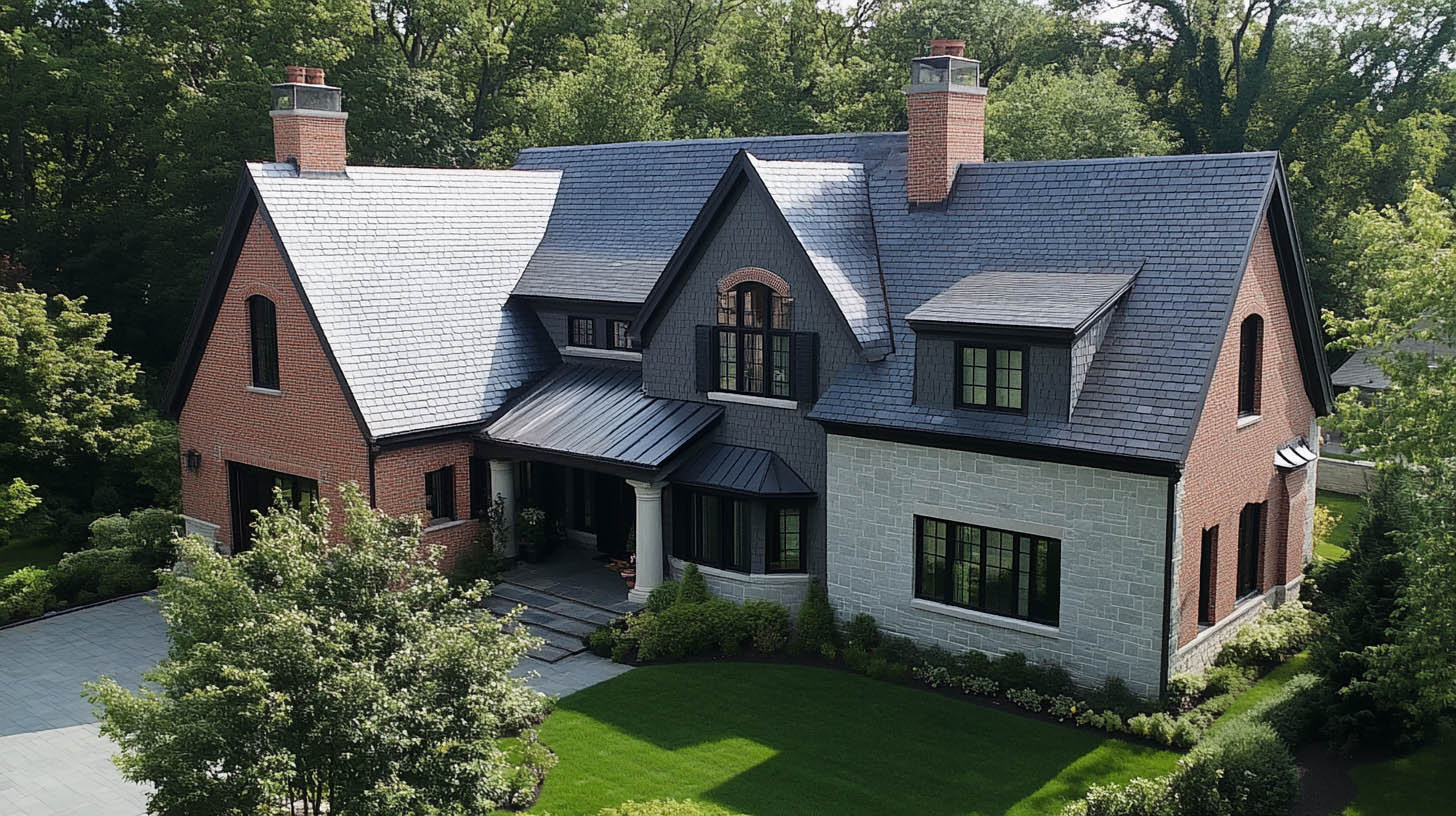
SkyRight in Sandpoint, ID offers premium roofing solutions tailored to beat the summer heat. Selecting the right materials can significantly enhance your home’s energy efficiency, reduce cooling costs, and increase comfort during scorching weather.
1. Metal Roofs
- Energy Efficiency: Reflect most sunlight, reducing heat absorption.
- Environmental Impact: Often made from recycled materials, making them highly sustainable.
- Cooling Benefits: Include an air gap that acts as insulation, preventing heat transfer into the home.
- Durability: Metal roofs cool quickly at night, reducing long-term heat stress.
2. Slate Roofs
- Aesthetic Appeal: Provides a high-end, classic look that enhances property value.
- Heat Resistance: Reflects sunlight, minimizing heat transfer into the structure.
- Longevity: Known for lasting over a century, making it a long-term investment.
- Considerations: Heavy and may require structural reinforcement.
3. Clay Tile Roofs
- Thermal Resistance: Keeps interiors cooler with its curved design that promotes air circulation.
- Sustainability: Made from natural materials and easily recyclable.
- Affordability: More budget-friendly than slate but offers similar cooling benefits.
- Style Compatibility: Ideal for Mediterranean or Southwest-style homes.
4. Rubber Roofs (EPDM)
- Heat Resistance: Synthetic rubber effectively insulates against high temperatures.
- Versatility: Available in white or natural colors to reflect heat.
- Cost-Effectiveness: Affordable and may qualify for tax credits in certain regions.
- Applications: Suitable for flat and low-slope roofs but adaptable for other surfaces.
Why SkyRight is Your Go-To Partner
SkyRight combines expertise and innovation to provide roofing solutions that enhance summer comfort. As an Owens Corning Preferred Contractor and Bonner County’s #1-rated roofing company in 2023, we help homeowners select materials that maximize energy efficiency and aesthetic appeal.
Unique Fact
Clay and slate roofs can reflect up to 50% more solar radiation than asphalt shingles, significantly lowering indoor temperatures.
FAQs
What is the most energy-efficient roofing material for summer?
Metal roofs are among the most energy-efficient roofing materials for hot climates due to their reflective properties. These roofs reflect a significant amount of sunlight, which reduces heat absorption. Additionally, when installed with an air gap or reflective coatings, metal roofs can enhance cooling efficiency, keeping homes cooler and reducing reliance on air conditioning during the summer months.
Are heavy roofing materials like slate and clay worth the investment?
Yes, heavy roofing materials like slate and clay tiles are a worthwhile investment due to their exceptional durability, long lifespan, and ability to provide natural cooling. These materials have excellent thermal mass properties, meaning they absorb heat during the day and release it at night, reducing temperature fluctuations inside the home. Although the initial investment is higher, these materials can provide long-term value through energy savings and reduced maintenance costs.
Can rubber roofs handle extreme heat?
Yes, EPDM (Ethylene Propylene Diene Monomer) rubber roofs are known for their heat resistance and versatility, making them suitable for hot climates. EPDM rubber is designed to withstand extreme temperatures without degrading, which helps maintain the integrity of the roof. Additionally, the material’s dark color can help absorb heat during cooler weather, while its reflective properties also reduce heat absorption in warmer months, making it an energy-efficient option.
How does roof color impact cooling?
Roof color plays a significant role in how much heat a roof absorbs or reflects. Lighter colors, such as white, light gray, or beige, reflect more sunlight, which helps keep the home cooler during hot weather. In contrast, darker-colored roofs absorb more heat, increasing the internal temperature of the home and raising cooling costs. Choosing a lighter roof color can significantly reduce the amount of heat transferred into your home, making it a more energy-efficient option.
Are tax credits available for cool roofing options?
Yes, some states and local jurisdictions offer tax credits or incentives for installing energy-efficient roofing systems, particularly cool roofs that reduce heat absorption. These credits aim to encourage homeowners and businesses to use materials that contribute to energy savings and sustainability. To find out if you qualify for such incentives, it’s essential to check local regulations, consult with roofing professionals, or visit the Department of Energy’s website for more information.If you want to read a blog about a comprehensive guide to commercial metal roofing systems, click here.