
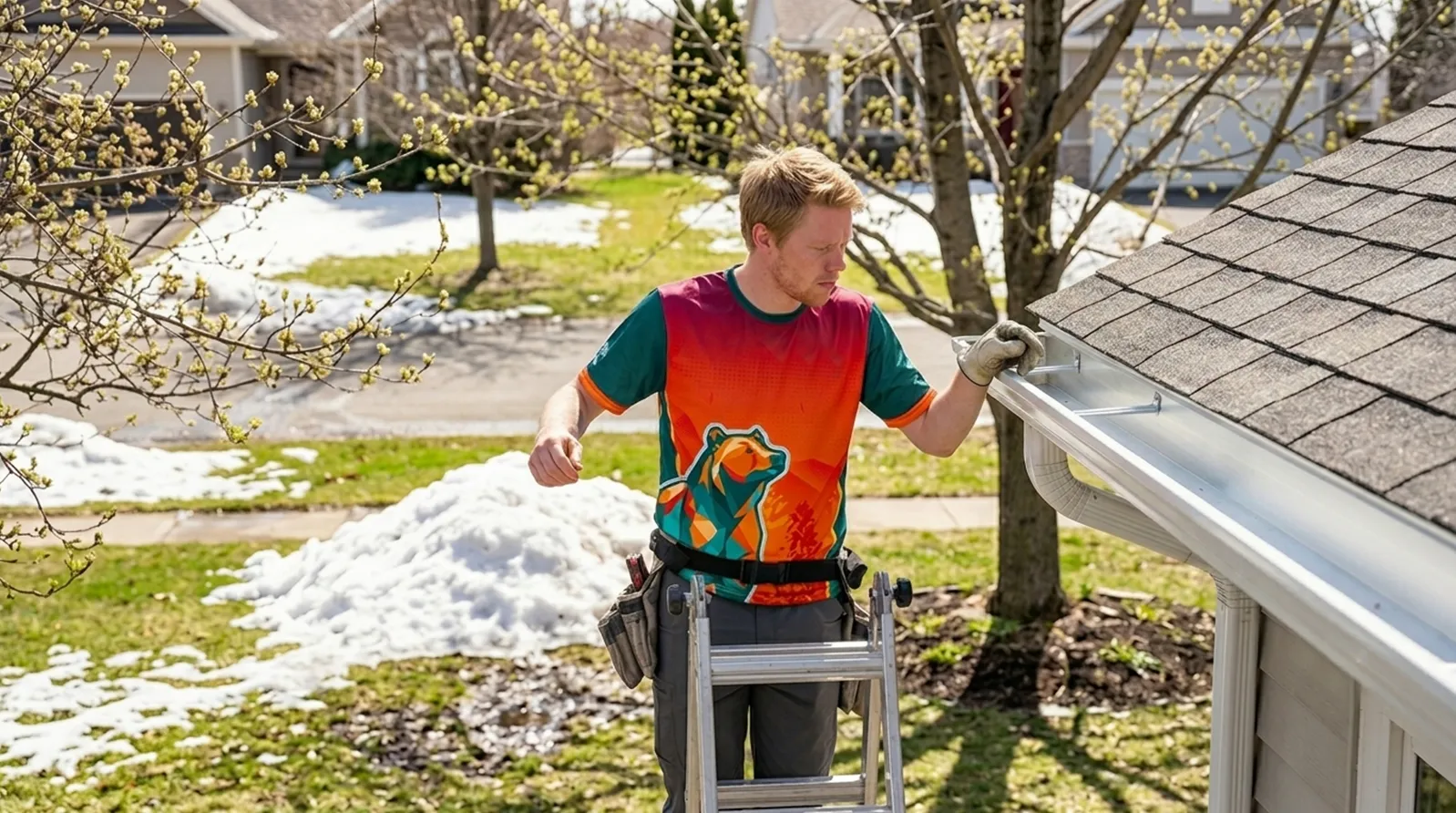
At a Glance: How Often Should You Inspect Your Roof?
North Idaho homeowners should inspect their roof visually in spring and fall, check gutters before winter, and schedule an inspection after major wind, hail, heavy snow, falling branches, or interior leak signs. The National Roofing Contractors Association advises homeowners who perform maintenance themselves to limit DIY work to spring and fall visual checks for cracked or curling shingles and cleaning gutters, while leaving repair or replacement work to trained professionals.
For planning purposes, many professional roof inspections cost around $100–$400, depending on roof size, complexity, roof pitch, access, and whether the inspection is physical, drone-based, infrared, or tied to a roof certification. These are general planning ranges, not a SkyRight quote. Some inspections may be free or credited toward approved work, while more detailed reports, steep roofs, storm documentation, or specialty inspections can cost more.
The best roof maintenance plan is simple: inspect early, clean water pathways, document storm damage, fix small problems before they become leaks, and review the roof before North Idaho winter.
SkyRight helps homeowners in Coeur d’Alene, Post Falls, Sandpoint, Hayden, Rathdrum, Athol, Spirit Lake, and nearby North Idaho communities maintain asphalt shingle, metal, flat, residential, commercial, and gutter systems.
For local support, visit SkyRight’s Coeur d’Alene roofing page, Post Falls roofing page, residential roofing services in Coeur d’Alene, roof repair vs replacement guide, or gutter services page.
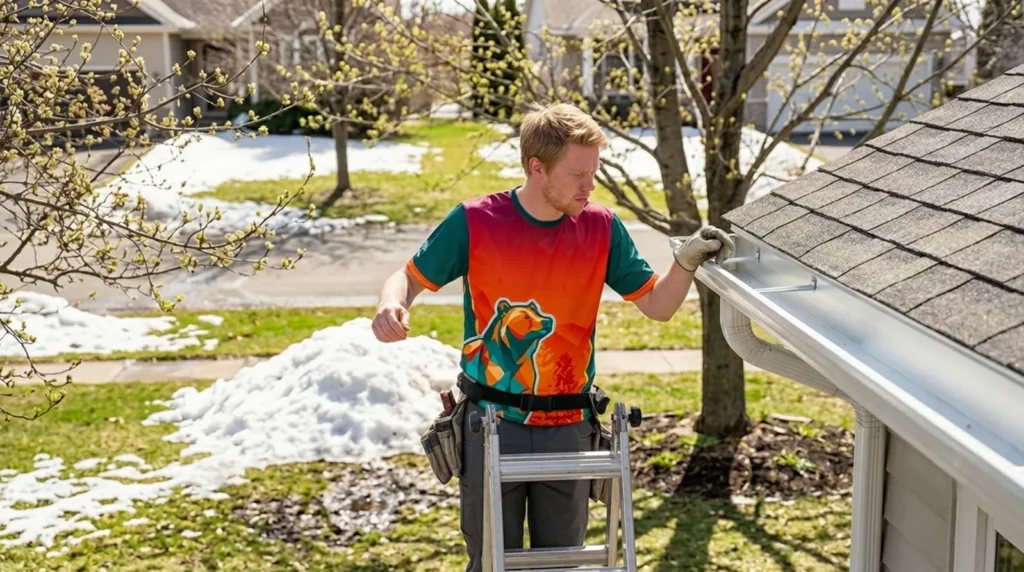
Quick Answer: The Best Roof Maintenance Schedule for North Idaho
Use this simple calendar:
|
Timing |
What to Check |
Why It Matters |
|
Early spring |
Winter damage, shingles, flashing, gutters, attic moisture |
Snow, ice, and freeze-thaw cycles can expose weak spots |
|
Late spring |
Moss, algae, tree debris, ventilation, drainage |
Prepares the roof for summer heat and storm season |
|
Summer |
Heat damage, roof ventilation, tree limbs, gutter flow |
Helps reduce heat and moisture stress |
|
Early fall |
Shingles, flashing, gutters, valleys, pipe boots, roof edges |
Prepares the home before snow and freeze-thaw conditions |
|
Late fall |
Clean gutters, remove debris, check downspouts |
Reduces ice dam and roof-edge water problems |
|
After storms |
Missing shingles, lifted edges, dents, branches, leaks |
Storm damage should be documented early |
|
Before selling or buying |
Full roof condition review |
Helps reduce inspection surprises and negotiation issues |
|
After interior stains |
Leak source inspection |
Water can travel before showing inside the home |
Best rule: schedule a professional inspection when you see roof damage, interior stains, granules in gutters, missing shingles, recurring ice buildup, soft decking signs, or storm damage.

Why Regular Roof Maintenance Matters
Regular roof maintenance helps homeowners find small problems before they become expensive leaks, decking damage, insulation damage, mold concerns, gutter failures, or premature roof replacement.
The roof is one of the most exposed parts of a home. In North Idaho, it has to deal with snow, ice, rain, wind, tree debris, summer heat, shaded roof sections, freeze-thaw cycles, and sudden weather changes.
A maintenance plan helps protect:
- shingles or metal panels;
- flashing;
- roof penetrations;
- valleys;
- roof edges;
- gutters;
- attic ventilation;
- insulation;
- roof decking;
- interior ceilings and walls;
- insurance documentation.
Roof maintenance also helps homeowners make better decisions. If the roof is mostly healthy, a repair may be enough. If inspection shows widespread wear, replacement may be the better long-term option.
For replacement planning, see SkyRight’s North Idaho roof replacement cost guide.
North Idaho Roof Maintenance Calendar
The best maintenance schedule follows the local weather cycle.
|
Season |
Main Goal |
Homeowner Action |
When to Call SkyRight |
|
Spring |
Check winter damage |
Look for missing shingles, leaks, gutter damage, attic moisture |
If you see stains, loose shingles, ice-dam damage, or flashing problems |
|
Summer |
Manage heat, storms, and tree growth |
Check ventilation, trim branches, monitor roof debris |
If shingles are curling, roof surface looks uneven, or attic is hot/moist |
|
Fall |
Prepare for snow and freeze-thaw |
Clean gutters, check valleys, inspect pipe boots and roof edges |
If roof has leaks, clogged drainage, or old flashing before winter |
|
Winter |
Watch for active problems |
Look for ice dams, attic frost, roof-edge leaks, heavy snow concerns |
If ice, leaks, or snow load concerns appear |
|
After severe weather |
Document storm damage |
Take photos from the ground and look for visible damage |
If wind, hail, debris, or leaks appear after the storm |
This calendar is not a replacement for professional inspection. It is a practical homeowner routine for spotting problems early.

Spring Roof Inspection Checklist
Spring is one of the most important roof inspection seasons in North Idaho. Snow, ice, and freeze-thaw cycles can reveal weaknesses that were not obvious in fall.
What to Check in Spring
Look for:
- missing shingles;
- lifted shingle edges;
- cracked or curling shingles;
- granules in gutters;
- bent or loose flashing;
- cracked pipe boots;
- damaged ridge caps;
- clogged valleys;
- gutter damage from ice or snow;
- stains on ceilings or walls;
- wet insulation;
- attic frost or condensation signs;
- moss or algae growth starting on shaded slopes.
Why Spring Matters
Spring inspections help catch winter-related damage before spring rain and summer storms make it worse.
Common spring roof problems include:
|
Spring Problem |
Why It Happens |
What It Can Lead To |
|
Loose shingles |
Wind, freeze-thaw movement, old sealant |
Wind damage or leaks |
|
Ice-dam damage |
Snowmelt refreezing near eaves |
Roof-edge leaks and damaged gutters |
|
Gutter separation |
Ice weight or clogged drainage |
Fascia damage and water overflow |
|
Attic moisture |
Poor ventilation or warm indoor air |
Mold concerns and deck damage |
|
Valley debris |
Branches and needles collecting over winter |
Slow drainage and leaks |
If spring inspection shows active leak signs, read SkyRight’s roof repair vs replacement guide.
Stay safe on the ground. Let our certified team handle the ladder work.
Roof inspections can be dangerous, and overlooking a single cracked pipe boot or loose flashing can lead to thousands in water damage. Request a professional, multi-point seasonal roof evaluation by local North Idaho experts.
Summer Roof Maintenance Checklist
Summer is the best time to address repairs before fall weather and winter snow arrive.
What to Check in Summer
Look for:
- heat-related shingle aging;
- excessive attic heat;
- poor attic ventilation;
- tree limbs touching the roof;
- moss or algae on shaded areas;
- gutters pulling away from fascia;
- downspouts discharging too close to the foundation;
- exposed nail heads;
- cracked sealant around penetrations;
- animal or pest entry points.
Why Summer Matters
Summer heat can stress roofing materials, especially if attic ventilation is poor. Poor ventilation can shorten roof life and contribute to moisture problems when cold weather returns.
A summer maintenance visit is also useful because repairs are often easier to schedule before fall storms and winter work limitations.
For attic airflow education, read SkyRight’s guide to roof and attic ventilation.
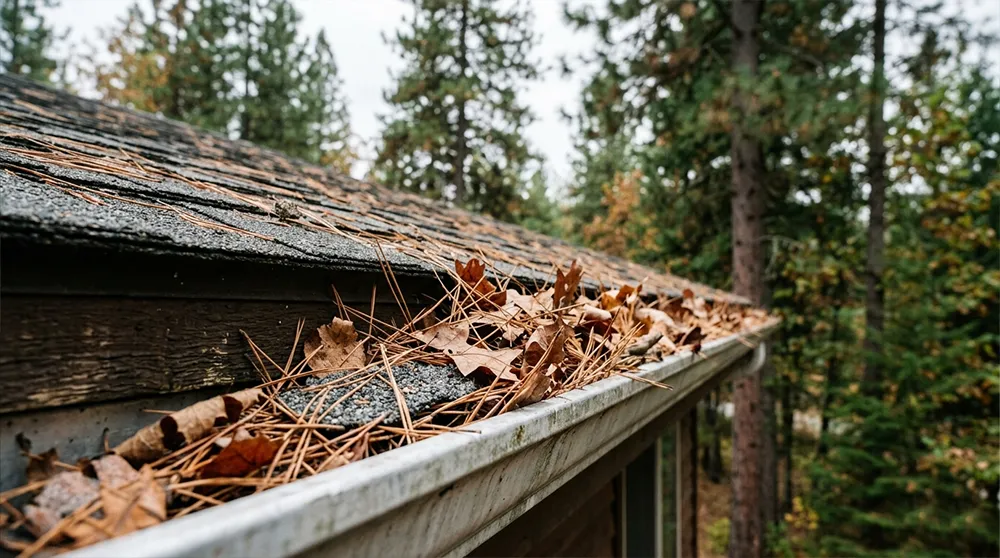
Fall Roof Maintenance Checklist
Fall is the most important preparation season for North Idaho roofs.
Before snow, ice, and freeze-thaw cycles arrive, homeowners should make sure water can move off the roof and away from the home.
What to Check in Fall
Look for:
- leaves and pine needles in gutters;
- clogged downspouts;
- debris in roof valleys;
- moss or algae growth;
- loose shingles;
- damaged flashing;
- exposed nails;
- cracked pipe boots;
- loose ridge caps;
- damaged drip edge;
- gutter slope problems;
- roof-edge water staining;
- tree limbs close to the roof.
Why Fall Matters
Fall maintenance reduces the risk of winter roof leaks, gutter ice, fascia damage, and water backing up near eaves.
|
Fall Task |
Why It Matters Before Winter |
|
Clean gutters |
Helps prevent ice buildup and overflow |
|
Clear valleys |
Keeps water and snowmelt moving |
|
Inspect flashing |
Protects chimneys, walls, and transitions |
|
Check pipe boots |
Prevents small penetration leaks |
|
Review attic ventilation |
Reduces condensation and ice-dam risk |
|
Trim branches |
Reduces debris and storm impact risk |
|
Document roof condition |
Helps with insurance or future repair decisions |
For deeper gutter maintenance, visit SkyRight’s article on gutter cleaning for roof maintenance.
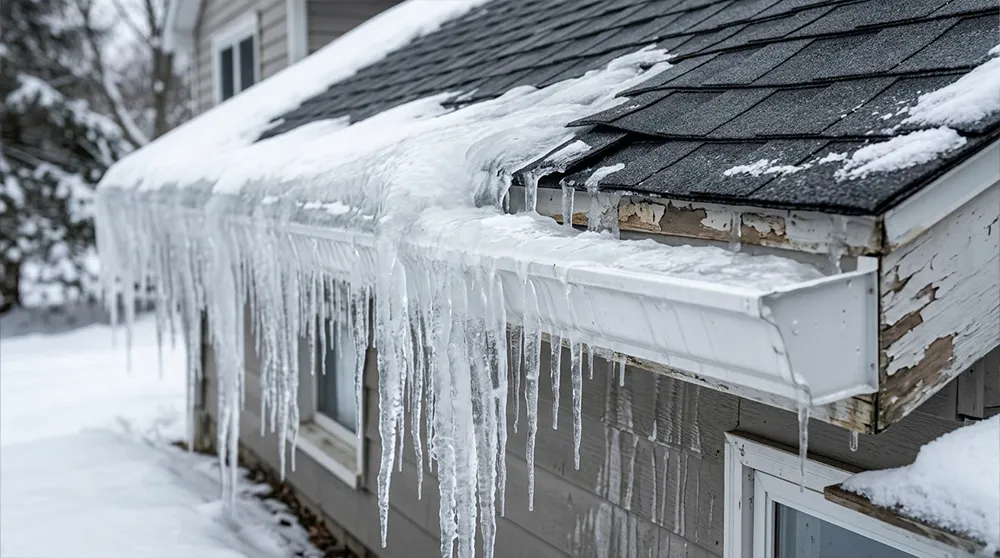
Winter Roof Watchlist
Winter is not the best time for routine roof work, but it is the season when hidden problems often show up.
What to Watch in Winter
Watch for:
- ice dams near eaves;
- icicles forming along gutters;
- water stains after snowmelt;
- attic frost;
- heavy snow buildup;
- gutter overflow during thaw cycles;
- leaks around chimneys or skylights;
- roof-edge staining;
- unusual sagging;
- blocked vents.
What Not to Do in Winter
Do not use sharp tools to chop ice from the roof. NRCA warns against using ice picks, shovels, or sharp-edged tools to remove ice because they can damage roof coverings and flashing.
Homeowners should also avoid walking on icy, steep, snowy, or wet roofs. Winter roof access is dangerous, and foot traffic can damage shingles or metal panels.
If snow, ice, or winter leaks create concern, call a roofing professional instead of trying to solve it from the roof surface.
After-Storm Roof Inspection Checklist
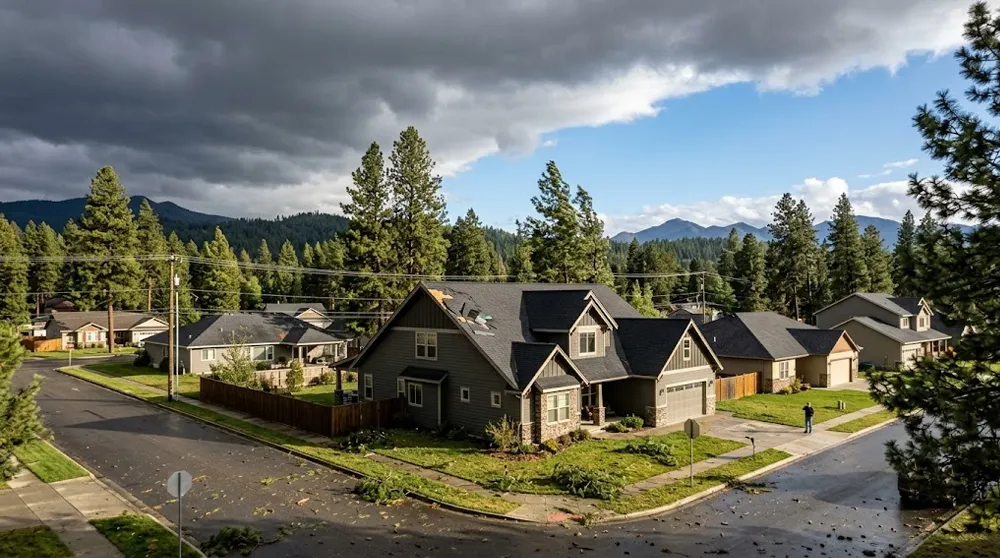
After strong wind, hail, heavy rain, falling branches, or sudden temperature swings, inspect the property safely from the ground.
What to Look For After a Storm
Check for:
- shingles in the yard;
- missing shingles;
- lifted roof edges;
- damaged ridge caps;
- dents in gutters or vents;
- branches on the roof;
- granules at downspouts;
- bent flashing;
- damaged skylights;
- new ceiling stains;
- water near chimneys or vents;
- gutter overflow;
- fascia damage.
What to Document
Take photos of:
- roof damage visible from the ground;
- fallen branches;
- shingles or roof pieces in the yard;
- dents on gutters or vents;
- water stains inside the home;
- attic moisture if safely accessible;
- date and time of the storm.
Insurance may cover roof damage when it comes from a sudden accidental event or act of nature, but it usually does not cover gradual deterioration, wear and tear, or neglect. Keeping inspection records, repair receipts, and before-and-after photos can help homeowners support a claim if storm damage occurs.
For storm-related repair decisions, visit SkyRight’s roof repair, leaks, and storm damage guide.
Gutter Maintenance and Roof Protection
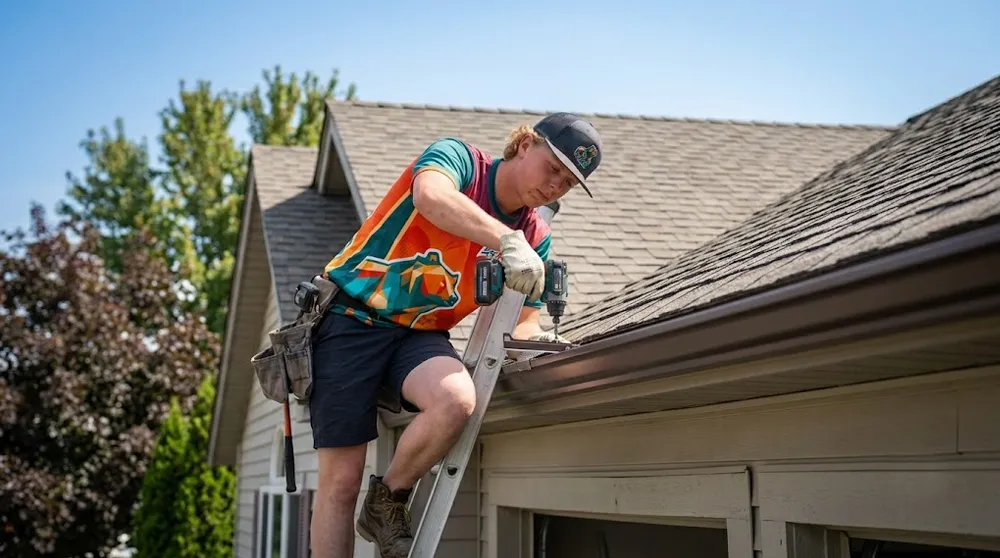
Gutters are part of the roof maintenance system. When gutters are clogged, loose, undersized, frozen, or draining poorly, water can back up near roof edges, damage fascia, stain siding, overload gutters, or contribute to ice problems.
Gutter Maintenance Tasks
Homeowners should:
- clean leaves, pine needles, and roof granules from gutters;
- check downspout flow;
- make sure downspouts discharge away from the foundation;
- look for gutters pulling away from fascia;
- watch for overflow during rain;
- check for ice buildup in winter;
- inspect fascia behind gutter runs;
- clear roof valleys that feed gutters.
Gutter Problems That Can Look Like Roof Problems
|
Symptom |
Possible Gutter Cause |
|
Water near roof edge |
Clogged gutter or bad slope |
|
Fascia stains |
Overflowing gutters |
|
Basement moisture |
Downspouts too close to foundation |
|
Ice buildup at eaves |
Clogged or frozen gutters |
|
Siding stains |
Overflow or downspout failure |
|
Roof-edge leak |
Water backing up near eaves |
SkyRight provides gutter services and gutter services in Coeur d’Alene for homeowners who need roof drainage support.
Roof Ventilation and Attic Moisture Checks
A roof can look fine outside while moisture problems are developing inside the attic.
Poor ventilation can contribute to:
- attic frost;
- condensation;
- wet insulation;
- mold-like staining;
- overheated attic space;
- premature shingle aging;
- ice dam risk;
- roof deck deterioration.
Signs of Ventilation Problems
Look for:
- musty attic smell;
- damp insulation;
- frost on nail tips;
- staining on roof decking;
- bathroom fans venting into attic space;
- blocked soffit vents;
- excessive attic heat;
- ice buildup near roof edges.
Balanced ventilation helps control attic heat and moisture. A professional roof inspection can identify whether intake and exhaust ventilation appear adequate.
For more detail, visit SkyRight’s article on how attic ventilation affects roof longevity in cold and humid conditions.
Is your attic secretly trapping moisture and frost?
A balanced ventilation system is critical to prevent mold, deck rot, and severe winter ice dams. Our comprehensive roof inspections always include an in-depth attic and airflow analysis to protect your home from the inside out.

Roof Inspection Cost and Maintenance Planning
For planning purposes, many professional roof inspections cost around $100–$400, with cost depending on roof size, accessibility, complexity, inspection type, and whether a certification or detailed report is needed. HomeGuide lists average roof inspection costs in that range and notes that drone and infrared inspections can cost more.
Roof repair costs are usually much lower than replacement, but recurring repairs can be a sign that replacement should be considered. Angi’s 2026 roof repair data lists average roof repair costs around $394–$1,962, while replacement costs are much higher, making early maintenance and small repairs important when the roof is otherwise healthy.
Planning Ranges for Homeowners
|
Item |
General Planning Range |
Notes |
|
Basic visual roof inspection |
$100–$400 |
May vary by company, roof size, access, and report needs |
|
Roof certification add-on |
$75–$200 |
Often used for real estate or insurance documentation |
|
Minor maintenance visit |
$200–$600+ |
Depends on gutter cleaning, debris removal, small adjustments |
|
Small roof repair |
$400–$2,000 |
Depends on leak source, material, pitch, and access |
|
More complex repair |
$2,000–$5,000+ |
Flashing, valleys, decking, storm damage, or steep access |
|
Full roof replacement |
Varies widely |
Best estimated after inspection |
Pricing disclaimer: These are general planning ranges only, not a SkyRight quote. Exact pricing depends on roof size, material, slope, access, current conditions, hidden damage, weather, inspection needs, and repair scope.
North Idaho Roof Maintenance Scenarios
These examples are planning scenarios, not quotes.
Scenario 1: Coeur d’Alene Home After Winter
Home profile: Asphalt shingle roof, shaded north-facing slope, gutters filled with pine needles, small ceiling stain after snowmelt.
Best next step: Spring roof inspection and gutter review.
Why: The stain may come from a roof-edge issue, pipe boot, valley debris, ice dam, or flashing problem. Cleaning gutters helps, but the leak source should be confirmed before spring rain.
Scenario 2: Post Falls Home Before Winter
Home profile: Open lot, wind exposure, gutters partly clogged, a few lifted shingles visible from the ground.
Best next step: Fall inspection before snow and freeze-thaw cycles.
Why: Lifted shingles and clogged gutters can become bigger problems during winter. Fall is the right time to address small issues before cold weather limits repair windows.
Scenario 3: Sandpoint or Rural North Idaho Home With Tree Cover
Home profile: Home near trees, debris collecting in valleys, moss on shaded slope, gutters clogging every fall.
Best next step: Seasonal maintenance plan focused on valleys, gutters, moss, branch trimming, and roof surface review.
Why: Tree debris holds moisture, blocks drainage, and can shorten roof life if ignored.
Scenario 4: Homeowner Preparing to Sell
Home profile: Older asphalt roof, no active leaks, but roof age may become an inspection concern.
Best next step: Pre-listing roof inspection.
Why: A documented inspection can help the seller understand repair needs before buyer negotiations. If the roof is near replacement age, it is better to know before the buyer’s inspector finds it.
Relevant SkyRight page: residential roofing services in Coeur d’Alene.
Scenario 5: Metal Roof With Snow Slide Concerns
Home profile: Metal roof on a North Idaho home or shop, snow sliding near entries, gutters showing stress, fasteners or trim need review.
Best next step: Metal roof inspection focused on fasteners, trim, snow-management details, gutters, and drainage.
Why: Metal roofs have different maintenance needs than asphalt shingles. Snow movement, fastener condition, trim details, and gutter attachment are especially important.
Maintenance Checklist by Roof Type
Different roof systems need different maintenance attention.
|
Roof Type |
Main Maintenance Priorities |
|
Asphalt shingles |
Missing shingles, granule loss, curling, flashing, pipe boots, moss, ventilation |
|
Metal roofing |
Fasteners, seams, trim, snow movement, penetrations, gutters |
|
Flat roofing |
Ponding water, seams, punctures, drainage, membrane condition |
|
Commercial roofing |
Drainage, penetrations, rooftop equipment, seams, scheduled inspections |
|
Gutters |
Clogs, slope, leaks, fascia attachment, downspout discharge |
For material-specific planning, visit SkyRight’s asphalt shingle and residential roofing materials guide, metal roofing page, or commercial roofing services in Coeur d’Alene.

What Homeowners Can Safely Do Themselves
Homeowners can safely perform basic visual checks from the ground and maintain accessible drainage areas.
Safe homeowner tasks may include:
- looking for missing shingles from the ground;
- checking for shingles in the yard;
- watching for gutter overflow;
- keeping downspout exits clear;
- checking attic moisture from a safe access point;
- photographing visible storm damage;
- trimming small branches that do not require roof access;
- calling a professional when roof access is needed.
What Should Be Left to Professionals
Leave these tasks to a professional:
- walking on steep roofs;
- winter roof access;
- leak tracing on the roof surface;
- flashing repairs;
- shingle replacement;
- skylight repairs;
- chimney flashing work;
- storm damage documentation;
- metal roof fastener or trim repairs;
- flat roof membrane repairs;
- attic ventilation corrections;
- ice dam removal from steep or icy roofs.
Professional roofing contractors are trained to repair or replace roofs safely, and improper DIY roofing work can damage the roof or create serious fall risk.
Warning Signs You Should Schedule a Professional Roof Inspection
Schedule an inspection if you notice:
- missing shingles;
- shingles in the yard;
- curling or cracked shingles;
- heavy granule loss;
- ceiling stains;
- attic moisture;
- moss or algae spreading;
- gutters overflowing;
- flashing pulling away;
- pipe boot cracking;
- repeated ice dams;
- sagging roof areas;
- skylight leaks;
- chimney leaks;
- storm debris on the roof;
- new leaks after wind or hail;
- roof age approaching replacement range.
If inspection shows repeated leaks or widespread aging, compare maintenance and repair against replacement. SkyRight’s roof repair vs replacement guide can help homeowners understand that decision.
How Maintenance Helps With Insurance Documentation
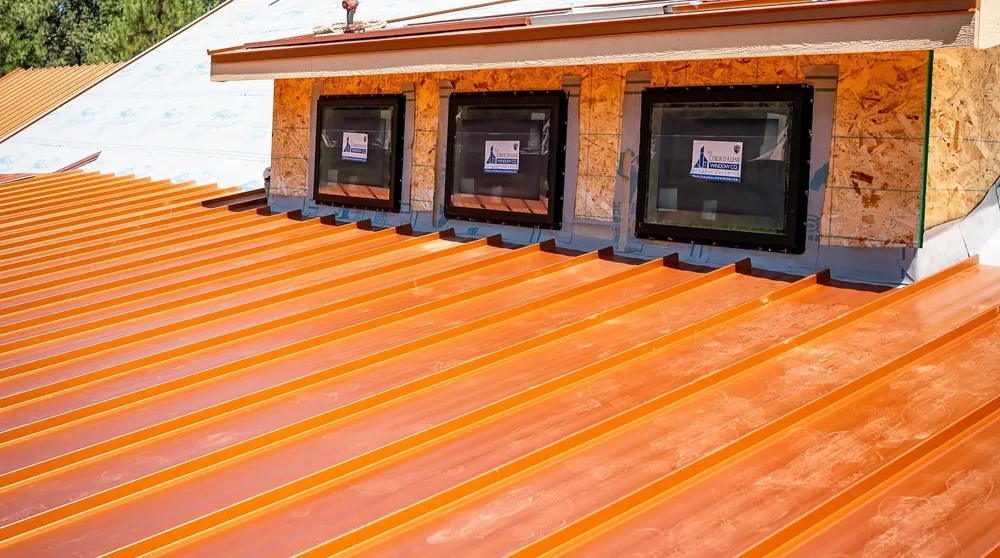
Roof maintenance does not guarantee insurance approval, but it can help homeowners show they took reasonable care of the roof.
Useful records include:
- inspection reports;
- repair invoices;
- before-and-after photos;
- storm date notes;
- gutter cleaning records;
- attic moisture photos;
- contractor recommendations;
- receipts for temporary protection after storm damage.
Insurance usually depends on the cause of damage. Sudden events may be covered, while wear and tear, neglect, or gradual deterioration usually are not.
Good records help separate storm damage from maintenance-related deterioration.
Protect your investment and build an insurance-ready paper trail
Don’t let an insurance adjuster claim your storm damage was just “neglect.” Regular professional inspection reports prove you took reasonable care of your roof system. Partner with SkyRight for proactive, documented seasonal maintenance.
When Maintenance Turns Into Repair
Maintenance becomes repair when inspection finds an active or likely failure point.
Examples include:
- cracked pipe boot;
- missing shingles;
- lifted shingles;
- loose flashing;
- exposed nail heads;
- damaged ridge caps;
- small roof puncture;
- leaking valley;
- gutter pulling away from fascia;
- roof-edge water intrusion.
If the issue is isolated and the roof is otherwise healthy, repair may be the right move.

When Maintenance Turns Into Replacement
Maintenance becomes replacement planning when inspection shows system-wide wear.
Examples include:
- widespread granule loss;
- brittle shingles;
- multiple leaks;
- soft decking;
- recurring repairs;
- major storm damage;
- old flashing throughout the roof;
- multiple roof layers;
- poor ventilation that has caused roof deck damage;
- roof age beyond practical repair value.
If the roof has a pattern of problems, replacement may protect the home better than repeated repairs.
For budgeting, visit SkyRight’s roof replacement cost guide.
Final Recommendation: Inspect Twice, Maintain Seasonally, Repair Early
North Idaho homeowners should use a simple roof maintenance rhythm:
- Spring: inspect winter damage.
- Summer: address repairs and ventilation concerns.
- Fall: clean gutters and prepare for snow.
- Winter: watch for ice, leaks, and attic moisture.
- After storms: document damage and schedule inspection if needed.
The best maintenance plan does not wait for water to drip through the ceiling. It finds roof problems early, keeps water moving, protects the attic, and helps homeowners decide whether repair or replacement is the right next step.
Ready to protect your roof before the next season? Schedule a roof inspection with SkyRight.
FAQ: North Idaho Roof Maintenance and Inspection
How often should I inspect my roof in North Idaho?
North Idaho homeowners should visually check the roof in spring and fall, and after major storms, heavy snow, falling branches, hail, or wind events. A professional inspection is recommended if you see leaks, missing shingles, gutter problems, storm damage, or roof aging.
What is the best season for roof maintenance?
Spring and fall are the most important roof maintenance seasons. Spring helps identify winter damage. Fall helps prepare the roof, gutters, flashing, and attic ventilation before snow and freeze-thaw cycles.
How much does a roof inspection cost?
Many professional roof inspections cost around $100–$400, depending on roof size, access, complexity, inspection type, and whether a certification or detailed report is needed. Some companies may offer free inspections or apply inspection fees toward approved work.
Should I clean my gutters before winter?
Yes. Gutter cleaning before winter is one of the most important roof maintenance steps in North Idaho. Clogged gutters can contribute to ice buildup, roof-edge leaks, fascia damage, overflow, and poor drainage.
Can poor ventilation damage my roof?
Yes. Poor attic ventilation can contribute to excess heat, condensation, attic frost, mold-like staining, ice dam risk, wet insulation, and premature roof aging. Ventilation should be reviewed during a roof inspection.
What roof problems should be fixed before winter?
Before winter, address missing shingles, loose flashing, cracked pipe boots, clogged gutters, valley debris, poor downspout flow, attic moisture, damaged ridge caps, and any active leak signs.
Should I inspect my roof after a storm?
Yes. After wind, hail, heavy rain, falling branches, or major snow events, check the property safely from the ground and document visible damage. Call a professional if you see missing shingles, dents, debris, roof-edge damage, or new interior stains.
Can maintenance prevent roof replacement?
Maintenance can delay premature replacement by catching small problems early, improving drainage, reducing moisture issues, and protecting roof details. It cannot make an old or failing roof last forever, but it can help homeowners get more useful life from a healthy roof.
Is roof maintenance different for asphalt and metal roofs?
Yes. Asphalt roofs need attention to shingles, granules, flashing, pipe boots, moss, and ventilation. Metal roofs need attention to fasteners, seams, trim, penetrations, snow movement, and gutters.
Who provides roof maintenance inspections in Coeur d’Alene and Post Falls?
SkyRight provides roof inspections, maintenance guidance, roof repair recommendations, gutter services, and replacement planning for homeowners in Coeur d’Alene, Post Falls, Sandpoint, Hayden, Rathdrum, Athol, Spirit Lake, and nearby North Idaho communities.