
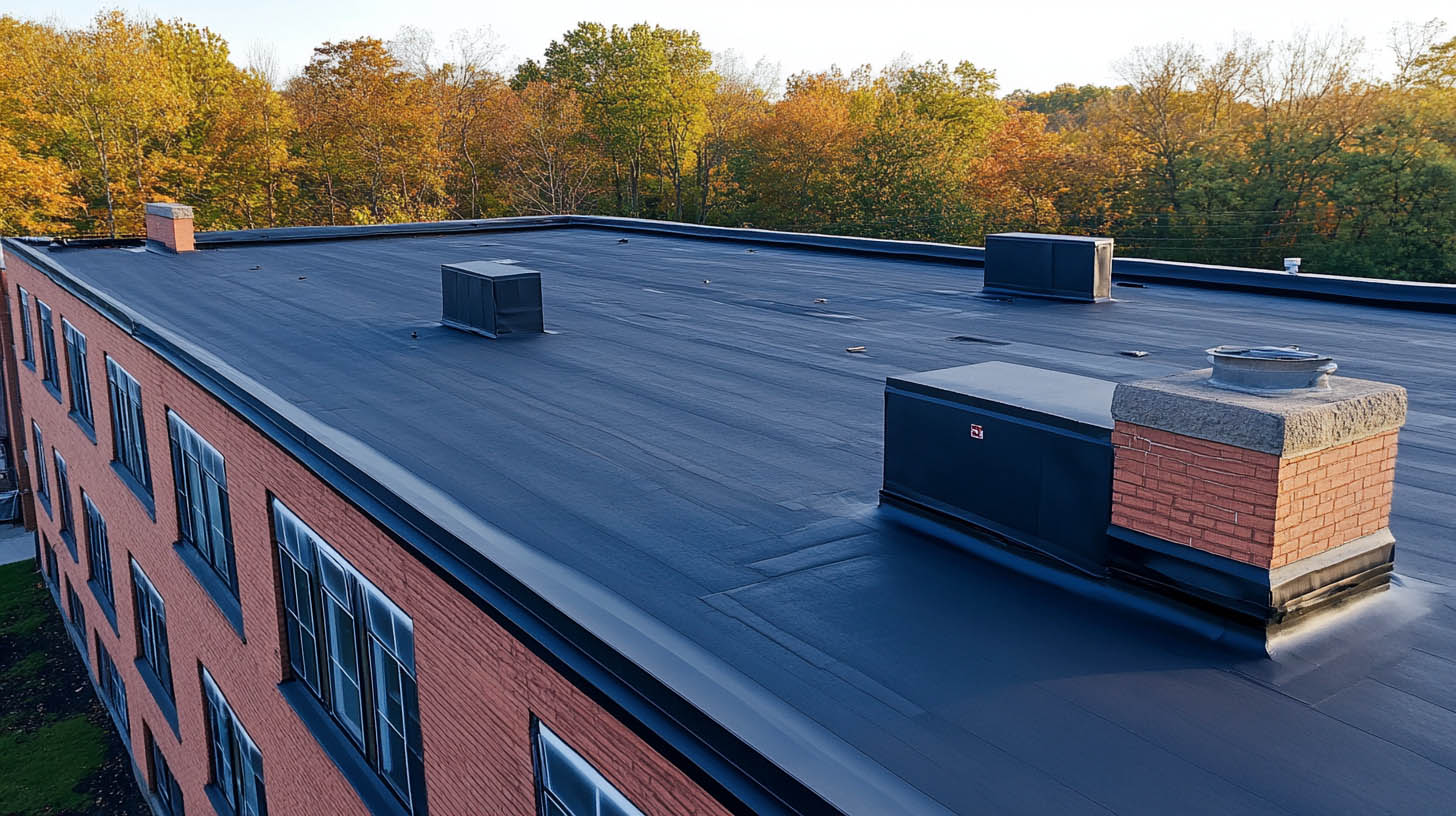
Low-slope roofing systems are critical for modern buildings, providing durable solutions for minimal-incline structures. At SkyRight in Sandpoint, ID, we offer innovative products designed to enhance roof longevity and performance in diverse environments.
What Are Low-Slope Roofs?
Defined by a slope below 2:12, low-slope roofs require specialized materials to protect against water pooling and damage. These systems often involve either single-ply membranes or multi-ply roofing solutions for optimal performance.
Single-Ply Roofing Systems
Single-ply membranes consist of a single, flexible layer rolled over the roof and seamed together. Common types include:
Thermoplastic Polyolefin (TPO)
- Advantages: Lightweight and cost-effective.
- Challenges: Stiffness issues and reduced performance in high temperatures.
Ethylene Propylene Diene Monomer (EPDM)
- Advantages: Ideal for cold climates due to its dark color.
- Challenges: Limited chemical compatibility and lower flame resistance.
Polyvinyl Chloride (PVC)
- Advantages: Premium performance and flexibility.
- Challenges: Higher cost compared to TPO.
Multi-Ply Roofing Systems
Built-Up Roof (BUR) Membranes
- Layered with bitumen and reinforcement membranes.
- Provide multi-layered water resistance, thermal insulation, and fire resistance.
- Challenges: Labor-intensive installation and vulnerability in extreme temperatures.
Modified Bitumen (MBUR) Membranes
- Enhanced with rubber or plastic polymers for improved flexibility and durability.
- Better suited for extreme climates compared to traditional BUR systems.
Unique Fact: Multi-ply membranes maintain consistent thickness over time, unlike single-ply systems that degrade with weathering.
Polyglass Solutions for Low-Slope Roofs
Modified Bitumen Roofing
- APP Membranes: Plastomeric compounds for weathering performance.
- SBS Membranes: Rubberized compounds for flexibility and impact resistance.
Self-Adhered Roofing
- Features patented ADESO® Technology for a clean, efficient installation.
- Eliminates the need for hot asphalt or torches, reducing labor and safety concerns.
Benefits of Low-Slope Roofing Systems
- Enhanced Durability: Multiple layers provide superior weatherproofing.
- Energy Efficiency: Reduces heat transfer, lowering cooling costs.
- Ease of Maintenance: Simplifies repairs and extends roof lifespan.
Why SkyRight Is the Best Choice
As Bonner County’s #1 Rated Roofing Company in 2023, SkyRight specializes in state-of-the-art low-slope roofing solutions. From self-adhered systems to multi-ply membranes, we ensure every installation meets rigorous performance standards.
Did you know? Modified bitumen membranes are engineered to withstand extreme temperatures without compromising structural integrity.
FAQs
Q: What’s the difference between single-ply and multi-ply roofing systems?
A: Single-ply systems use one layer of material, while multi-ply systems incorporate multiple layers for added durability and insulation.
Q: Are self-adhered membranes safe for residential use?
A: Yes, they’re ideal for residential and commercial roofs, offering easy installation and long-term reliability.
Q: How do I choose the right roofing system?
A: Consider factors like climate, roof slope, and building usage. Consulting experts like SkyRight ensures the best solution.
Q: Can these systems be retrofitted to existing roofs?
A: Absolutely. Many low-slope systems, including self-adhered membranes, are compatible with retrofits.
Q: How long do low-slope roofing systems last?
A: With proper maintenance, they can last 20-30 years or more.If you want to read a blog about roof maintenance and the secret to longevity, click here.