
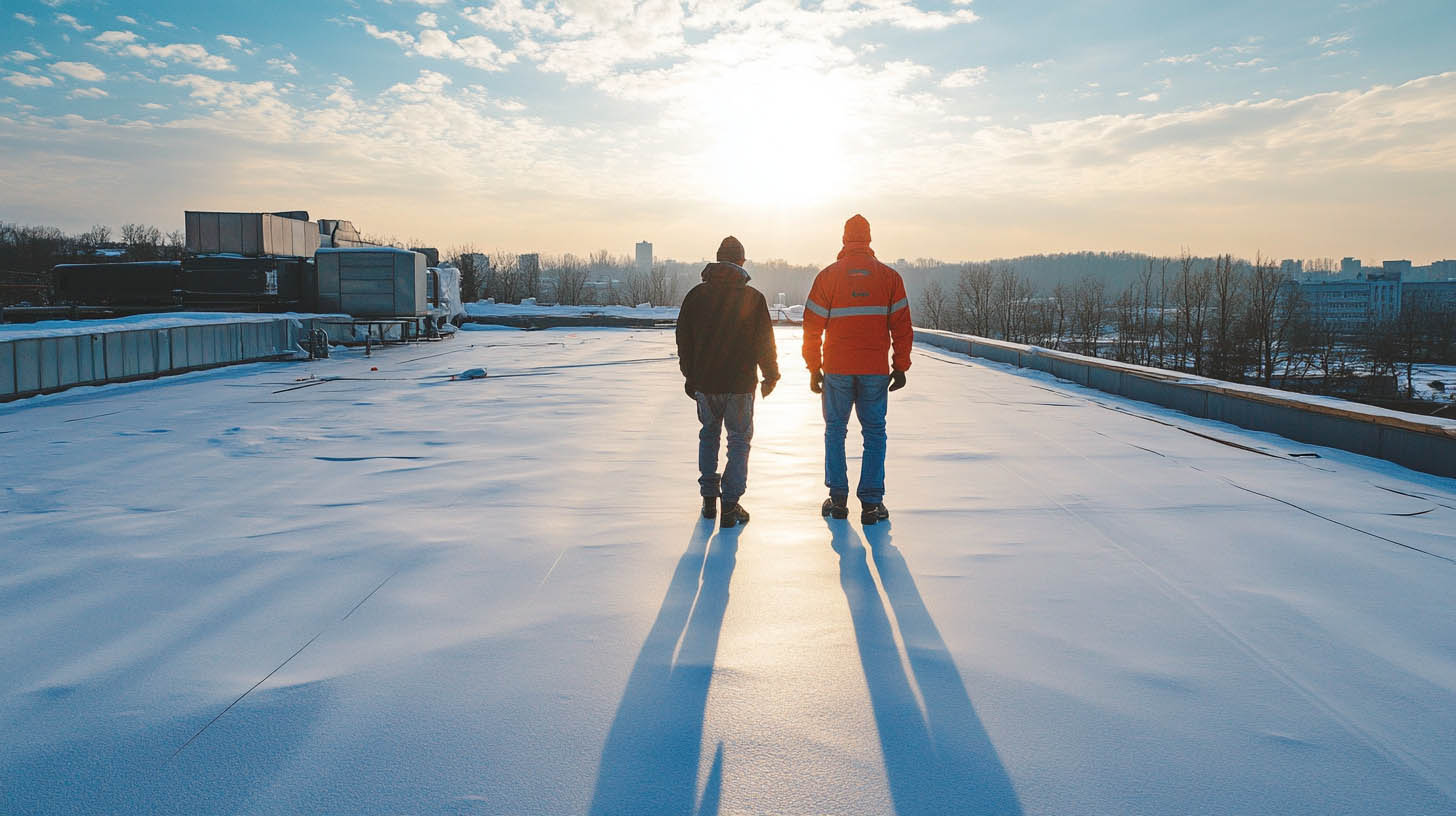
Winter weather challenges roofing systems, making cold-weather self-adhered membranes a game-changer for long-lasting and reliable roofs. At SkyRight in Coeur d’Alene, ID, we recommend these advanced membranes for superior performance and protection, even in subzero conditions.
What Are Cold-Weather Self-Adhered Membranes?
Cold-weather self-adhered membranes are specially designed to maintain flexibility and adhesive strength in freezing temperatures. Made with SBS-modified asphalt and elastomeric adhesives, these membranes adapt to temperature fluctuations, offering durability and water resistance where traditional systems fail.
Unique Fact: Cold-weather membranes are engineered to resist brittleness at temperatures as low as -40°F, ensuring long-term durability in extreme climates.
Key Advantages Over Traditional Roofing Materials
1. Enhanced Adhesion
- Traditional asphalt materials become brittle in the cold, risking cracks and leaks.
- Cold-weather membranes maintain a strong bond with the substrate, even in freezing conditions.
2. Resistance to Ice Damming
These membranes prevent water infiltration during freeze-thaw cycles, reducing the risk of ice dams that compromise roof integrity.
3. Flexibility in Subzero Temperatures
Unlike conventional materials that harden and shrink, cold-weather membranes remain pliable, ensuring seamless protection against the elements.
Steps for Installing Cold-Weather Self-Adhered Membranes
Step 1: Surface Preparation
- Clean the Roof: Remove dirt, debris, and moisture for optimal adhesion.
- Inspect for Damage: Repair weak spots in the roof deck to ensure a solid foundation.
Step 2: Priming the Surface
Primers enhance adhesion between the roof substrate and membrane, especially on surfaces prone to moisture retention.
Step 3: Rolling Out the Membrane
- Start at the lower edge of the roof and work upward.
- Overlap seams by at least 3 inches to create a waterproof barrier.
Step 4: Trimming and Securing
- Trim membranes for a precise fit using utility knives.
- Roll membranes with weighted rollers to ensure a strong bond and seal.
Step 5: Final Inspection
Walk the roof to inspect laps and seams, addressing any issues to prevent future leaks.
Choosing the Right Membrane
Elastoflex SA V Polar Base®
This product resists cracking and brittleness in extreme cold while ensuring superior adhesion.
Polyglass Self-Adhered Systems
With patented SEALLap and FastLap technologies, these systems simplify installation and maximize durability.
The Future of Roofing: Why Choose Cold-Weather Membranes?
As contractors and homeowners seek reliable solutions for cold climates, self-adhered membranes are gaining popularity for their:
- Cost-effectiveness: Faster installation reduces labor costs.
- Ease of application: No additional adhesives or fasteners are needed.
- Sustainability: Durable systems reduce the frequency of roof replacements.
SkyRight: Your Roofing Partner
As Bonner County’s #1 Rated Roofing Company in 2023, SkyRight provides cutting-edge roofing solutions tailored to local conditions. Our team ensures seamless installation of cold-weather self-adhered membranes for long-lasting protection and energy efficiency.
Did you know? Cold-weather self-adhered membranes outperform traditional systems by reducing maintenance costs by up to 20% over their lifespan.
FAQs
Q: Are cold-weather membranes suitable for all climates?
A: Yes, they perform exceptionally in cold and variable climates but can also be used in warmer conditions.
Q: How do these membranes prevent ice dams?
A: They create a seamless, waterproof barrier that resists freeze-thaw cycles, preventing water infiltration.
Q: Do cold-weather membranes require special tools for installation?
A: Standard tools like utility knives and weighted rollers are sufficient for most installations.
Q: Are these membranes environmentally friendly?
A: Their durability reduces waste from frequent replacements, making them a sustainable roofing choice.
Q: How long do cold-weather membranes last?
A: With proper installation, they can last over 30 years, offering excellent value.If you want to read a blog about why roofers have a bad reputation, click here.